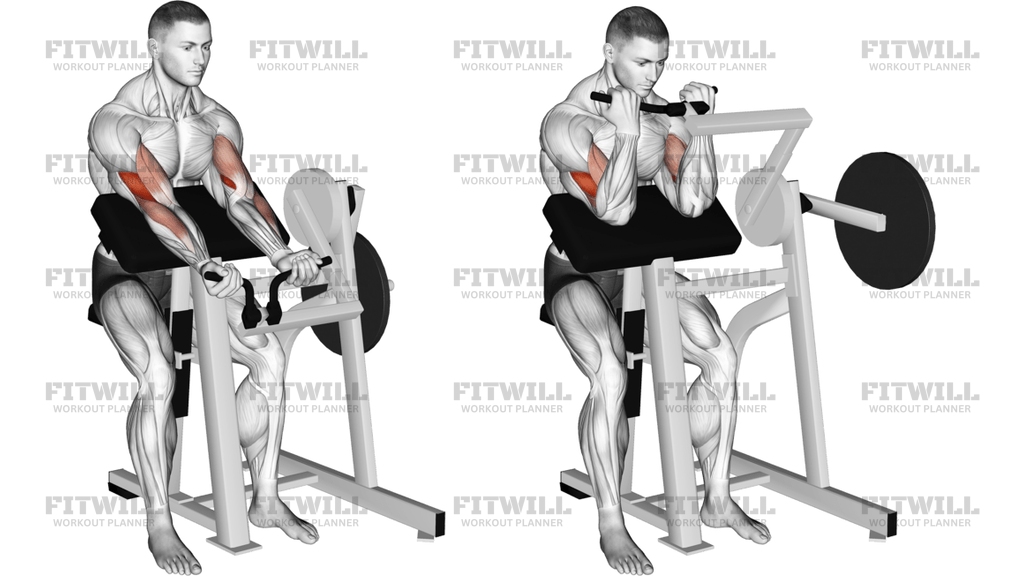
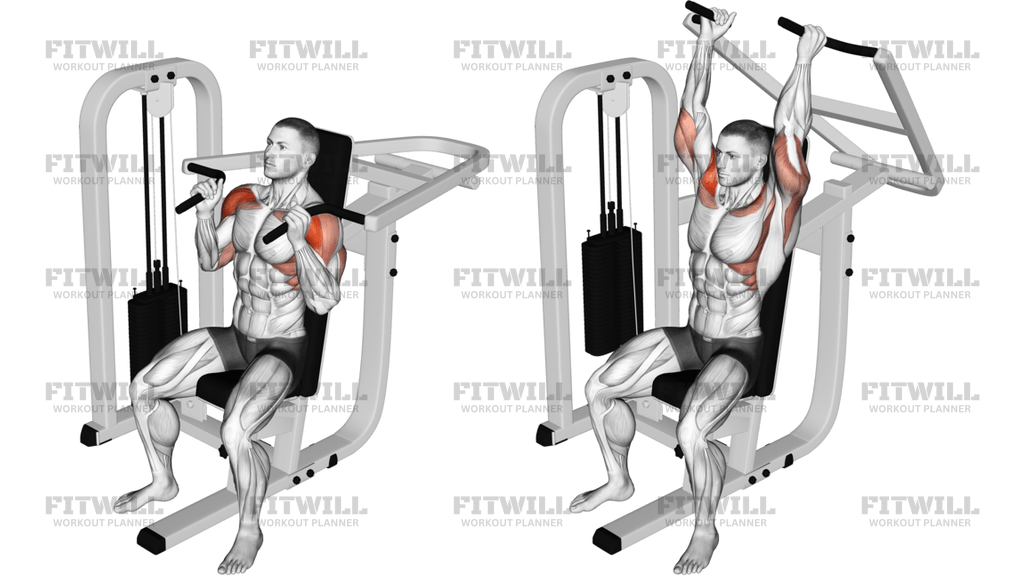
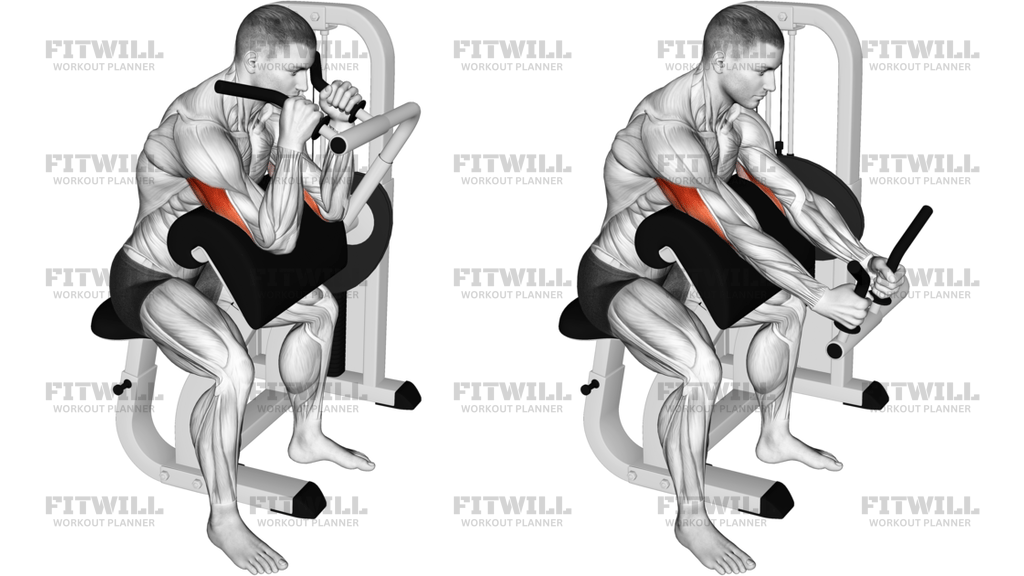
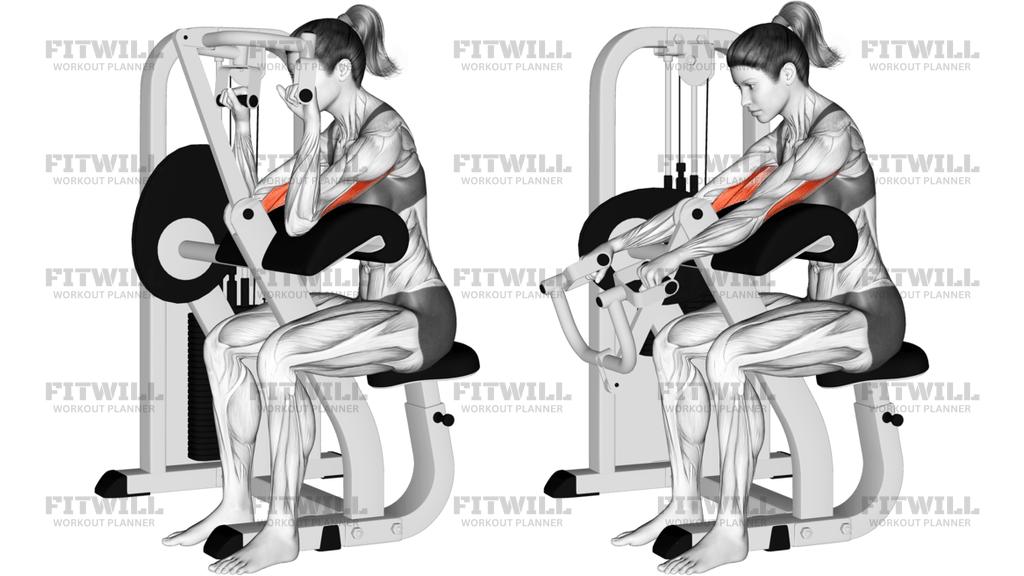
Lever Triceps Extension
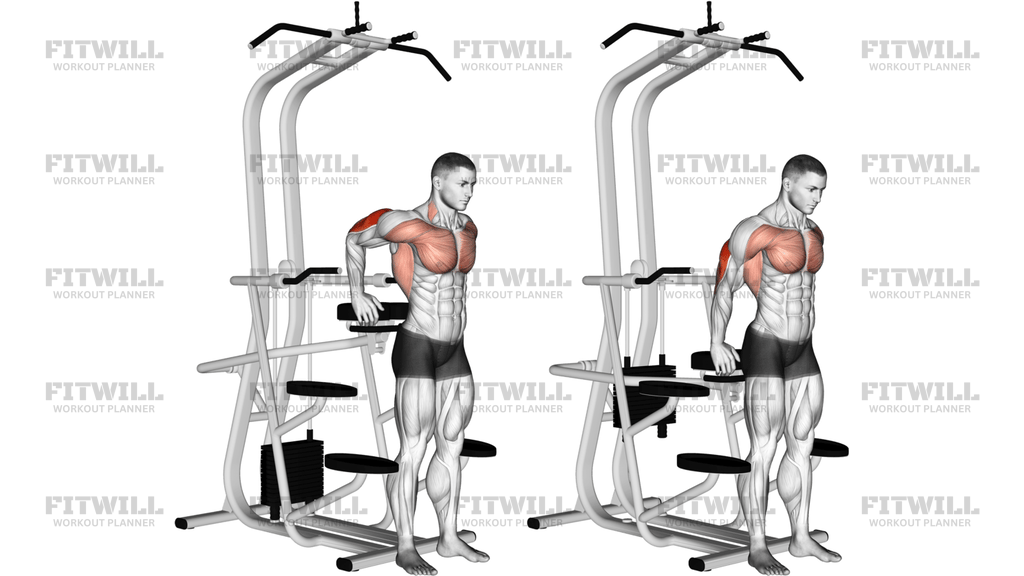
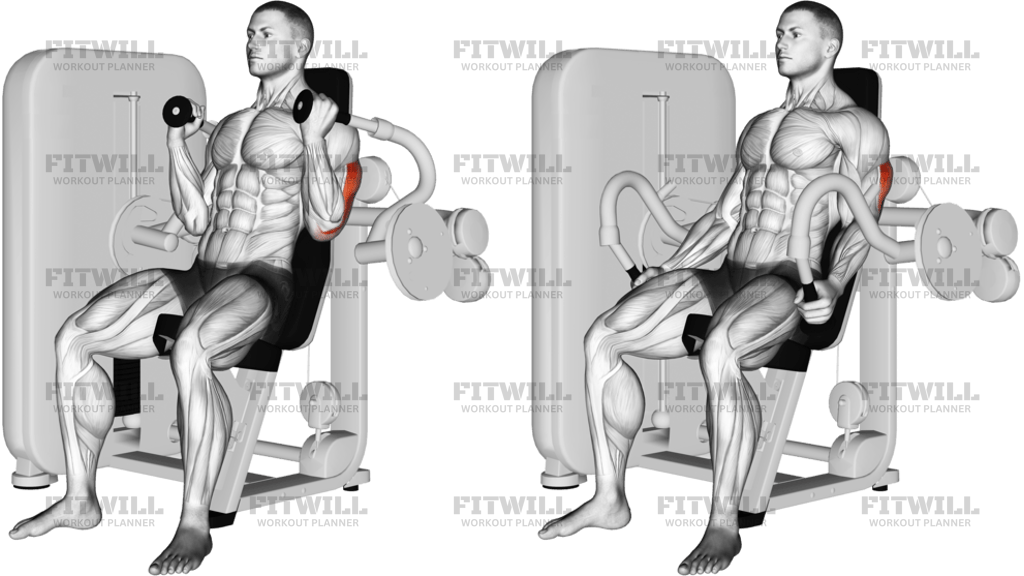
Lever Triceps Extension is a seated machine triceps exercise built around a fixed lever path. It lets you load elbow extension hard while the backrest, seat, and machine arms remove most of the balance demands that come with free-weight triceps work. That makes it a practical choice when you want direct arm training with a stable setup and predictable resistance.
The setup is what makes the exercise feel right. Sit fully back against the pad, plant both feet, and position your upper arms on the machine pads so your elbows line up with the pivot. In the start position the handles should sit close to the shoulders, with the elbows bent and the wrists neutral. If the seat is too high, too low, or too far from the pads, the shoulders and wrists start helping too much and the triceps lose the cleanest line of force.
Each repetition should feel like a strict elbow-opening action. Brace lightly into the back pad, press the handles through the machine's arc, and finish with the arms straight but not violently locked. On the return, let the handles come back slowly until the elbows are loaded again and the upper arms stay planted on the pads. Exhale as you press and inhale as the machine returns to the start.
This exercise fits well after presses, as accessory work for arm size and strength, or as a controlled finisher when you want local triceps fatigue without much whole-body strain. The guided path helps keep tension consistent from rep to rep, which is useful for tracking progress and staying honest with load selection. A smooth set should look repetitive and controlled rather than explosive.
The main things to protect are shoulder position, wrist alignment, and tempo. If the chest lifts, the shoulders roll forward, or the torso starts swinging, the load is too heavy or the setup is off. Keep the movement centered on elbow extension and let the machine do the guiding while the triceps supply the force.
[ Workout Log & Planner ]
Put your next workout in Fitwill
Keep your plan and training log ready when you are.


Instructions
- Sit fully back on the leverage machine with your feet flat and your upper arms resting on the pads.
- Adjust the seat so the machine pivot lines up with your elbows and the handles start close to shoulder height.
- Grip the handles with neutral wrists and keep your chest against the back pad.
- Brace your torso lightly so your ribs stay down and your shoulders do not roll forward.
- Press the handles through the machine's arc by extending your elbows, not by rocking your torso.
- Finish the rep with the arms straight but without snapping into a hard lockout.
- Pause for a moment at the end of the press, then lower the handles slowly until the elbows bend under control.
- Keep the upper arms pinned to the pads for every rep, then release the handles carefully when the set is over.
Tips & Tricks
- If you feel the front of the shoulders taking over, lower the load and re-check the seat height so the elbows match the pivot.
- Keep the wrists stacked over the forearms; bent-back wrists turn the handles into a forearm and joint-stress problem instead of a triceps exercise.
- Let the upper arms stay on the pads from start to finish so the machine does not become a body-swing movement.
- Use a controlled lowering phase of about two to three seconds to keep tension on the triceps instead of dropping into the start position.
- Do not chase a violent lockout; straight arms are enough, and a hard snap at the top often shifts stress into the elbows.
- Choose a load that still lets you return to the deep bent-elbow start without the shoulders shrugging forward.
- Exhale as you press and inhale as the handles come back, which helps keep the torso steady against the backrest.
- If the seat feels wrong, fix the setup before adding weight, because this machine is very sensitive to elbow and pivot alignment.
Frequently Asked Questions
What does Lever Triceps Extension work most?
It mainly trains the triceps brachii through elbow extension, with the forearms and shoulders helping to stabilize the machine path.
How should my elbows line up on this machine?
Your elbows should sit in line with the machine pivot so the handles move smoothly without the shoulders having to reach for the load.
Where should the handles start?
They should start close to shoulder height with the elbows bent, not stretched far behind the body or jammed too low.
Can beginners use this exercise?
Yes. The seated pad support and fixed lever path make it beginner-friendly as long as the load stays light enough to keep the motion strict.
Why do my wrists feel strained on this movement?
The most common reason is a bad seat position or an overbent wrist. Keep the wrists neutral and adjust the seat until the handles line up naturally.
Should I lock out my elbows at the top?
Extend fully, but do not slam into the joint. A controlled finish is enough to get the triceps working hard.
How is this different from cable pushdowns?
The lever machine gives a fixed arm path and more body support, so it is easier to keep the movement strict and repeatable.
What is the biggest form mistake to avoid?
Letting the chest lift and the torso swing. This turns a triceps isolation exercise into a whole-body heave and reduces tension on the target muscles.