Lever Preacher Curl Plate Loaded
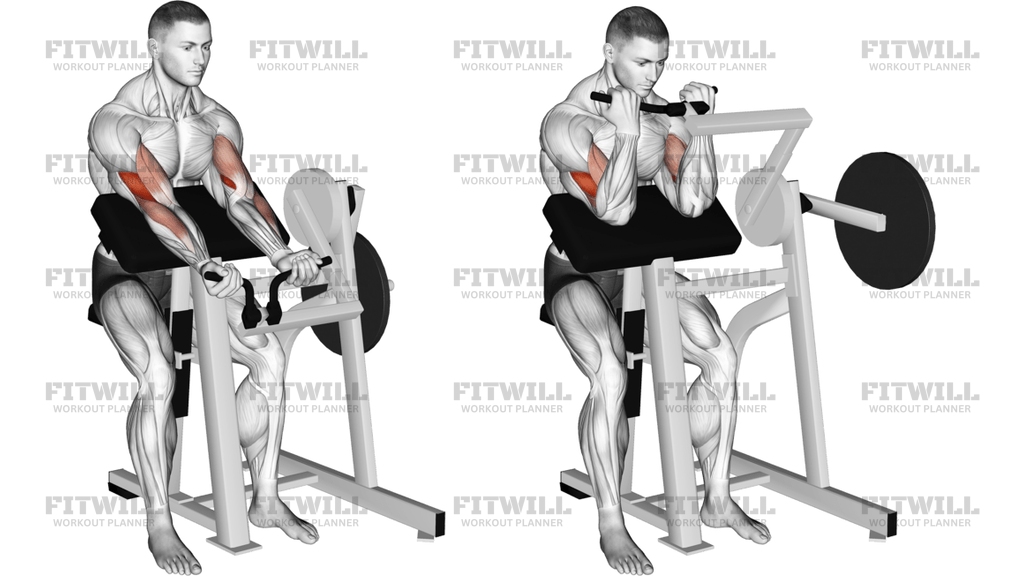
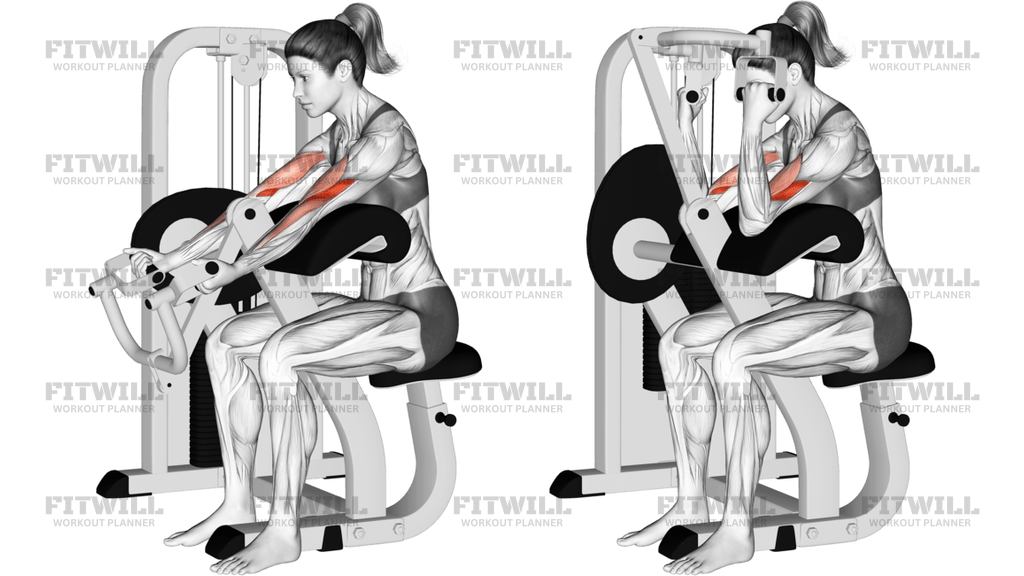
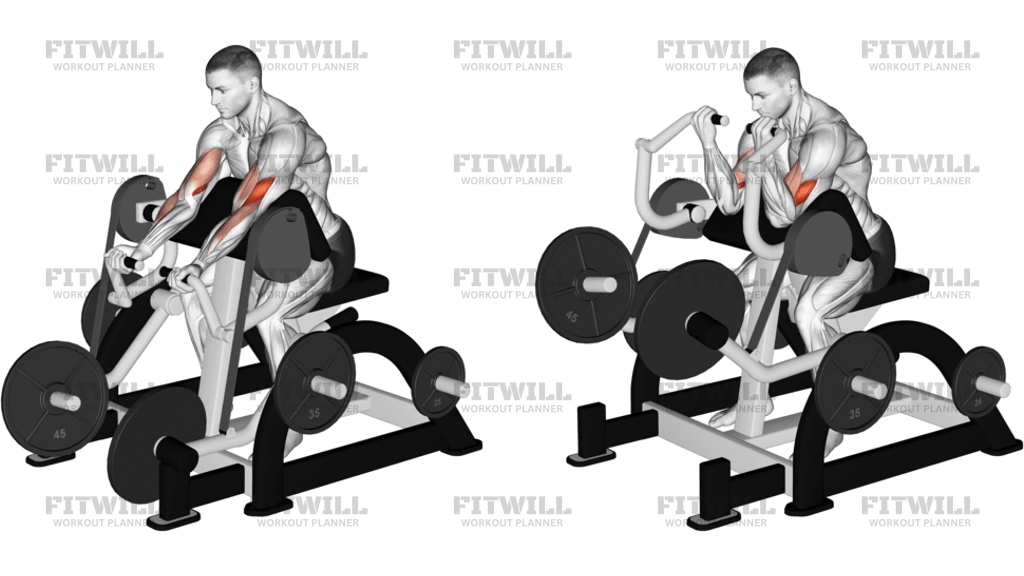
Lever Preacher Curl Plate Loaded is a machine-based arm exercise that puts the upper arms on a preacher pad and uses a fixed lever to challenge elbow flexion through a smooth, guided path. It is especially useful when you want to train the biceps hard without needing to stabilize a free bar or dumbbells. The preacher setup removes most of the body swing that often turns curls into a shoulder or hip movement.
The main target is the biceps, with the brachialis, brachioradialis, and forearm flexors helping to control the handle and finish the curl. Because the upper arms stay anchored against the pad, the exercise keeps the line of pull honest and makes it easier to feel where the rep gets difficult. That makes Lever Preacher Curl Plate Loaded a strong choice for hypertrophy work, arm-focused training, and controlled accessory volume.
Setup matters more here than with many other curls. Sit close enough that the armpits and upper arms rest comfortably on the preacher pad, then grip the handles with the wrists stacked over the forearms. If the seat is too high or too low, the shoulders will drift forward and the elbows will lose their fixed position, which reduces tension on the biceps and can make the bottom of the rep feel awkward.
Each repetition should start from a long but controlled elbow position, then curl the handles upward by bending only at the elbows. Keep the chest quiet, the shoulders down, and the upper arms pressed into the pad while the lever moves in a smooth arc. At the top, squeeze without jerking the weight, then lower the handles slowly until the elbows are almost straight again.
This exercise works well near the end of an upper-body session, after heavier pressing or pulling work, when you want direct arm work without much balance demand. It can also be a good beginner curl variation because the machine path reduces cheating and helps teach a strict elbow-driven curl. Keep the load honest, though: if the lever bangs at the bottom or your shoulders start helping, the set is too heavy for clean work.
[ Workout Log & Planner ]
Put your next workout in Fitwill
Keep your plan and training log ready when you are.


Instructions
- Sit on the preacher curl machine with your chest against the pad and your upper arms resting firmly along the angled arm support.
- Plant both feet flat on the floor and adjust your seat so your armpits and elbows line up comfortably with the top edge of the pad.
- Take an underhand grip on the handles or grips, then stack your wrists straight over your forearms without letting them bend back.
- Start with your elbows nearly straight but not locked, and keep your shoulders relaxed instead of reaching forward.
- Exhale and curl the handles upward by bending only at the elbows while your upper arms stay pressed into the pad.
- Bring the lever up until your biceps are fully shortened and the handles are near the top of their arc without shrugging.
- Pause briefly at the top, then inhale and lower the weight slowly until your arms are long again and the biceps stay under tension.
- Keep the descent smooth, stop before the lever slams into the bottom, and reset your shoulders before the next rep.
- Finish the set by lowering the handles under control and stepping out only after the lever is stable.
Tips & Tricks
- Set the seat height so your upper arms stay glued to the pad for the whole rep; if your elbows drift off the edge, the curl turns into a shoulder movement.
- Keep your wrists straight and slightly stacked over the forearms so the handles do not fold your hands back at the top.
- Stop just short of a hard lockout at the bottom if the machine pulls on your elbows or you lose tension in the biceps.
- Use a slower lowering phase than lifting phase; the lever should not drop under its own weight.
- Do not chase the top with your shoulders. If the front of your shoulders roll forward, the load is too heavy or the seat is mis-set.
- A hard squeeze at the top works well here because the machine keeps the path consistent and makes the peak contraction easy to find.
- If the bottom position feels cramped, narrow your range slightly and keep the lever moving without bouncing off the stop.
- Use smaller jumps in weight than you would on a standing curl, because the preacher pad removes most of the body momentum.
- Let the forearms lead the handle smoothly instead of yanking the start of the rep with your hands.
- Finish the set when you can no longer lower the lever without the upper arms peeling off the pad.
Frequently Asked Questions
What muscles does Lever Preacher Curl Plate Loaded train most?
The biceps do most of the work, with the brachialis, brachioradialis, and forearm flexors helping to control the handle.
Why use the preacher pad on Lever Preacher Curl Plate Loaded?
The pad locks your upper arms in place, which reduces body swing and makes the curl more focused on elbow flexion.
How should my seat be set on Lever Preacher Curl Plate Loaded?
Set it so your armpits and upper arms rest comfortably on the pad and the handles line up with your forearms without forcing your shoulders forward.
Should my elbows leave the pad during the curl?
No. If the elbows peel off the pad, the set usually turns into a cheating curl and the biceps lose tension.
How low should I lower the handles?
Lower until the arms are long and tension is still controlled, but stop before the lever slams into the bottom stop.
Is Lever Preacher Curl Plate Loaded good for beginners?
Yes. The fixed path makes it easier to learn a strict curl, as long as the load is light enough to keep the upper arms pinned down.
What are the most common mistakes on this machine?
Letting the shoulders roll forward, bouncing off the bottom, and bending the wrists back are the biggest issues.
Can I use this exercise instead of standing dumbbell curls?
Yes, if you want less body swing and a more isolated biceps set. Standing curls usually allow more total-body movement.
How should I breathe during Lever Preacher Curl Plate Loaded?
Exhale as you curl the handles up and inhale as you lower them under control.