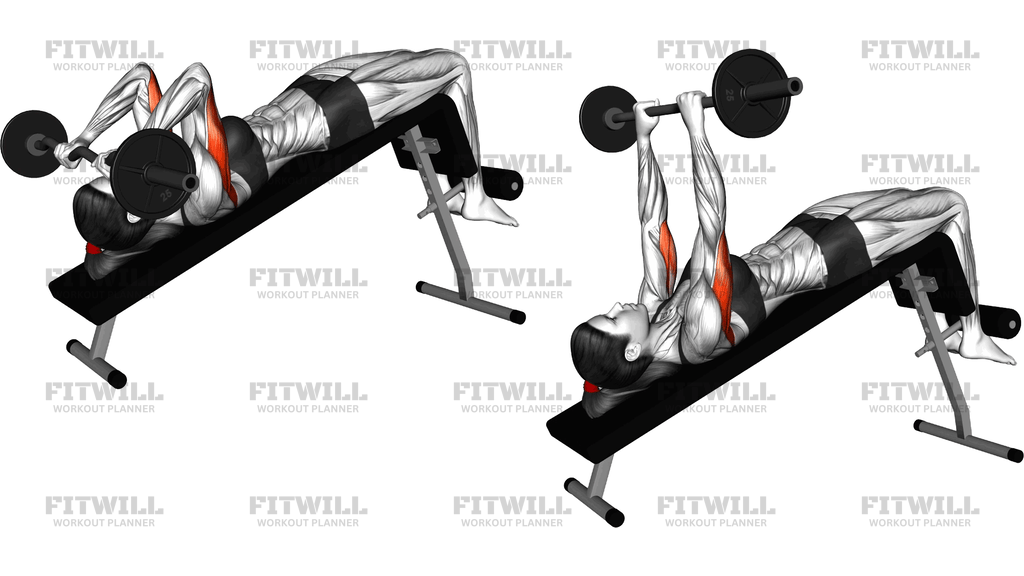
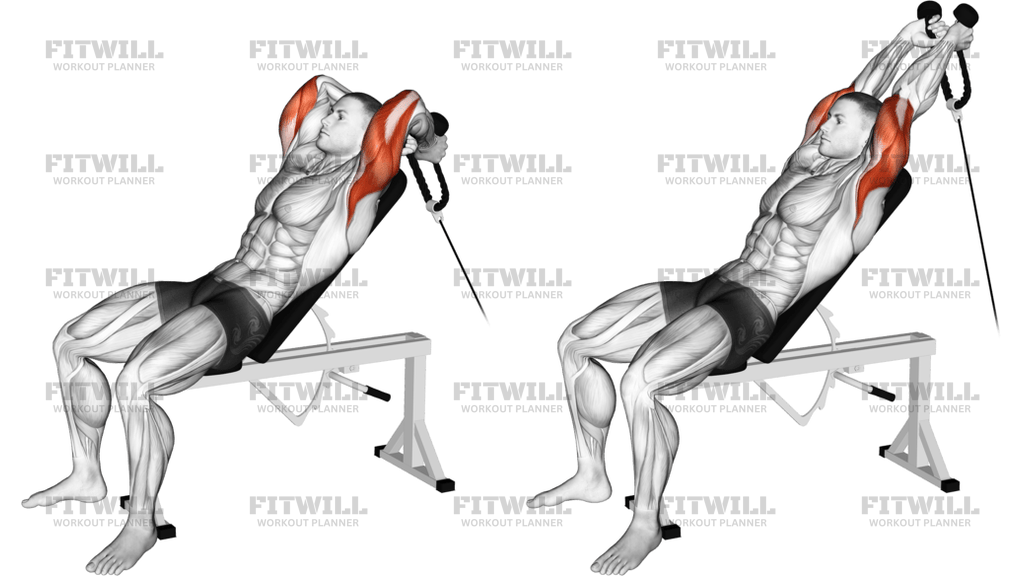
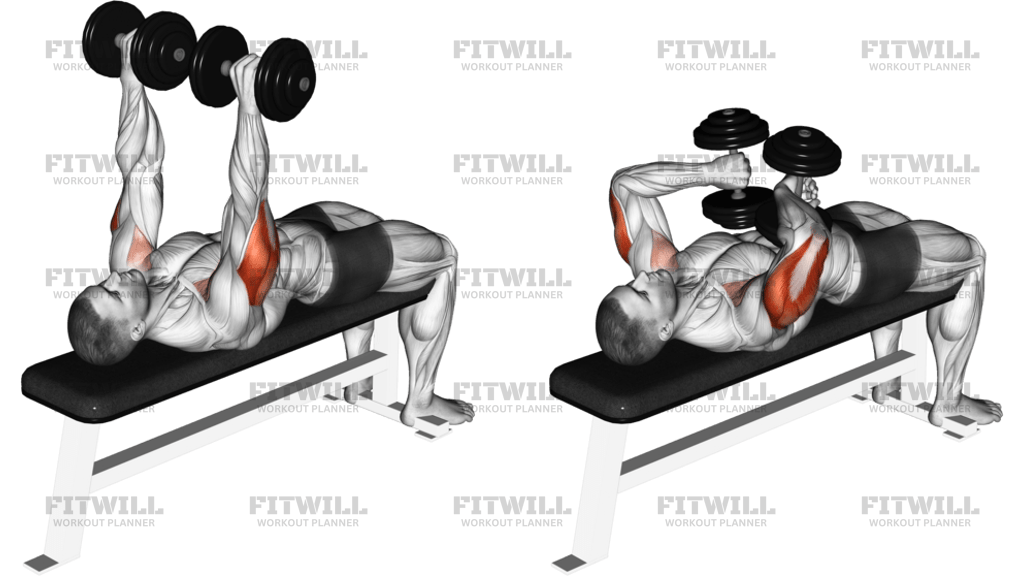
Barbell Close-Grip Bench Press
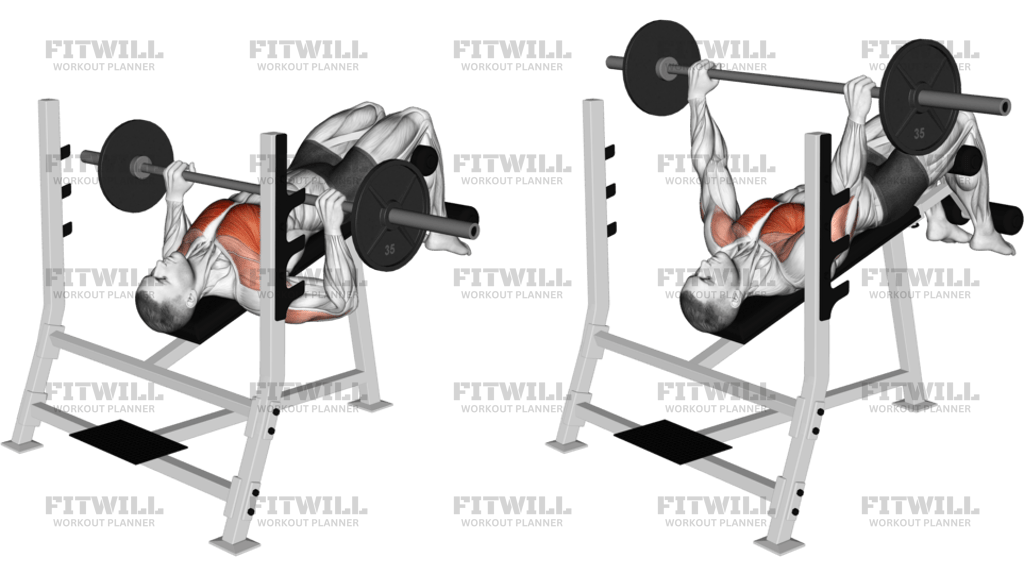
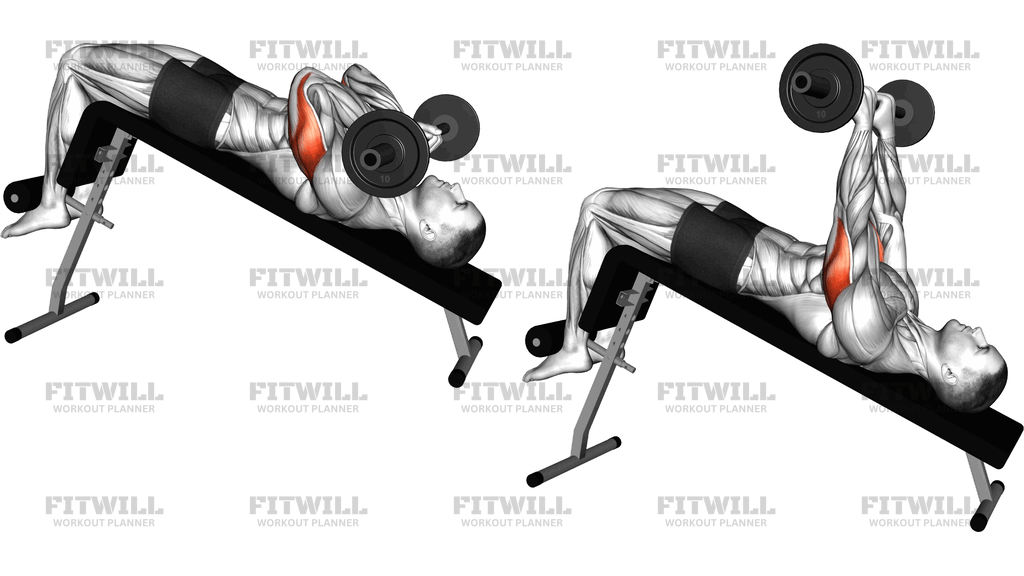
Barbell Close-Grip Bench Press is a bench press variation that uses a narrower hand position to place more emphasis on the triceps. You still press from a flat bench with the barbell over the chest, but the elbows stay closer to the body than in a wider bench press. This makes it a useful upper-arm strength exercise that also trains the chest and front shoulders.
The primary target is the triceps brachii, with the pectoralis major and anterior deltoids assisting. A shoulder-width or slightly narrower grip is usually enough to create the triceps bias. Going extremely narrow often makes the wrists bend and the shoulders feel crowded without adding useful benefit.
Set up on a flat bench with the feet planted, eyes under the bar, and shoulder blades pulled back against the bench. Grip the bar with straight wrists and hands close enough that the elbows can track near the sides. Unrack carefully and let the bar settle over the chest before lowering.
Lower the bar under control toward the lower chest or upper rib area while keeping the elbows tucked but not pinned. Touch or approach the body without bouncing, then press upward until the arms are extended. Keep the wrists stacked over the elbows so the bar path feels strong and the triceps can finish the press.
Barbell Close-Grip Bench Press works well as a triceps-focused accessory, a secondary bench variation, or a strength builder for lockout power. It usually uses less weight than a regular bench press, so load it with patience. Use safety arms or a spotter when training heavy because the narrower grip can fatigue quickly.
Common mistakes include gripping too narrowly, flaring the elbows, bouncing the bar, losing shoulder-blade position, or letting the wrists collapse backward. Keep the rep controlled and the touch point consistent. The exercise should feel like a strong press through the triceps, not a painful strain through the wrists or shoulders.
[ Workout Log & Planner ]
Put your next workout in Fitwill
Keep your plan and training log ready when you are.


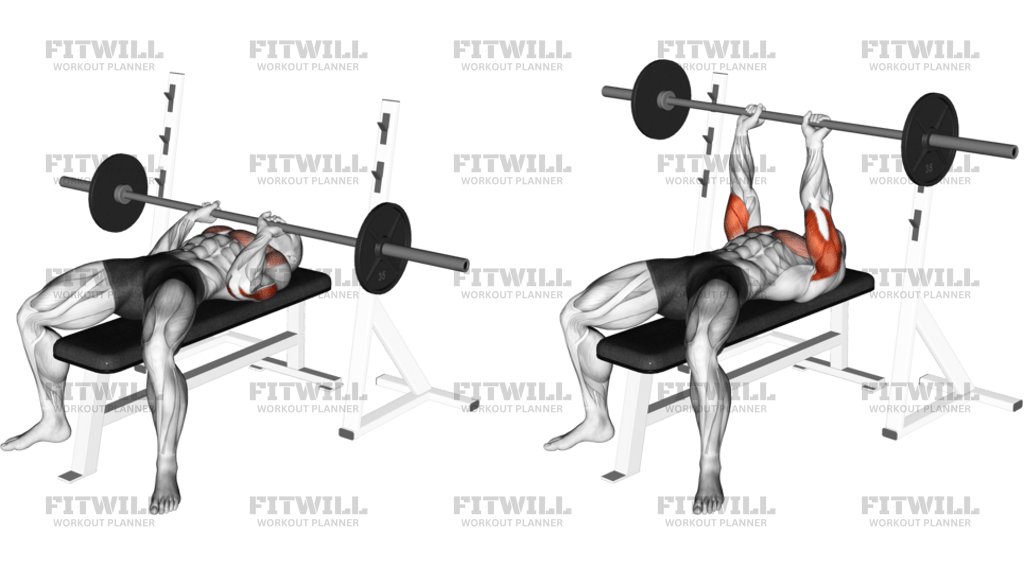
Instructions
- Lie on a flat bench with your feet planted and your eyes under the bar.
- Grip the bar around shoulder width or slightly narrower.
- Pull your shoulder blades back and keep your chest lifted.
- Unrack the bar and hold it above your chest with straight wrists.
- Lower the bar under control while keeping your elbows closer to your sides.
- Touch or approach the lower chest without bouncing.
- Press the bar upward until your arms are extended.
- Rack the bar carefully after your final rep.
Tips & Tricks
- Do not make the grip extremely narrow; shoulder-width is often enough.
- Keep your wrists stacked over your elbows to reduce wrist strain.
- Tuck your elbows, but avoid pinning them hard against your ribs.
- Use a controlled lowering phase to keep tension on the triceps.
- Keep your shoulder blades set against the bench throughout the set.
- Use a spotter or safety arms when lifting heavy.
- Expect to use less weight than your regular bench press.
Frequently Asked Questions
What muscles does the Barbell Close-Grip Bench Press work?
It primarily emphasizes the triceps, while the chest and front shoulders also assist during the press.
How close should my grip be?
A grip around shoulder width or slightly narrower is usually enough. Going too narrow can make the wrists and shoulders uncomfortable.
Is Barbell Close-Grip Bench Press better than dips for triceps?
Both can be effective. The close-grip bench press is easier to load precisely and may be more comfortable for some shoulders.
Where should the bar touch?
Most lifters lower the bar toward the lower chest or upper rib area. Keep the touch point consistent and controlled.
What are common mistakes in the Close-Grip Bench Press?
Common mistakes include gripping too narrowly, bending the wrists back, flaring the elbows, and bouncing the bar.
Can beginners do Barbell Close-Grip Bench Press?
Yes, beginners can use it if they already understand basic bench press setup. Start light and focus on wrist and elbow position.
Should my elbows touch my ribs during Barbell Close-Grip Bench Press?
No. Keep the elbows closer to your sides than a regular bench press, but do not pin them hard against your ribs.