Barbell Lying Triceps Extension
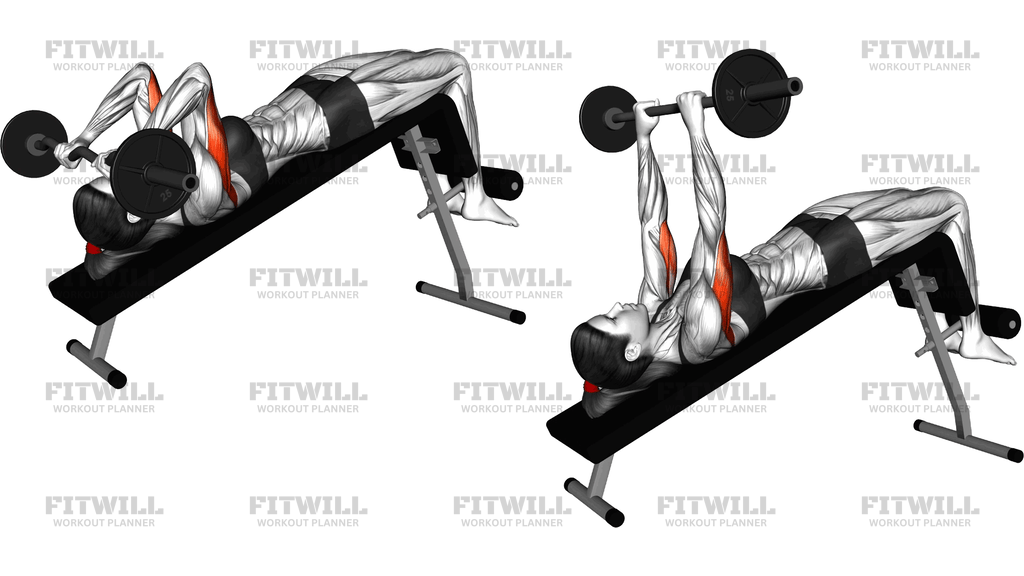
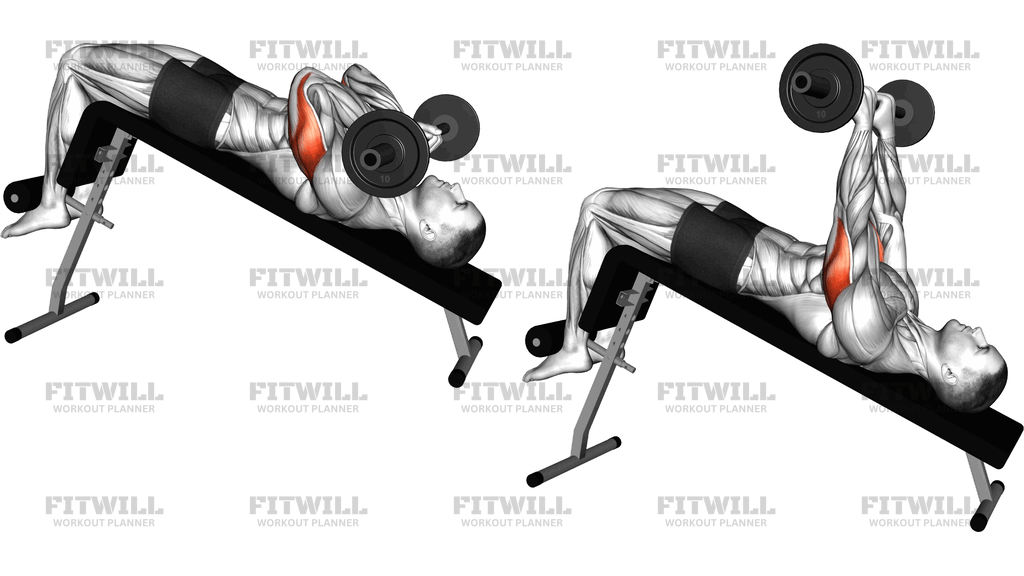
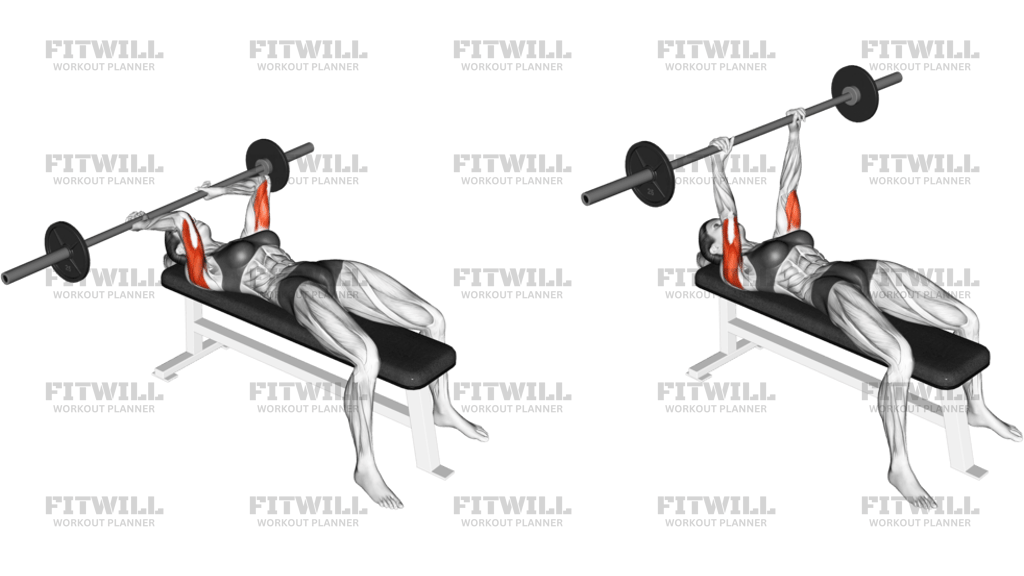
Barbell Lying Triceps Extension is a bench-based elbow-extension exercise that isolates the triceps through a long range of motion. You lie on a flat bench, hold a barbell with a narrow-to-shoulder-width grip, and bend only at the elbows so the bar lowers in a controlled arc toward the forehead or slightly behind it before you press it back up. The movement is often called a skullcrusher, but the goal is not to crash the bar into the head or to turn the rep into a pressing motion. The triceps should do most of the work while the upper arms stay nearly fixed in space.
The setup matters because small changes in grip width, elbow angle, and bench position change the stress on the elbows and the stretch on the long head of the triceps. A stable upper back, planted feet, and a neutral wrist position help you keep the bar path predictable. If the elbows drift wide or the shoulders take over, the exercise becomes less efficient and usually less comfortable. Keeping the upper arms controlled lets you load the triceps directly instead of borrowing tension from momentum or shoulder movement.
This exercise is useful when you want focused triceps work after your main pressing lifts, or when you need a triceps accessory that emphasizes the stretched position. It can build size and strength well with moderate loads and clean repetitions. The rep should look deliberate: lower the bar under control, feel the triceps lengthen, then extend the elbows to bring the bar back over the shoulders without bouncing or swinging. A slower lowering phase usually improves both muscle tension and elbow comfort.
Safety and form quality matter more here than on many arm movements because the bar travels close to the face and the elbows are working through a deep bend. Use a load you can lower smoothly, keep the wrists stacked over the bar, and stop the set if the elbows ache sharply or the shoulders start to drift forward. If a straight bar bothers your wrists or elbows, a lighter load or a different bar choice is usually a better fix than forcing the same setup. For clean triceps work, the rep should stay controlled from the first lowering phase to the final lockout.
[ Workout Log & Planner ]
Put your next workout in Fitwill
Keep your plan and training log ready when you are.


Instructions
- Lie on a flat bench with your head near the bar path, feet planted on the floor, and a shoulder-width or slightly narrower grip on the barbell.
- Press the bar over your shoulders with straight elbows, stack your wrists over the bar, and keep your upper arms pointed mostly toward the ceiling.
- Set your shoulder blades gently down and back so your chest stays open without over-arching your lower back.
- Brace your torso, then bend only at the elbows to lower the bar in a controlled arc toward your forehead or slightly behind it.
- Keep your upper arms nearly still while the forearms tip back and the elbows fold; do not turn the rep into a bench press.
- Lower until you feel a strong triceps stretch and can still control the bar path without letting the elbows flare hard.
- Exhale as you extend the elbows and drive the bar back to the start over your shoulders, squeezing the triceps at the top.
- Pause briefly in the locked-out position, then start the next rep without bouncing the bar or letting the shoulders roll forward.
- After the final rep, bring the bar back to the rack or hand it off with bent knees and a stable grip.
Tips & Tricks
- Keep your elbows pointed mostly up instead of letting them drift wide; that keeps the triceps doing the work.
- A narrow grip shortens the lever arm, but if your wrists feel cramped, move the hands out slightly and keep them stacked over the bar.
- Lower the bar slowly enough that you can feel the triceps lengthen; a fast drop usually turns into an elbow-joint jolt.
- If the bar feels too close to your face, let it travel a little behind the forehead rather than forcing it straight down.
- Keep your ribcage down on the bench so you do not turn the lift into a big chest arch and shoulder extension pattern.
- Use lighter loads than you would for pressing work; the triceps are strongest when the elbow path stays strict, not when the bar is heavy enough to wobble.
- A slight pause at the bottom helps kill momentum and makes each rep start from the same stretched position.
- If straight-bar grips irritate your wrists or elbows, switch to a lighter bar or an EZ-bar version instead of grinding through pain.
- Stop the set when the upper arms start drifting toward your torso, because that usually means the shoulders have started taking over.
Frequently Asked Questions
What muscle does Barbell Lying Triceps Extension target most?
The triceps do most of the work, especially when you keep the upper arms fixed and only move at the elbows.
Can beginners perform this exercise?
Yes, but beginners should start light and learn to control the bar path before adding load.
Where should the bar lower during the rep?
Most lifters lower it toward the forehead or slightly behind the head, as long as the elbows stay controlled and the shoulders stay quiet.
What is the biggest form mistake on the barbell version?
Letting the elbows flare and turning the movement into a press instead of a triceps extension.
Why do my elbows feel stressed in this exercise?
The elbows take the load if the descent is too fast, the grip is awkward, or the bar is lowered too aggressively.
Can I use an EZ-bar instead of a straight barbell?
Yes. An EZ-bar often feels better on the wrists and elbows while keeping the same lying triceps-extension pattern.
How is this different from a close-grip bench press?
A close-grip bench press still uses a pressing pattern, while this exercise isolates elbow extension with the upper arms mostly fixed.
What should I do if the bar feels unstable over my face?
Reduce the load, slow the lowering phase, and keep your wrists stacked so the bar path stays predictable.