Barbell Seated Overhead Triceps Extension
Barbell Seated Overhead Triceps Extension is a seated isolation movement that loads the triceps while your arms work in an overhead position. With the elbows pointed up and the bar traveling behind the head, the exercise places the triceps, especially the long head, under a strong stretch before you press back to lockout. The seated setup removes most lower-body contribution, so the set stays focused on elbow extension rather than body English.
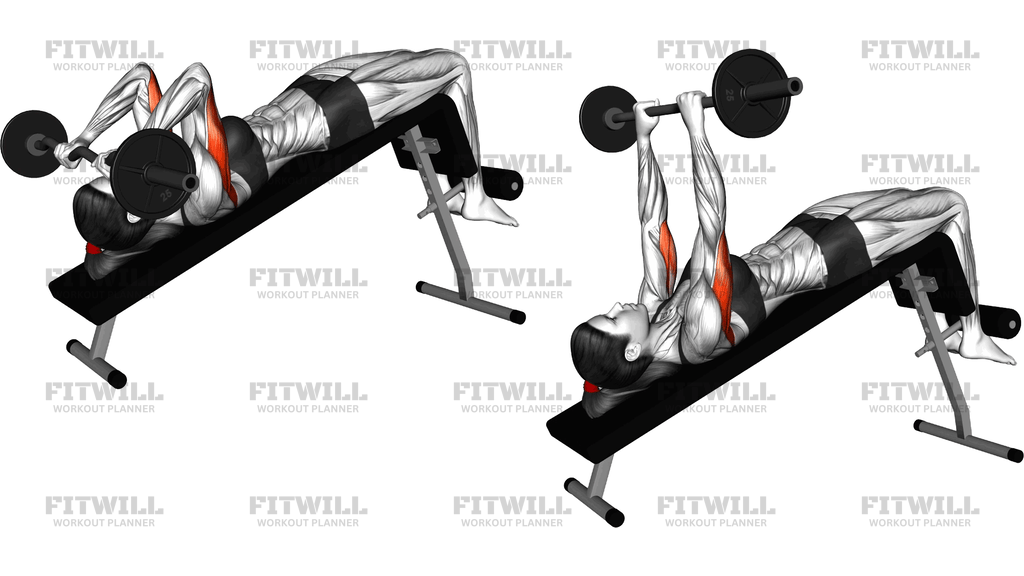
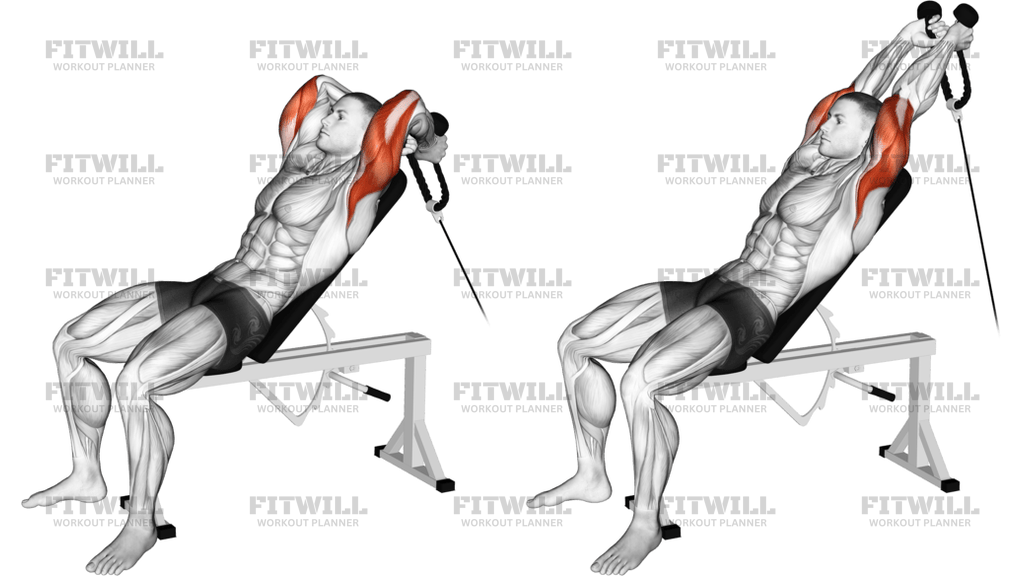
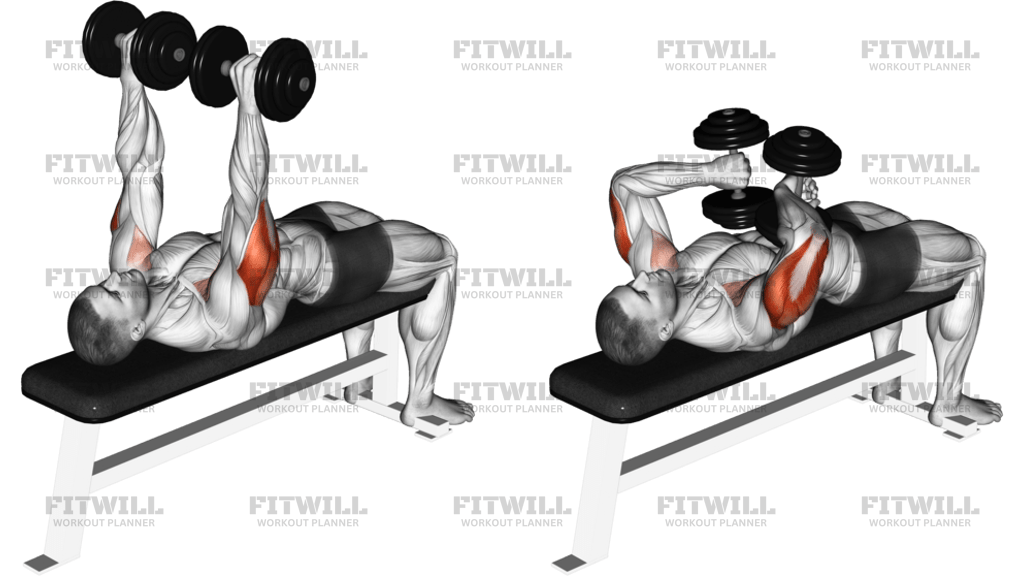
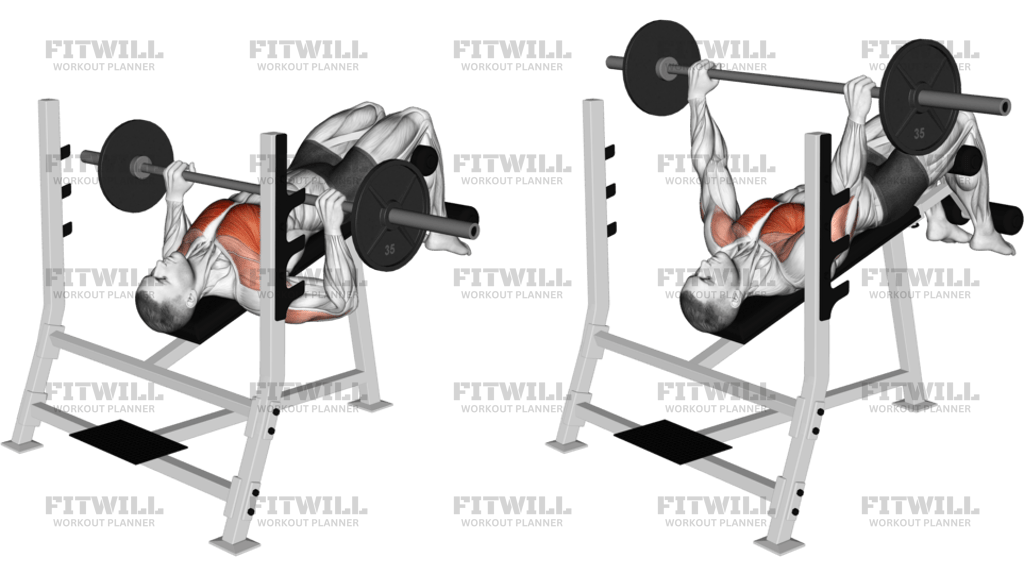
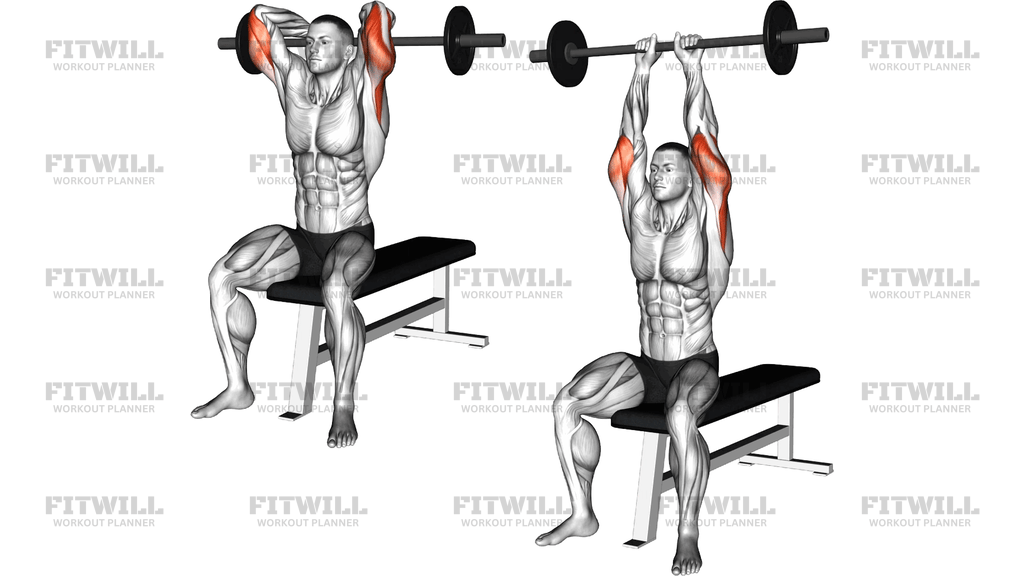
The image shows a flat bench setup with the lifter sitting tall, feet planted, and the bar held overhead with a narrow overhand grip. That position matters because the torso has to stay stacked while the elbows bend and straighten. If the ribs flare, the shoulders shrug, or the lower back takes over, the triceps lose tension and the bar path gets harder to control. A clean repetition keeps the upper arms mostly vertical and the forearms moving like hinges around the elbows.
This is a useful accessory exercise for arm growth, pressing carryover, and improving strength in the overhead triceps position. It is especially helpful when you want direct triceps work without relying on chest or shoulder drive. The long lever created by the bar makes the movement feel demanding even with moderate weight, so it rewards careful setup, a stable seated posture, and a controlled tempo more than load chasing.
To do it well, lower the bar behind the head only as far as your shoulders and elbows can keep aligned comfortably. The bar should travel on the same path every rep, with the elbows staying close to the head instead of flaring wide. Press by extending the elbows, not by arching the spine or swinging the bar. If the wrists, elbows, or shoulders start to complain, shorten the range slightly and reduce the load before technique breaks down.
Use this exercise when you want direct triceps volume in a strength, hypertrophy, or accessory block. It pairs well with pressing work, but it should feel like a controlled arm movement rather than a full-body lift. Beginners can use it if they start light and learn to keep the bench position, grip width, and elbow path consistent. A smooth rep with a full but comfortable overhead range is the goal.
[ Workout Log & Planner ]
Put your next workout in Fitwill
Keep your plan and training log ready when you are.


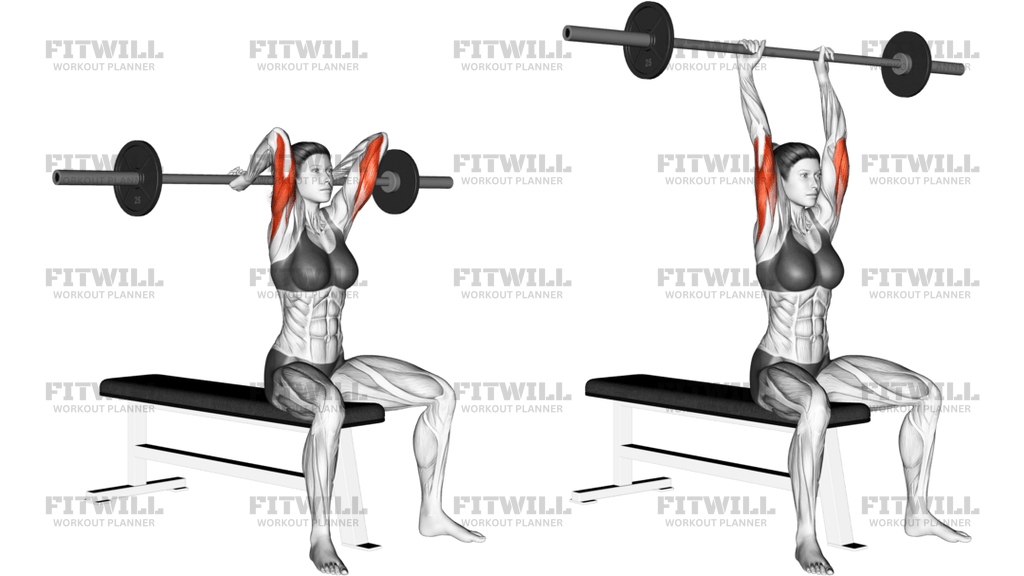
Instructions
- Sit on a flat bench with your feet planted and your torso tall, then grip the barbell with an overhand grip a little narrower than shoulder width.
- Press the bar overhead until your elbows are straight and the bar is stacked above the crown of your head.
- Brace your midsection and keep your ribs down so your lower back does not take over the lift.
- Bend your elbows to lower the bar behind your head, keeping your upper arms mostly vertical and close to your ears.
- Lower the bar until you feel a strong but controlled triceps stretch and your forearms are nearly parallel to the floor.
- Exhale and extend your elbows to drive the bar back overhead on the same path.
- Finish each rep with straight elbows, quiet shoulders, and the bar back over the middle of your body.
- Lower the bar again under control and repeat for the planned number of reps before carefully racking it.
Tips & Tricks
- Choose a grip width that lets your wrists stay stacked over your forearms instead of bending back hard.
- Keep your elbows pointed mostly up; if they drift wide, the bar usually gets harder to control.
- Do not turn this into a standing press by leaning back and kicking the bar upward.
- A lighter load is usually more productive here because the long overhead lever exposes sloppy reps quickly.
- Let the bar travel behind your head, not forward in front of your face, so the triceps keep the tension.
- Stop the descent before your shoulders pinch or your elbows lose their stacked position.
- Exhale as you extend the elbows and inhale as the bar lowers behind your head.
- If the bar feels unstable, slow the lowering phase before adding more weight.
Frequently Asked Questions
What does the seated overhead position train best in this exercise?
It emphasizes the triceps in a stretched overhead position, especially the long head, because the elbows start above and slightly behind the head.
Why is the exercise done seated instead of standing?
Sitting on a bench makes it easier to keep the torso still and focus on elbow extension instead of leaning back and using body momentum.
How low should I lower the bar behind my head?
Lower it only as far as you can keep the upper arms controlled and the shoulders comfortable. A deep stretch is useful, but the bottom position should still feel stable.
What is the most common mistake with a barbell overhead triceps extension?
Letting the ribs flare and turning the rep into a mini press. The movement should stay centered at the elbows.
Should my elbows stay narrow or flare out?
Keep them mostly pointed up and relatively close to your head. If they flare wide, the bar path usually gets sloppy and the triceps lose tension.
Can I use this movement for arm growth?
Yes. It is a strong triceps accessory exercise for adding direct arm volume, especially when you want overhead work that loads the muscle through a longer range.
What should I do if my elbows or shoulders feel cranky?
Reduce the load, shorten the range slightly, and keep the elbows more stacked. If the joint discomfort continues, swap to a more comfortable triceps variation.
Is this harder on the wrists than other triceps exercises?
It can be, because the bar locks both hands into one fixed position. A narrower grip usually helps, but the wrists still need to stay aligned with the forearms.