Barbell Z Press
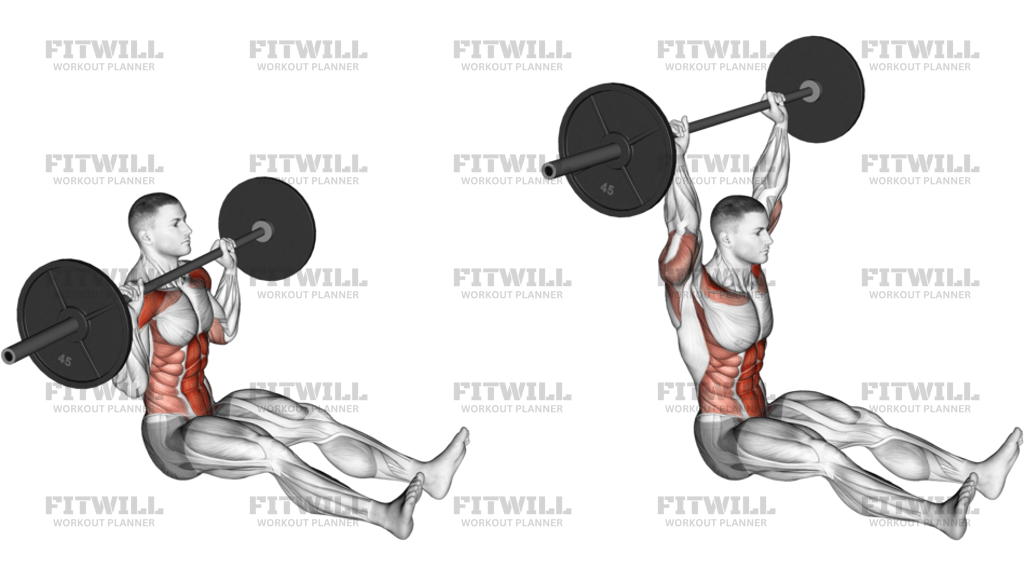
Barbell Z Press is a strict overhead pressing exercise performed seated on the floor with the legs extended in front of you and no bench support behind the torso. That floor position is the point of the lift: it removes leg drive, forces a tall torso, and exposes any tendency to lean back, twist, or turn the press into a standing push press. The barbell is usually held in the front rack at the shoulders before each rep, with the hands just outside shoulder width and the wrists stacked over the forearms.
The exercise is especially useful for building shoulder strength, triceps lockout power, and upper-back control while also demanding a lot from the trunk. Because the pelvis cannot hide behind a backrest, the abs, obliques, and hip flexors have to keep the torso organized as the bar travels overhead. That makes Barbell Z Press a good choice when you want a strict press that still teaches full-body tension instead of relying on body English.
A good rep starts with a tall sit, active legs, and a braced midsection. Keep the chest lifted without flaring the ribs, then press the bar in a slightly back-and-up path so it finishes over the shoulders and midfoot. The head moves back just enough for the bar to clear the face, then comes through under the bar as the elbows lock out. If the bar drifts forward, the rep usually turns into a shoulder and lower-back fight instead of a clean press.
Load choice matters more here than on many other presses because the floor position removes a lot of assistance. Most lifters will need less weight than they use on a standing overhead press, especially if hamstring mobility or hip tightness makes it hard to sit upright with straight legs. Use the lift to build precision, not to chase momentum. Controlled lowering, stacked joints, and consistent breathing are what make the exercise effective.
Barbell Z Press fits well in strength blocks, accessory work, and pressing progressions where you want strict overhead mechanics and a high core demand. It also helps reveal side-to-side differences in shoulder stability and torso control. When the setup is right and the reps stay honest, it is a demanding but very efficient way to train overhead pressing strength without a bench or leg drive.
[ Workout Log & Planner ]
Put your next workout in Fitwill
Keep your plan and training log ready when you are.


Instructions
- Sit on the floor with both legs extended straight in front of you and the torso tall.
- Set the barbell in the front rack at the shoulders, with the hands just outside shoulder width and the wrists stacked over the forearms.
- Pull the ribs down, squeeze the glutes and quads, and brace before the first rep so the torso stays upright.
- Press the bar up and slightly back in a smooth path until it finishes over the shoulders and midfoot.
- Let the head move back just enough for the bar to clear the face, then bring the head through under the bar as it rises.
- Lock out overhead with the elbows straight, biceps near the ears, and the bar directly over the shoulders.
- Lower the bar under control back to the front rack at the shoulders.
- Keep the legs quiet and the torso tall for every rep, then reset your breath before the next press.
Tips & Tricks
- If your chest is drifting back or your legs are popping off the floor, the load is too heavy for a true Z press.
- Keep the bar in the heel of the hand instead of deep in the fingers so the wrists stay stacked and the press feels more stable.
- Think about pressing around your face, not straight out in front of you; the bar should finish over the shoulder line, not in front of it.
- A small exhale as the bar passes the sticking point can help, but the ribs should stay controlled instead of flaring open.
- If straight legs make it impossible to stay upright, the hip flexors or hamstrings are limiting the setup, so reduce the load before you turn the rep into a lean-back press.
- Keep the elbows slightly in front of the bar in the rack position so the start of each rep feels balanced instead of collapsed onto the wrists.
- Lower every rep with the same discipline you use to press it; dropping the bar often leads to shoulder irritation and lost positioning.
- Use a spotter or safeties if you are working near failure, because bailing from a floor-seated overhead press is less forgiving than a standing press.
Frequently Asked Questions
What muscles does the Barbell Z Press work?
It mainly trains the shoulders and triceps, with a big isometric demand on the abs, obliques, and upper back to keep the torso upright.
Why do I have to sit on the floor for the Barbell Z Press?
The floor removes leg drive and back support, so the press becomes a strict test of shoulder strength and trunk control.
How should the bar travel during the Barbell Z Press?
It should move up and slightly back so it finishes over the shoulders and midfoot, not drifting forward in front of your face.
What is the most common mistake with the Barbell Z Press?
Leaning back and turning it into a seated incline-style press is the big one. If your ribs flare and your hips shift, the load is too heavy or your setup is off.
Is the Barbell Z Press harder than a standing overhead press?
Usually yes for the core and hip position, even though the weight is often lighter. The lack of leg drive makes strict overhead control much harder.
Can beginners do the Barbell Z Press?
Yes, but only with a light bar or very small load at first. Beginners usually need time to learn the upright sit and the shoulder path before adding weight.
What if I cannot sit tall with my legs straight in the Barbell Z Press?
Start lighter and adjust your hamstring and hip position before you load it. If you cannot hold the torso upright, the press will turn into a compensation pattern instead of a strict lift.
Do I need a spotter for the Barbell Z Press?
If the bar is heavy or you are pushing close to failure, yes. A spotter or safeties are helpful because the seated floor position makes bailing out awkward.