Barbell Side Split Squat Version 2
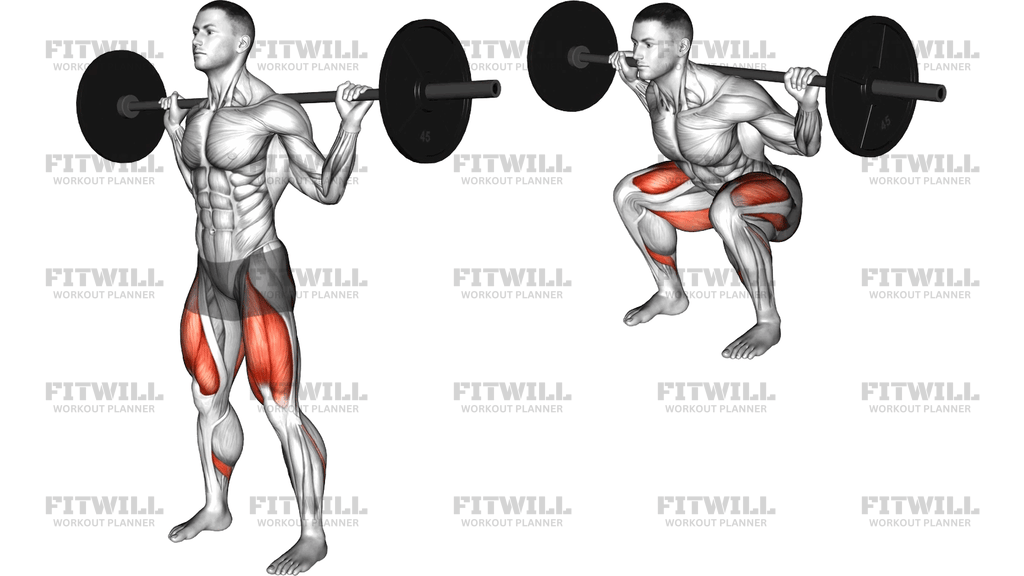
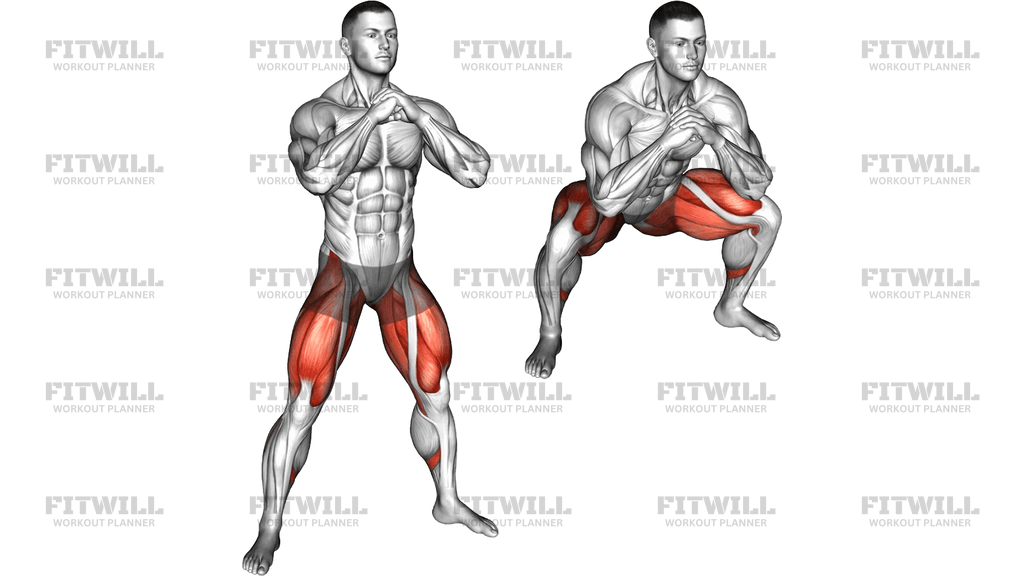
Barbell Side Split Squat Version 2 is a loaded lateral squat performed from a wide stance with the barbell across the upper back. Instead of stepping like a side lunge, you stay planted, shift the hips toward one leg, and load that side while the opposite leg stays longer. This makes the movement useful for training glutes, adductors, quads, and side-to-side lower-body control.
The working leg handles most of the squat demand, especially through the glutes and quads, while the inner thigh of the straighter leg gets a controlled stretch. The core helps keep the bar centered and the torso from collapsing forward or rotating. The exercise is best done with a light to moderate bar until the lateral pattern feels stable.
Set up with a wide stance, toes slightly turned out, and the bar resting securely below the neck. Push the hips back and toward one foot, bend that knee in line with the toes, and keep the opposite leg extended enough to feel a stretch without locking aggressively. Drive through the bent-leg foot to return to the middle before changing sides or repeating the same side.
Use this exercise as an accessory for glute development, adductor strength, athletic lateral movement, or squat variation work. Keep the working heel planted and the bar level. If the knee caves inward, the torso twists, or the straight-leg groin stretch feels sharp, shorten the range and reduce the load.
[ Workout Log & Planner ]
Put your next workout in Fitwill
Keep your plan and training log ready when you are.


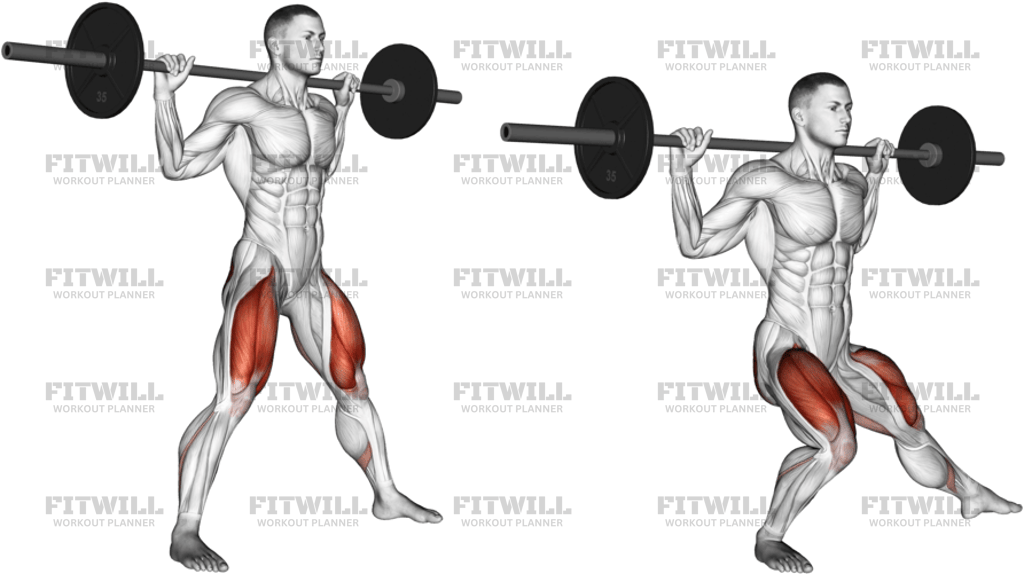
Instructions
- Place the barbell across your upper back and stand with your feet wider than shoulder width.
- Turn your toes slightly outward and keep the bar centered over your midline.
- Brace your core, lift your chest, and keep both feet flat before you descend.
- Shift your hips back and toward one leg while bending that knee in the same direction as the toes.
- Keep the opposite leg long and let the inner thigh stretch without forcing the knee to lock hard.
- Lower only as far as the working heel stays down and your torso remains controlled.
- Push through the working foot to drive your hips back to the center.
- Repeat to the same side or alternate sides, keeping the bar level each rep.
Tips & Tricks
- Find the stance width before adding weight; too wide can pull the straight-leg groin too aggressively.
- Keep the working knee tracking over the middle toes instead of letting it collapse inward.
- Think hips back first, then knee bend, so the glutes stay involved.
- Keep the straight foot planted, but allow that leg to stay relaxed enough for a smooth inner-thigh stretch.
- Use a slower descent than a normal squat because the lateral shift is easier to lose.
- Keep your ribs stacked over your pelvis so the bar does not drift toward the bent knee.
- Drive the floor away with the bent leg rather than pulling yourself up with the straight leg.
- Reduce the load if you cannot return to center without twisting the bar.
Frequently Asked Questions
What muscles does Barbell Side Split Squat Version 2 work?
It mainly works the glutes, with help from the quads, adductors, hamstrings, and core.
Is Barbell Side Split Squat Version 2 the same as a side lunge?
It is similar, but the wide stance and barbell load make it feel more like a controlled lateral squat.
How deep should I go?
Lower as far as you can keep the working foot planted, knee aligned, and torso controlled.
Should I step sideways during this exercise?
No. This version starts from a wide stance and stays planted while you shift side to side or work one side at a time.
Where should the barbell sit?
Rest it across the upper back below the neck, similar to a back squat position. Keep it level as you shift.
Why do I feel my inner thigh on the straight leg?
The straight leg is being lengthened as you shift away from it, so the adductors get a stretch while the bent leg does the main work.
Is Barbell Side Split Squat Version 2 good for beginners?
Learn the bodyweight or dumbbell version first. Add the barbell only when you can keep the foot, knee, hip, and torso aligned.
What is the most common mistake?
Letting the working heel lift or the knee cave inward. Both usually mean the stance, depth, or load needs to be reduced.