Single-Arm Cable Rows
Single-Arm Cable Rows are unilateral rowing reps that let one side of the back work at a time while the other side stays out of the way. That makes the exercise useful for building lat and upper-back strength, improving side-to-side control, and spotting asymmetries that can hide inside two-arm rowing patterns.
The main muscles are the lats and upper back, with the biceps, rear shoulders, and core helping stabilize the pull. The exercise works best when the torso stays quiet and the elbow travels back toward the hip or lower torso rather than flaring outward. That keeps the movement strict, makes the cable path easier to repeat, and lets each side produce force without borrowing from the other side.
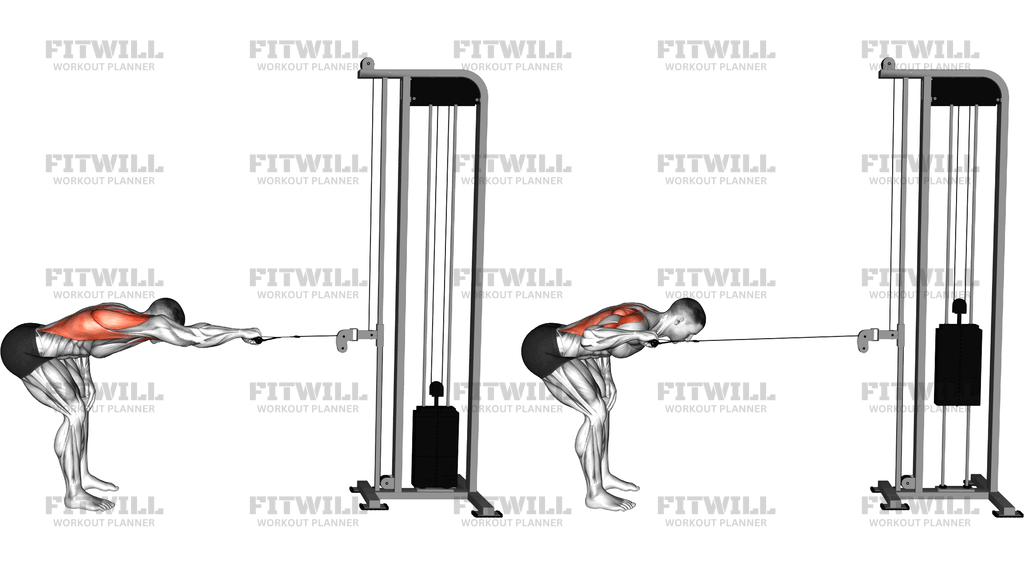
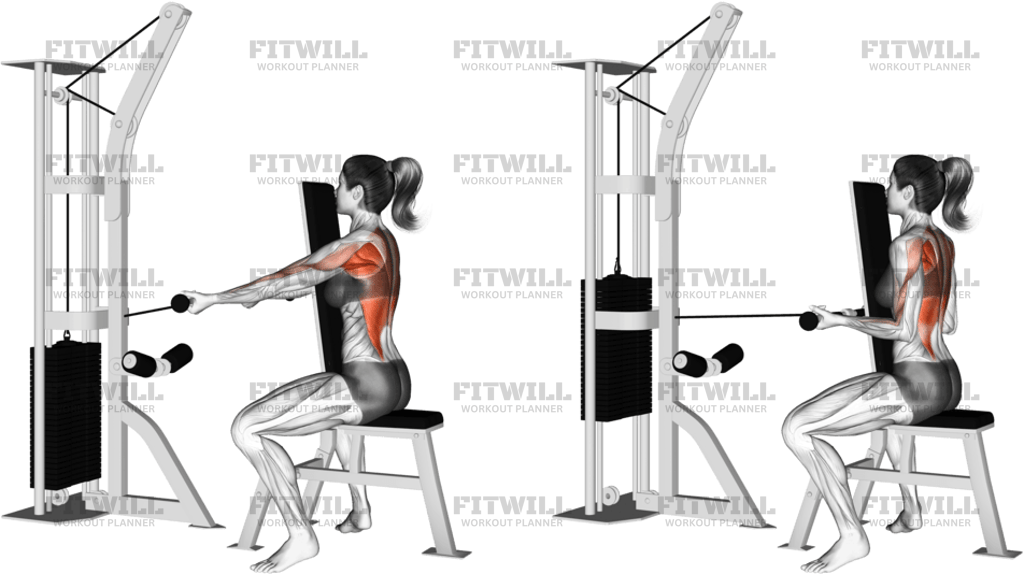
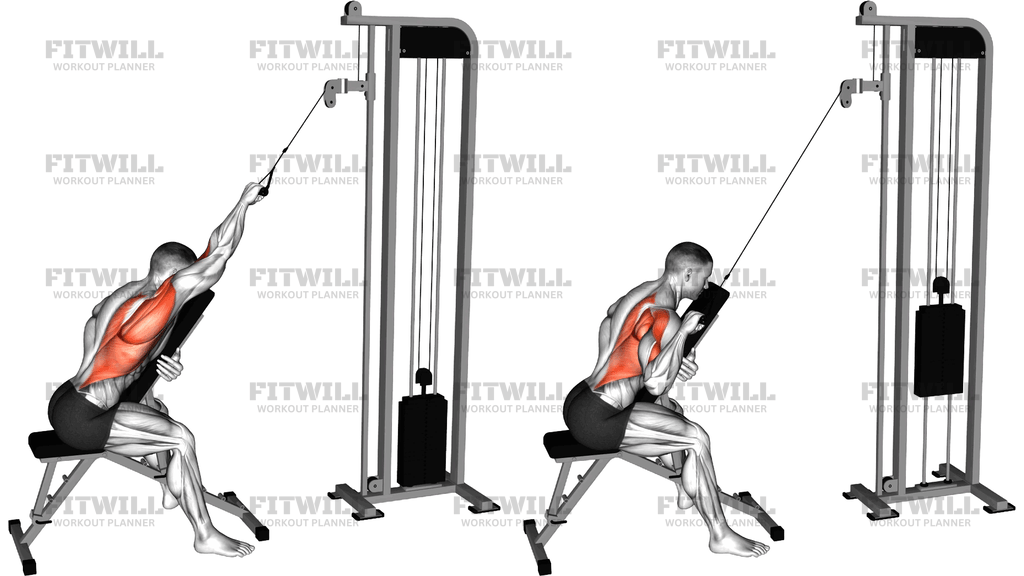
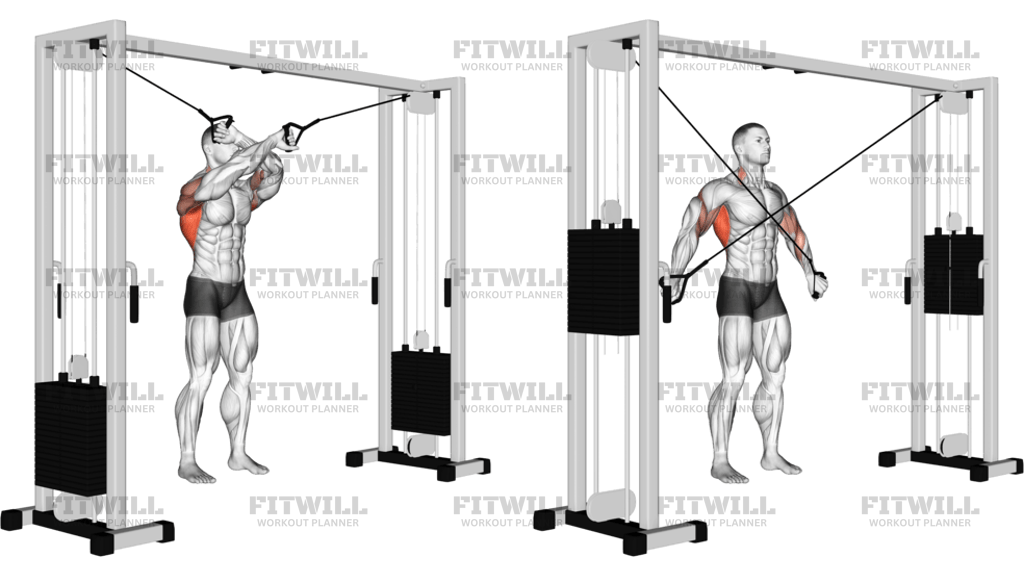
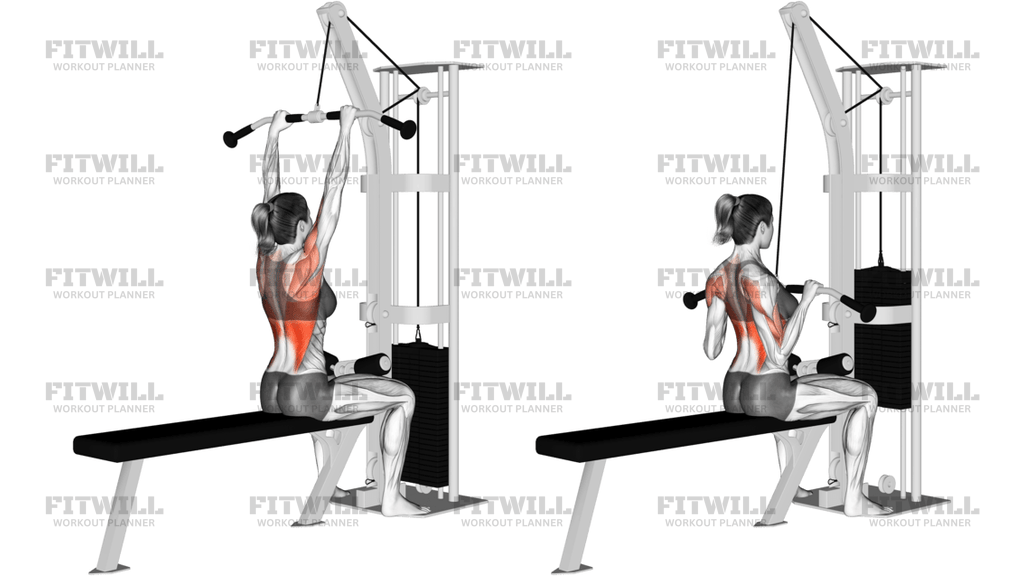
Set the cable to a low or mid row height and choose a stable stance or seated setup that lets you keep your ribs stacked and your shoulder down. Start with one arm extended and the torso still, then row the elbow back toward the hip line while keeping the chest square enough that the body does not twist through every rep. Return slowly to the reach position and reset the shoulder before the next pull.
Single-Arm Cable Rows work well as a main accessory in a back session, as a correction tool when one side feels weaker, or as a strict option when you want better control than a bilateral row gives you. They can also help you learn how much scapular movement you actually need, because the working side is easy to feel and easy to compare with the other side. Good reps are clean, symmetrical between sides, and free from torso swing.
If the body starts rotating to finish the pull, reduce the load and shorten the range a little. The goal is a solid one-arm row driven by the back, not a side-to-side twist with a handle attached.
[ Workout Log & Planner ]
Put your next workout in Fitwill
Keep your plan and training log ready when you are.


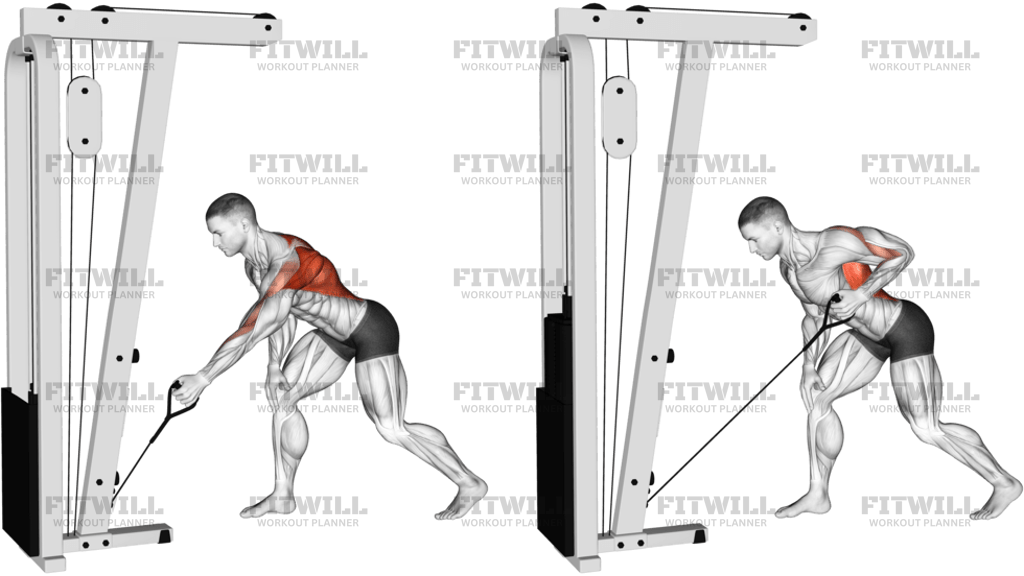
Instructions
- Set the cable to a low or mid row height and choose a stance or seated position that lets you stay balanced.
- Take the handle in one hand and start with that arm fully extended while your torso stays square and tall.
- Brace your core and keep the shoulder of the working side set down before you begin the first rep.
- Row the elbow back toward the hip or lower torso line instead of flaring it out wide.
- Squeeze the back briefly at the finish without twisting the body to get more range.
- Return the handle forward slowly until the arm is long again and the shoulder stays organized.
- Keep the cable path smooth and repeat the same pull on every rep before switching sides.
- After the set, repeat the same tempo and range on the other side so both sides match.
Tips & Tricks
- If the torso rotates hard to finish the row, the load is too heavy for a strict unilateral pull.
- Keep the shoulder of the working side down as the elbow drives back; shrugging usually means the back is losing the rep.
- The elbow should travel toward the hip line, not outward toward the shoulder, if you want the lat to stay involved.
- Match the same rep count and tempo on both sides so one arm does not get an easier version of the movement.
- A brief pause at the finish helps you feel whether the back is actually doing the work or whether momentum is taking over.
- Use the return phase to reset posture; if you rush the reach, the next rep starts crooked.
- A stable stance or seated position is more useful than trying to make the set feel harder by balancing too much.
- If the forearm fails before the back, reduce grip tension and think about moving the elbow instead of the hand.
Frequently Asked Questions
What are the main benefits of Single-Arm Cable Rows?
They improve unilateral control, help spot side-to-side imbalances, and make it easier to focus on one side of the back at a time.
What muscles do Single-Arm Cable Rows work?
They mainly work the lats and upper back, with the biceps, rear shoulders, and core helping stabilize the pull.
Should I twist with Single-Arm Cable Rows?
Minimal rotation is best if you want strict back targeting rather than a body-driven row.
Can beginners do Single-Arm Cable Rows?
Yes, they are beginner friendly as long as the load is light enough to keep the torso steady.
Is standing or seated better for Single-Arm Cable Rows?
Both can work, so choose the setup that lets you keep the cleanest pull and the least body sway.
How many reps should I do per side?
Use the same number of reps on both sides so the stronger arm does not get more work than the weaker one.
What is the most common mistake in Single-Arm Cable Rows?
Using torso swing or rotation to move heavier weight instead of rowing with the back.