Cable Lateral Pulldown With V-Bar
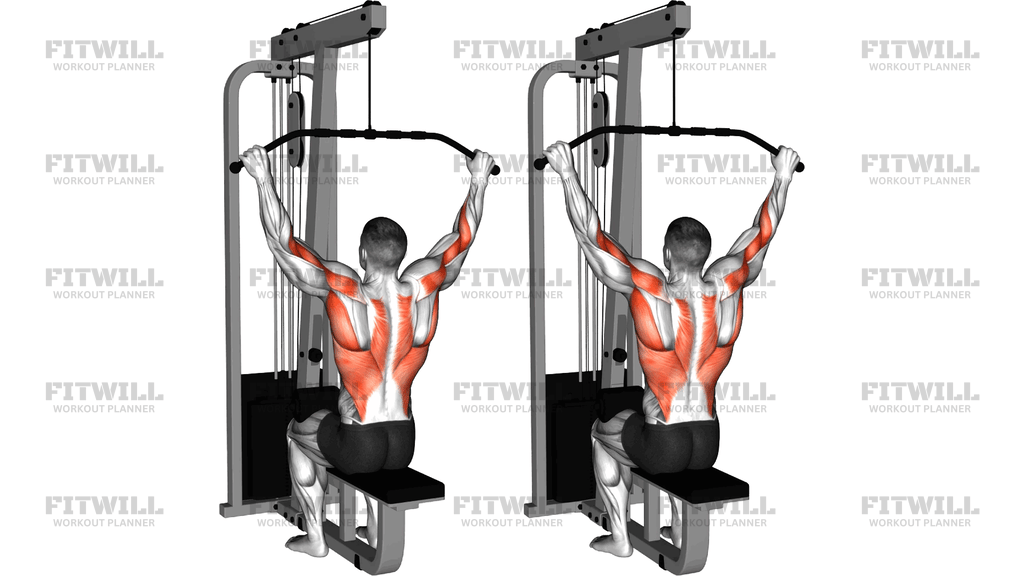
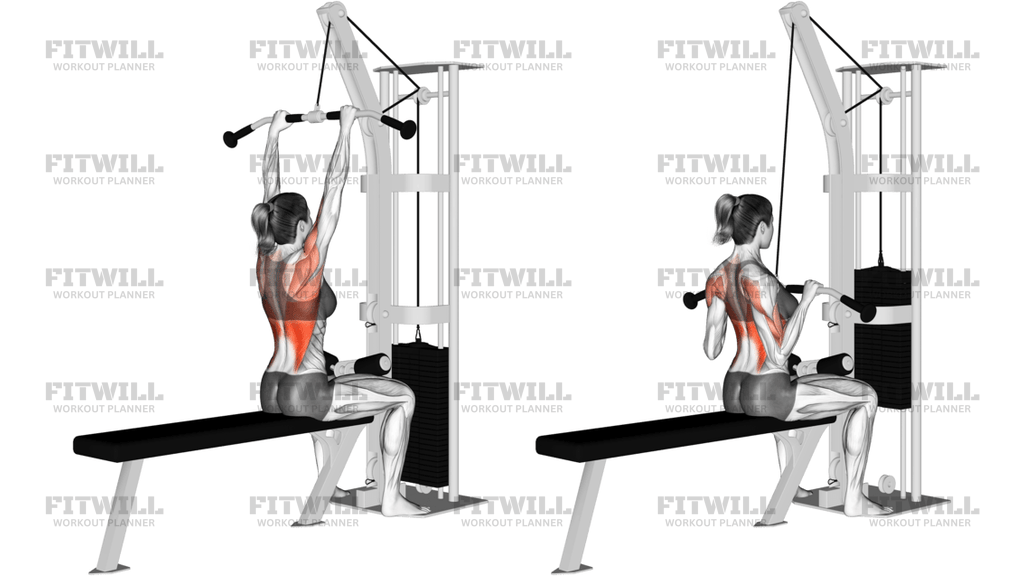
Cable Lateral Pulldown With V-Bar is a close-grip vertical pulling exercise that emphasizes the lats while also training the upper back, biceps, and forearms. The neutral V-bar keeps the hands close together and usually makes the pull feel smoother on the wrists and shoulders than a wide overhand bar. It is a practical back builder for lifters who want more control, a stronger shoulder-blade-down position, and a clean path from the top stretch to the lower chest.
The setup matters because the exercise starts with the arms overhead and the torso fixed against the pull of the cable. Sit tall on a bench or seat in front of the high pulley, plant both feet firmly, and take the V-bar with palms facing each other. Let the arms reach long overhead, then settle the ribs down, keep the chest lifted, and avoid turning the first rep into a body swing.
As you pull, think about driving the elbows down and slightly back while the hands stay attached to the handle. The handle should travel toward the upper chest or collarbone, not behind the neck, and the shoulders should stay away from the ears. Pause for a moment at the bottom when the lats are shortest, then return the bar under control until the arms are long again and the upper back stays organized.
Cable Lateral Pulldown With V-Bar is useful for hypertrophy work, accessory back training, and as a shoulder-friendly alternative when a straight bar feels awkward. It also teaches a useful pattern for keeping the torso steady while the arms move through a strong vertical pull. Keep the reps smooth, choose a load that lets you control the stretch, and stop the set when you have to lean back hard or shrug to finish the rep.
[ Workout Log & Planner ]
Put your next workout in Fitwill
Keep your plan and training log ready when you are.


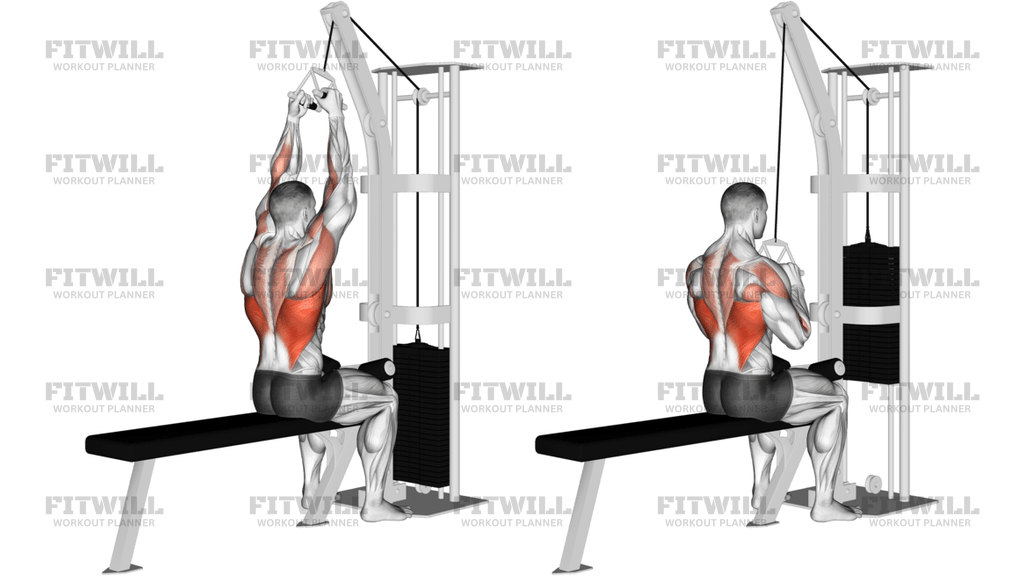
Instructions
- Sit on the bench or seat facing the high pulley and grip the V-bar with your palms facing each other.
- Plant both feet flat, brace your thighs against the seat or pad if your machine has one, and sit tall with the cable directly above you.
- Let your arms reach overhead, keep a slight bend in the elbows, and set your shoulders down away from your ears.
- Inhale, brace lightly through your midsection, and keep your chest lifted without arching your lower back.
- Pull the V-bar down toward your upper chest by driving your elbows down and slightly back.
- Keep your wrists straight and your neck long as the handle comes to the strongest part of the pull.
- Pause briefly with the handle near your upper chest and feel your shoulder blades move down and in.
- Inhale as you let the cable pull your arms back up in a slow, controlled return until your elbows are straight again.
- Reset your posture at the top, keep tension in the cable, and repeat for the planned number of reps before racking the handle carefully.
Tips & Tricks
- Keep the handle moving to the upper chest, not behind the neck, so the shoulders stay in a safer line of pull.
- Let the elbows travel down first; if your hands are doing all the work, the biceps will take over too soon.
- A small lean back is fine, but if your torso keeps swinging, the stack is too heavy.
- Do not let the wrists fold back as you squeeze the V-bar; a straight wrist keeps the pull cleaner.
- At the top, reach long without losing your rib position so the lats get a real stretch instead of the low back taking over.
- Pause for a brief squeeze at the bottom, but do not yank or bounce the handle off your chest.
- If your shoulders creep toward your ears, lighten the load and think about pulling them down before each rep.
- Use a slower return on the way up so the lats stay loaded instead of letting the cable slam the stack.
- Choose a seat height that keeps the cable path vertical over your shoulders; a poor setup makes the first pull awkward.
- Stop the set when you need momentum to finish the last few inches, because that usually means the load has outrun your control.
Frequently Asked Questions
What muscles does Cable Lateral Pulldown With V-Bar work most?
The lats are the main driver, with the upper back, biceps, and forearms helping to control the pull.
Is Cable Lateral Pulldown With V-Bar good for beginners?
Yes. The neutral grip is usually easy to learn, as long as you keep the torso still and use a light enough load to control the return.
Should the handle touch my chest on Cable Lateral Pulldown With V-Bar?
Bring it close to the upper chest or collarbone, but do not force it lower if that makes you lean back or lose shoulder position.
Why use a V-bar instead of a wide pulldown bar?
The V-bar keeps the hands neutral and closer together, which often feels friendlier on the wrists and makes it easier to drive the elbows down.
Should I lean back during Cable Lateral Pulldown With V-Bar?
Only slightly. A big lean turns it into a body swing and usually shifts tension away from the lats.
What is the biggest form mistake on Cable Lateral Pulldown With V-Bar?
Pulling with the arms only and shrugging the shoulders up instead of driving the elbows down and keeping the neck long.
Can I substitute another exercise if I do not have this handle?
A neutral-grip pulldown handle, close-grip pulldown bar, or a straight-bar pulldown can all work if they let you keep the same vertical pull path.
How many reps should I use for Cable Lateral Pulldown With V-Bar?
Most people use moderate-to-higher reps, such as 8-15, because the exercise responds well to steady tension and clean control.
Where should I feel Cable Lateral Pulldown With V-Bar?
You should feel the sides of the back working hardest, with the biceps and forearms assisting during the pull and return.