Cable Low Seated Row
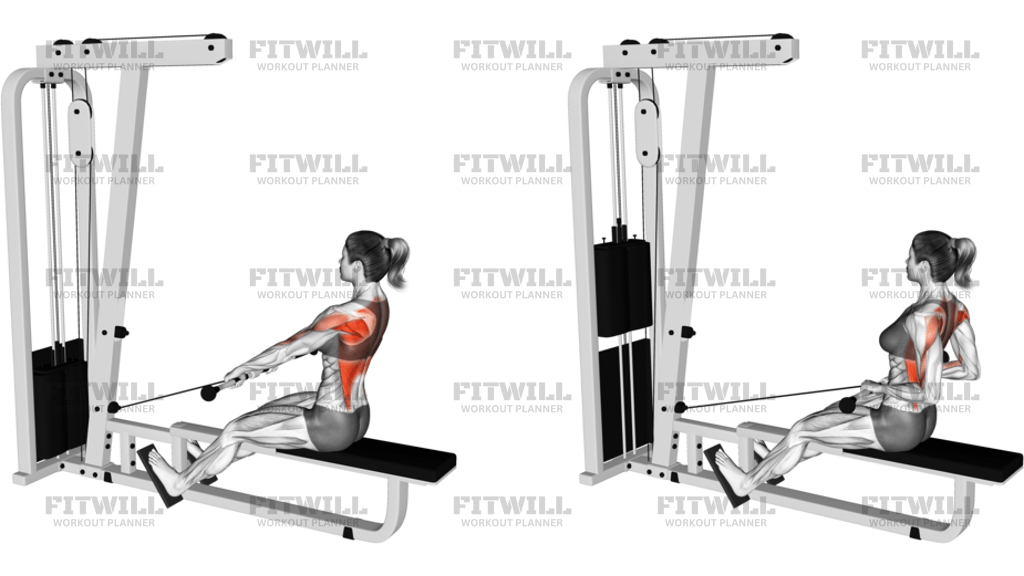
Cable Low Seated Row is a seated rowing exercise that uses a low pulley and handle attachment to train the back through a long, controlled pull. The low cable keeps tension on the muscles from the first inch of the rep, so the movement rewards good posture, steady breathing, and a clean elbow path more than big loads or body swing. It is a practical option when you want to build upper-back and lat strength without the setup changing rep to rep.
In the start position, you sit tall with your feet anchored and your arms reaching forward toward the low stack. That long reach is not a shruggy collapse; it is a controlled stretch through the shoulder blades while the spine stays organized. From there, the pull should travel back toward the lower ribs or upper waist, which is why seat distance and cable height matter. If you sit too close or let the torso drift, the line of pull gets sloppy and the row turns into a hip hinge or a lean-back.
The exercise is usually used for back-focused hypertrophy, accessory strength, or as a cleaner alternative to a heavier rowing variation when you still want continuous cable tension. It can also be useful in programs that need a seated pull with less lower-body involvement than a standing row. The main muscles doing the work are the lats, mid-back, rear shoulders, and elbow flexors, while the trunk and grip keep the body steady against the cable.
Good reps look smooth from reach to finish. The shoulders should travel from a forward reach into a strong pulled-back position without flaring high, and the elbows should stay close enough to the torso that the handle finishes in a consistent path every time. Avoid yanking the handle, overextending the low back, or turning the top position into a big chest pop. The row should feel deliberate, repeatable, and anchored to the seat.
If you are coaching this lift or using it in your own training, think of it as a tension exercise rather than a momentum exercise. A lighter load with the right seat distance and a controlled return usually produces a better back stimulus than a heavier stack you have to swing. Keep the neck relaxed, the ribcage stacked, and the return slow enough that the cable never goes slack. That combination makes the movement safer, cleaner, and more useful for progressive training.
[ Workout Log & Planner ]
Put your next workout in Fitwill
Keep your plan and training log ready when you are.


Instructions
- Sit on the bench facing the low pulley, plant your feet on the footrests, and hold the handle with both hands while your knees stay softly bent.
- Scoot back until the cable is taut and your arms are fully reached forward without rounding your lower back.
- Stack your ribs over your pelvis, keep your chest lifted, and let the shoulders reach slightly forward at the start instead of shrugging up.
- Brace your midsection, then pull the handle toward your lower ribs or upper waist by driving the elbows back along your sides.
- Keep your wrists neutral and your shoulders down as the handle passes your knees and thighs.
- Squeeze your shoulder blades back and slightly down at the finish, but do not lean far behind the seat to get extra range.
- Lower the handle under control until your arms are long again and the shoulder blades can move forward a little at the front.
- Inhale on the reach, exhale as you row, and keep every rep smooth and anchored to the seat.
- Stop the set if you start jerking the cable, losing posture, or shortening the return.
Tips & Tricks
- Set the seat distance so the handle reaches the front without locking you into a deep slump or forcing your knees into the stack.
- Finish the row by bringing the elbows back, not by pulling the shoulders up toward your ears.
- If the handle keeps drifting into your stomach, you are probably sitting too close or leaning back too much.
- Keep the return slow enough that the weight stack never crashes and the cable stays under tension.
- A brief squeeze at the back of the rep works better here than a long lean-back hold.
- Use a lighter load if your forearms take over before your back does.
- Keep the neck long and the chin gently tucked so the upper traps do not dominate the pull.
- Think about reaching forward through the shoulder blades at the start, then pulling them back and down on the row.
- If your low back feels the set more than your back muscles, reduce the load and sit taller.
Frequently Asked Questions
What muscles does Cable Low Seated Row work most?
It primarily trains the lats, mid-back, rear shoulders, and elbow flexors, with the core and grip helping you stay organized on the seat.
Where should the handle finish on each rep?
For most people it should finish around the lower ribs or upper waist, with the elbows moving back close to the torso.
Should I lean back to get more range?
A small torso angle is fine, but the row should not turn into a swinging lean-back. Keep the movement anchored to the seat.
How far forward should I reach at the start?
Reach far enough to feel the shoulder blades move forward, but keep the lower back neutral and avoid collapsing into a rounded posture.
Can beginners use this row?
Yes. It is a good beginner option if the load is light and the seat distance lets you row without jerking the stack.
Why use a low cable instead of a higher row setup?
The low pulley gives a long start position and keeps constant tension as you pull the handle toward your lower ribs.
What is the most common form mistake?
The biggest mistake is using body swing or a hard lean-back to finish the rep instead of controlling the handle with the back.
How should I breathe during the set?
Inhale as you reach forward, then exhale as you row the handle back and keep the trunk braced through the pull.