Cable Pulldown
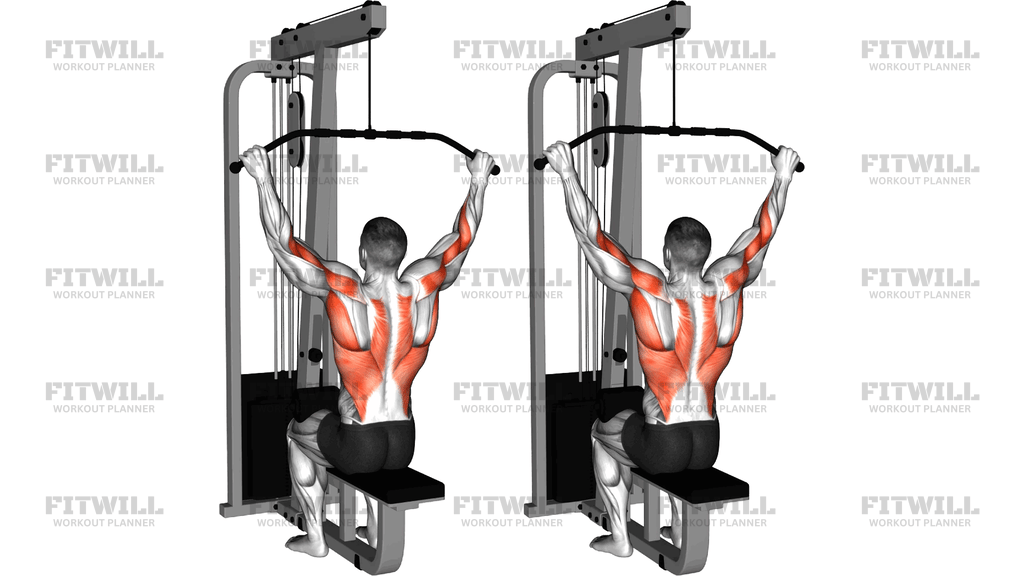
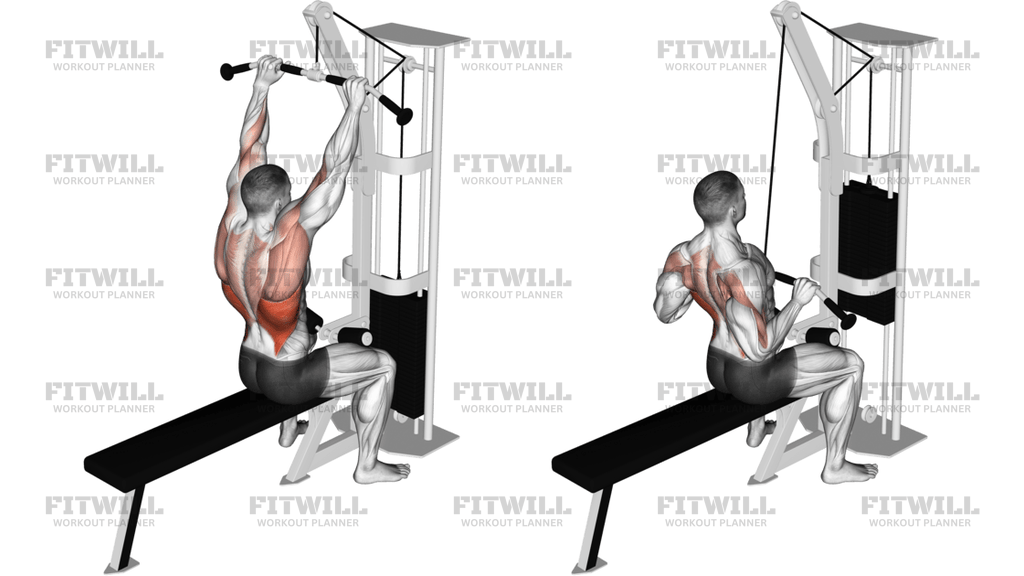
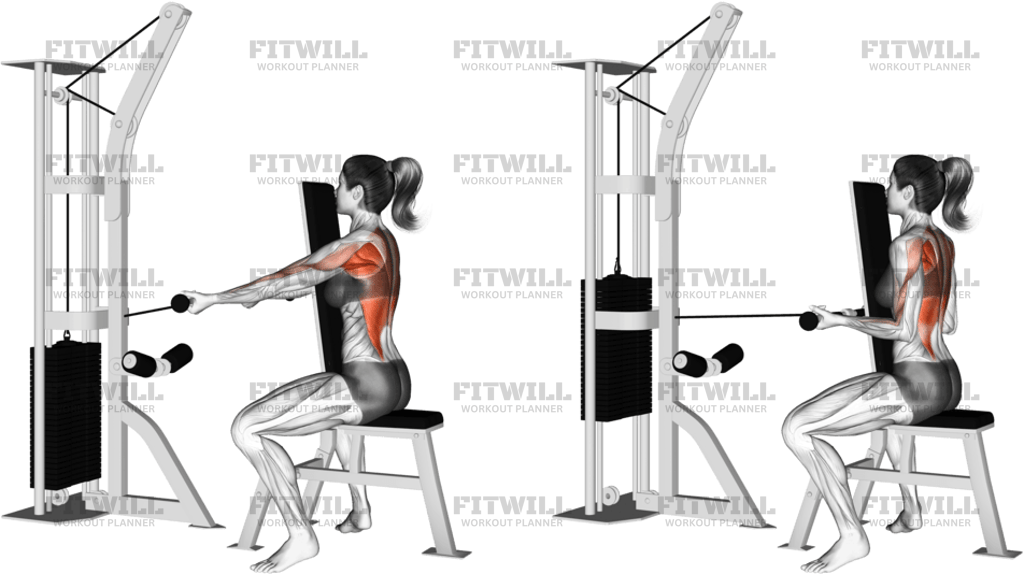
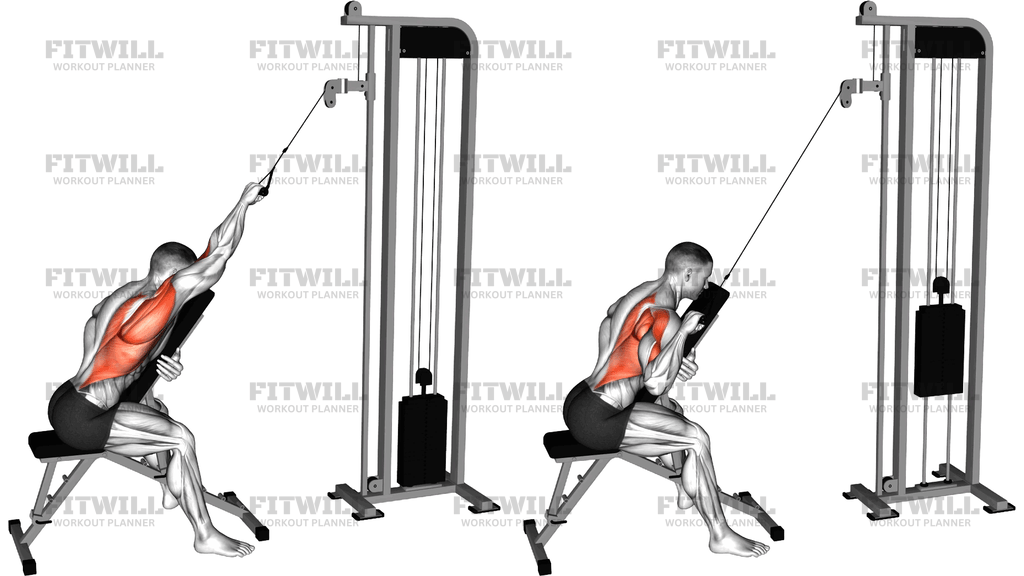
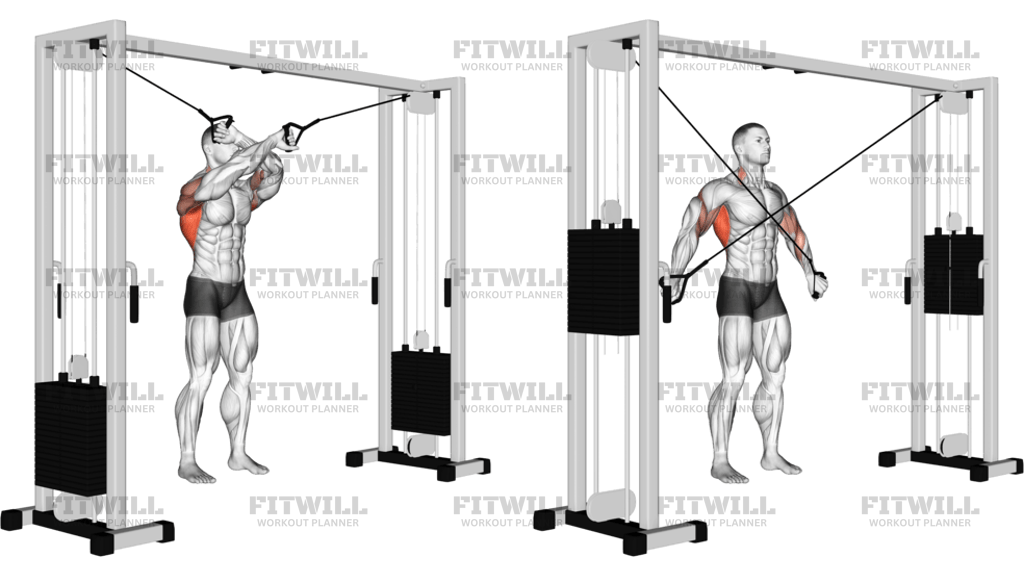
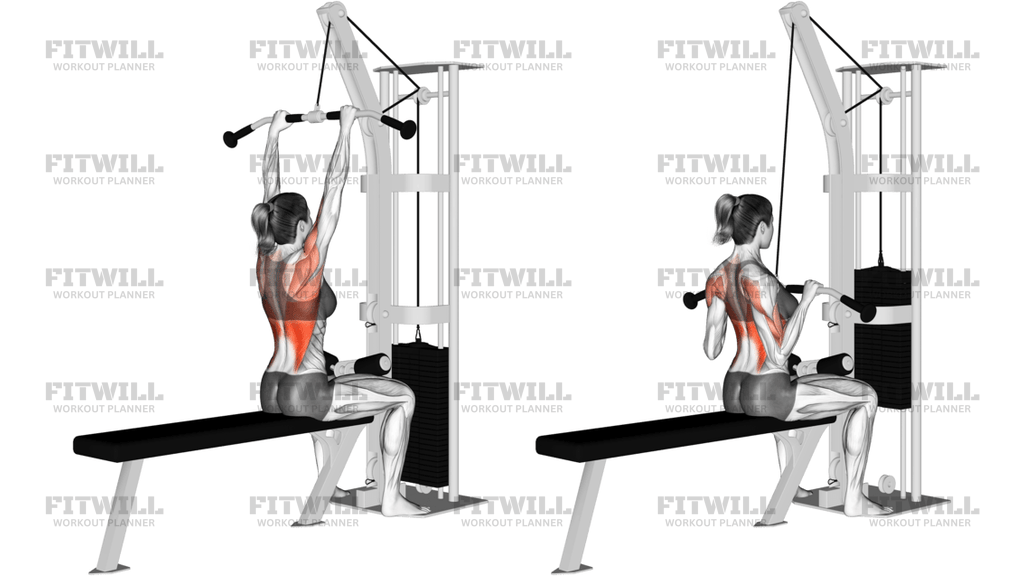
Cable Pulldown is a standard vertical pulling exercise that trains the back with a cable bar or handle and a controlled downward pull toward the upper body. The movement is a core lat pattern: the arms travel from overhead to the front of the chest while the torso stays organized and the shoulder blades move under control.
The main target is the latissimus dorsi, with the upper back, biceps, and rear shoulders supporting the pull. It works best when the chest stays tall, the shoulders stay down, and the elbows lead the motion instead of the hands simply dragging the attachment. That makes Cable Pulldown one of the most useful and scalable back exercises for building vertical pulling strength and clean lat engagement.
Sit at the pulldown station, secure your legs under the pads, and choose a grip that feels strong and shoulder-friendly. Start from a long overhead position with the core braced and the ribs stacked, then pull the elbows down and slightly back until the attachment reaches the upper chest. Pause briefly without shrugging, then return the bar or handle slowly to the top stretch while keeping the torso quiet.
Cable Pulldown works well as a main back accessory, a beginner-friendly vertical pull, or a pulldown pattern that can be adapted with different grips and attachments. It can also help bridge the gap toward pull-up strength because it teaches the same basic elbow-down, shoulder-down pulling action. Clean reps are smooth, repeatable, and controlled, with the finish staying in front of the body rather than drifting behind the neck.
If the body starts leaning back or the shoulders shrug at the top, reduce the load and keep the finish a little higher. The goal is a clean front pulldown that feels like the lats are pulling the elbows down, not like the torso is trying to win a tug-of-war with the stack.
[ Workout Log & Planner ]
Put your next workout in Fitwill
Keep your plan and training log ready when you are.


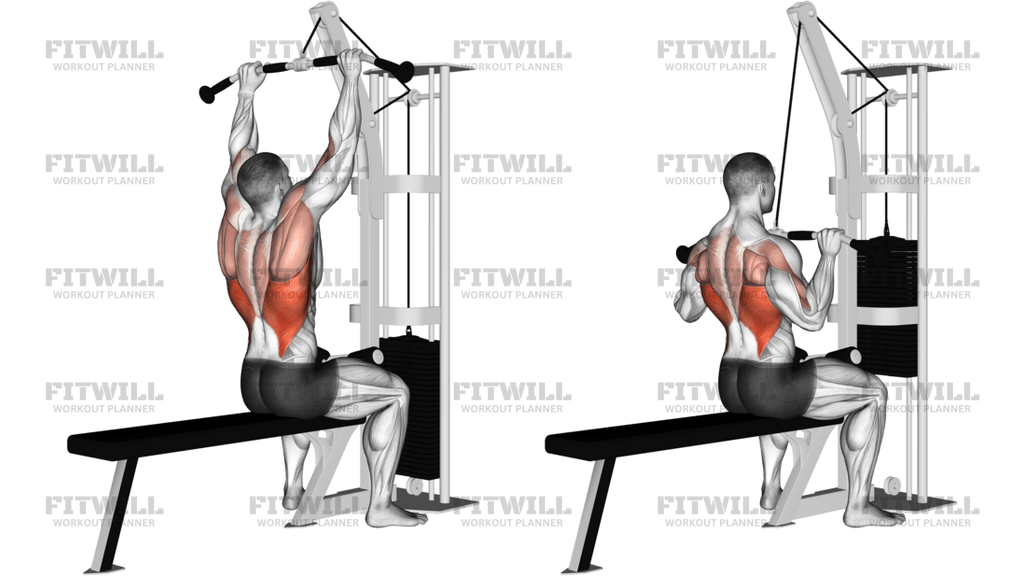
Instructions
- Sit at the pulldown station, secure your legs under the pads, and choose a grip that feels strong and shoulder-friendly.
- Start from a long overhead position with your chest tall and your core braced.
- Keep your shoulders down and your ribs stacked before the first pull.
- Pull the elbows down and slightly back to bring the bar or handle toward the upper chest.
- Pause briefly at the bottom without shrugging or leaning back hard.
- Return the attachment slowly to the top stretch while keeping the torso quiet.
- Keep the wrists neutral and the path smooth from rep to rep.
- Repeat for the planned reps, then let the bar settle before standing up.
Tips & Tricks
- Keep the finish in front of the body; behind-the-neck pulling is not the goal here.
- If you have to lean back hard to finish the rep, the load is too heavy or the setup is too loose.
- Lead with the elbows so the lats and upper back, not the hands, drive the pull.
- A controlled top stretch matters, but only if the shoulders stay down and the torso stays organized.
- Keep the wrists stacked over the bar or handle so the forearms do not take over.
- Different attachments can shift the feel, so use the one that lets you keep the cleanest elbow path.
- Exhale as the bar comes down and inhale on the return so the torso does not puff forward to help.
- A moderate load done cleanly will usually build more useful pulling strength than a heavy, swingy set.
Frequently Asked Questions
What muscles does Cable Pulldown work?
It mainly works the lats, with the upper back, biceps, and rear shoulders helping support the pull.
Is Cable Pulldown good for beginners?
Yes, it is very beginner friendly because the load and grip can be adjusted easily.
What grip should I use on Cable Pulldown?
Use the grip or attachment that feels strong and shoulder-friendly while still letting you pull cleanly to the front.
Can Cable Pulldown improve pull-ups?
Yes, it can build similar vertical pulling strength and help you practice the elbow-down pattern.
What is the most common mistake in Cable Pulldown?
Leaning back too far or using body swing instead of a controlled vertical pull.
Should I pull behind the neck in Cable Pulldown?
Most lifters should pull to the front of the body instead of behind the neck.
What rep range works well for Cable Pulldown?
Moderate reps are usually a good fit because the movement should stay controlled and repeatable.