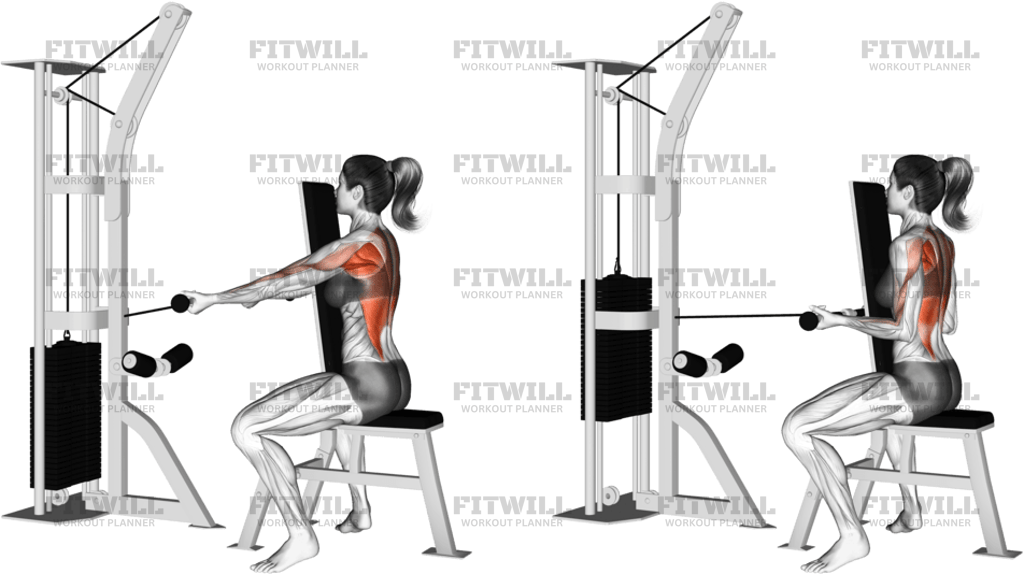
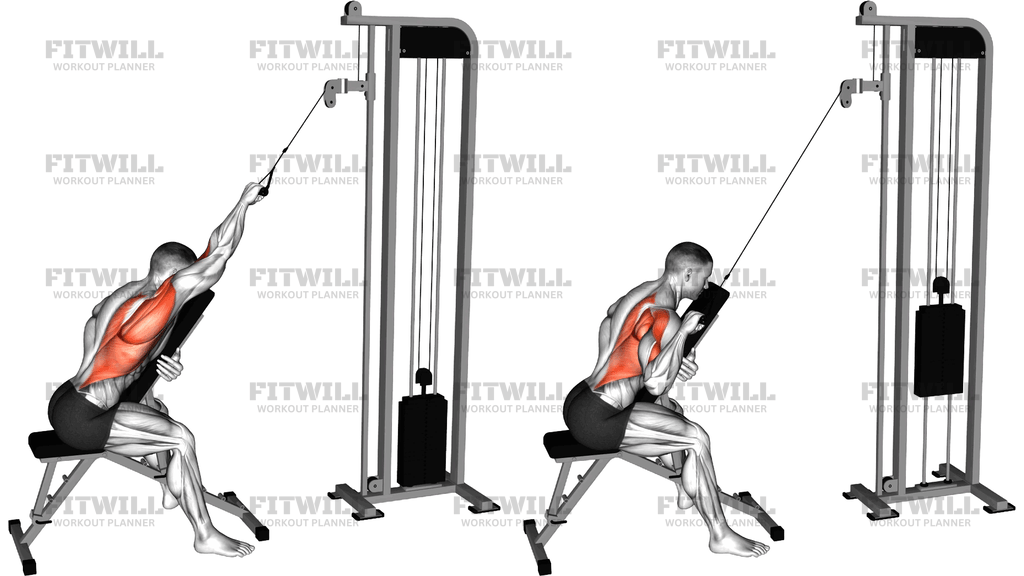
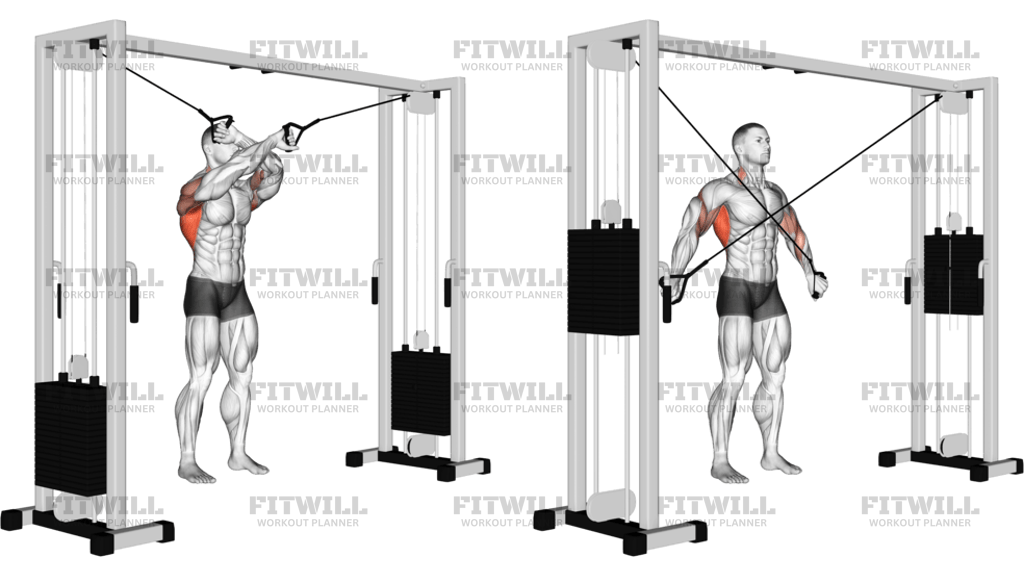
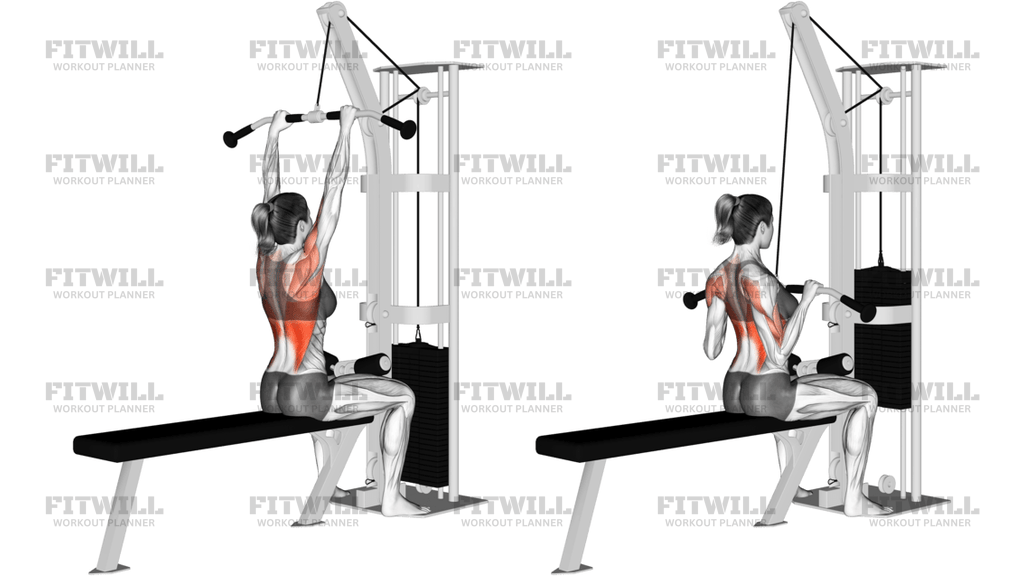
Cable Rear Pulldown
Cable Rear Pulldown is a lat-focused vertical pull that uses a slightly different line of pull to keep the shoulders and upper back organized while the lats do the main work. The rearward feel comes from the body position and the path of the elbows, which makes the exercise useful when you want a pulldown variation that feels a little different on the shoulders than a standard front pulldown.
The primary target is the latissimus dorsi, with the upper back, biceps, and rear shoulders assisting the pull. It works best when the shoulders stay depressed, the neck stays neutral, and the elbows travel in the intended rearward line without turning the rep into a big sway. That makes Cable Rear Pulldown a good option for lat development, controlled vertical pulling, and shoulder-friendly variation work.
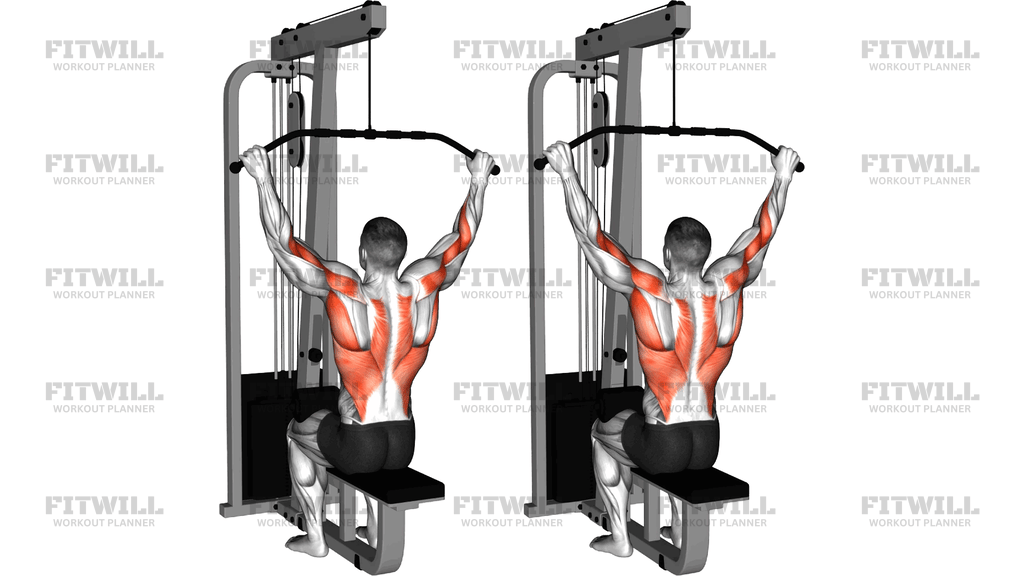
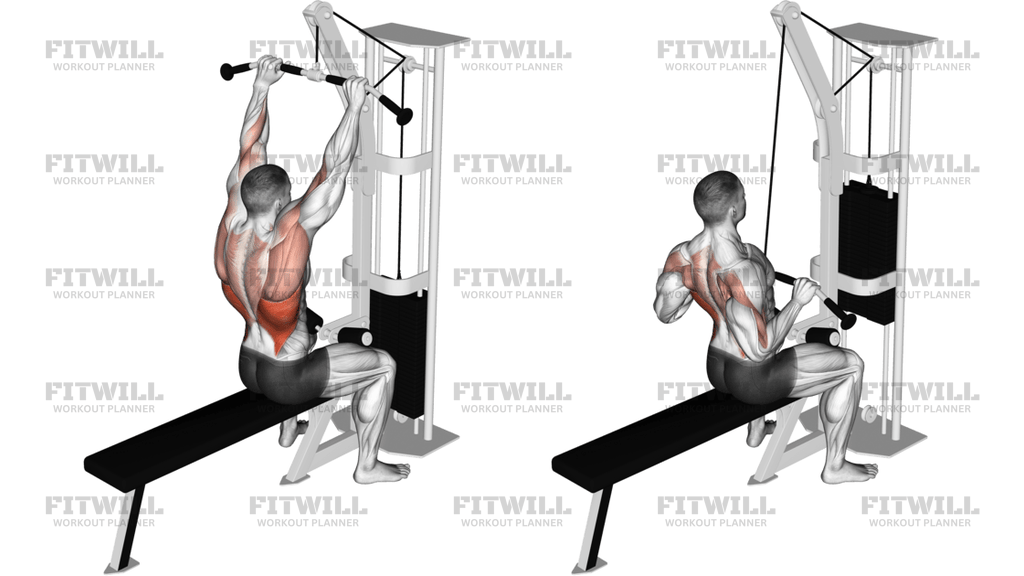
Set a high pulley with the pulldown attachment and take a seated or kneeling position that lets you start with the arms extended and the torso organized. Pull the elbows down along the rearward path toward the chosen finish point, pause briefly at the contraction, and return slowly to the top stretch without using momentum or forcing the shoulders into a painful position.
Cable Rear Pulldown works well as a back accessory, a variation to keep pulldown training from feeling repetitive, or a lower-load way to practice a different vertical pulling angle. It is not meant to be a wild behind-the-neck yank; the path should still feel controlled and joint-friendly. Good reps are smooth, repeatable, and deliberate, with the elbows leading and the torso staying quiet.
If the shoulders pinch or the load makes you lose control, reduce the weight and shorten the range. The goal is a clean rear-path pulldown that still feels like a lat exercise first and foremost.
[ Workout Log & Planner ]
Put your next workout in Fitwill
Keep your plan and training log ready when you are.


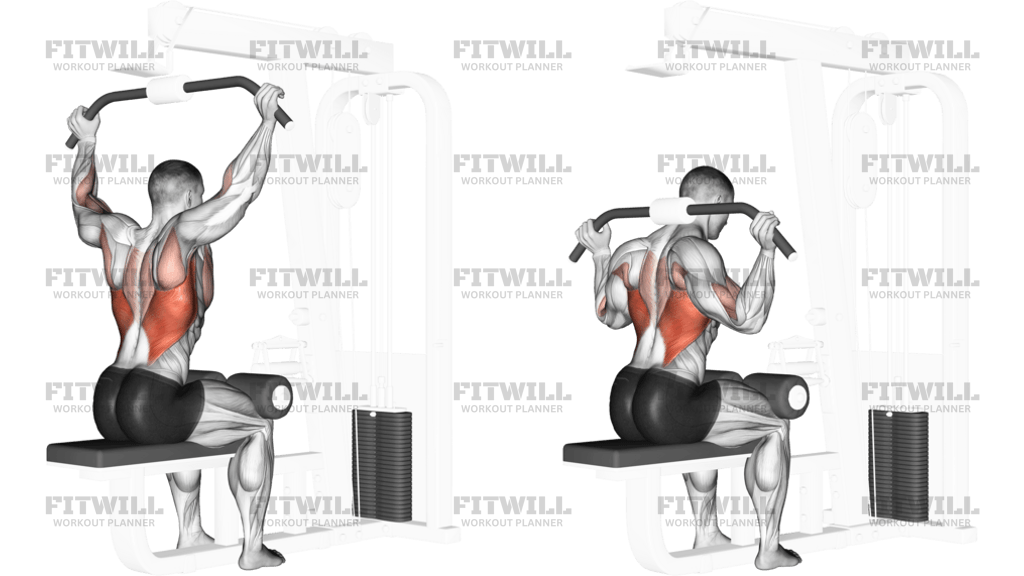
Instructions
- Set a high pulley with the pulldown attachment and take a seated or kneeling position that lets you start tall.
- Begin with your arms extended and your shoulders set down.
- Keep your chest lifted and your neck neutral before the first pull.
- Pull the elbows down along the rearward path toward the chosen finish point.
- Pause briefly at the contraction without jerking or shrugging.
- Return slowly to the top stretch while keeping the torso quiet.
- Keep the path smooth and repeatable from rep to rep.
- Repeat for the planned set, then let the attachment settle before standing up.
Tips & Tricks
- If the shoulders shrug or pinch, the load is too heavy or the finish point is too aggressive.
- Lead with the elbows so the lats can control the pull instead of the hands doing all the work.
- Keep the neck long and neutral to stop the upper traps from taking over.
- The rearward path should feel deliberate, not like a fast yank behind the body.
- Use a moderate load that lets the top stretch stay under control.
- If the exercise feels awkward, shorten the range and keep the shoulder position cleaner.
- The return matters as much as the pull; let the cable bring you back slowly without losing posture.
- A good rear pulldown should still feel like a lat exercise, even with the altered line of pull.
Frequently Asked Questions
What muscles does Cable Rear Pulldown work?
It mainly works the lats, with the upper back, biceps, and rear shoulders helping support the pull.
How is Cable Rear Pulldown different from a regular pulldown?
The pull path is a little different and can change how the shoulders and lats feel through the rep.
Can beginners do Cable Rear Pulldown?
Yes, as long as they keep the load light and the range controlled.
Should I pull behind the neck in Cable Rear Pulldown?
Only if it feels comfortable and is coached well; most lifters are better off keeping the path more controlled and friendly to the shoulders.
What is the most common mistake in Cable Rear Pulldown?
Overloading the movement and losing shoulder control.
What if my shoulders pinch during Cable Rear Pulldown?
Adjust the grip or path and reduce the load immediately.
Can Cable Rear Pulldown replace rows?
It complements rows well, but it does not replace horizontal pulling patterns.