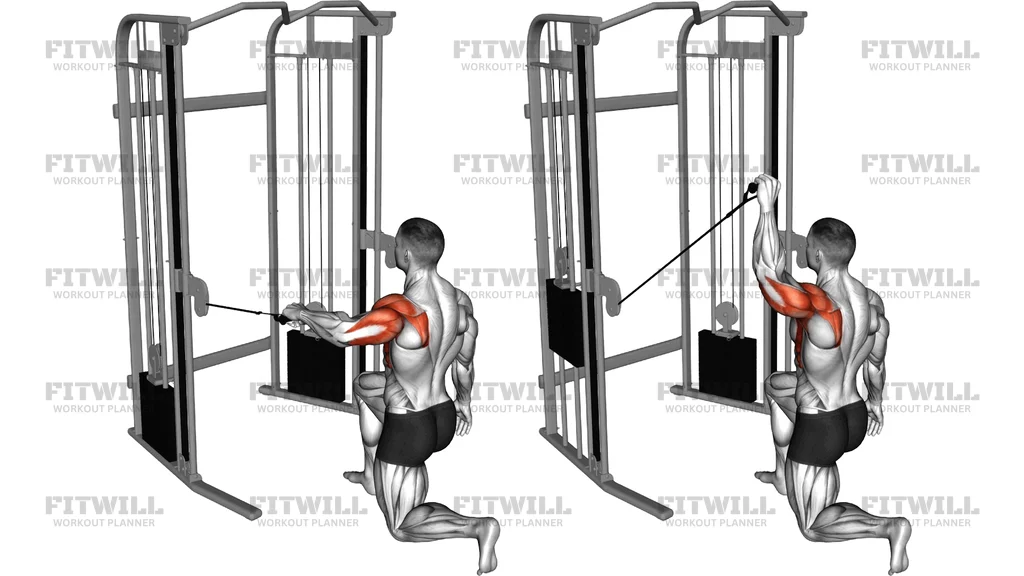
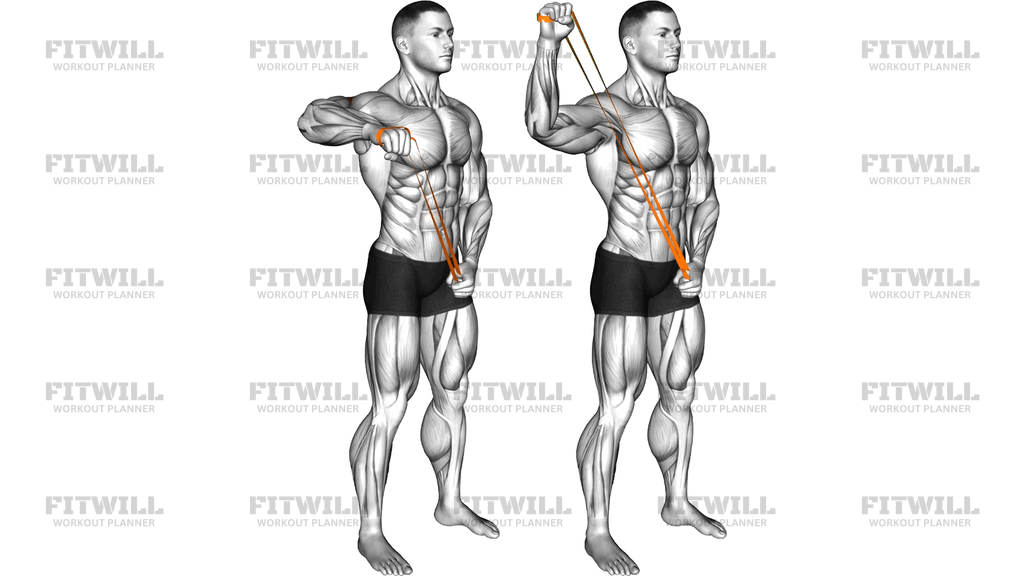
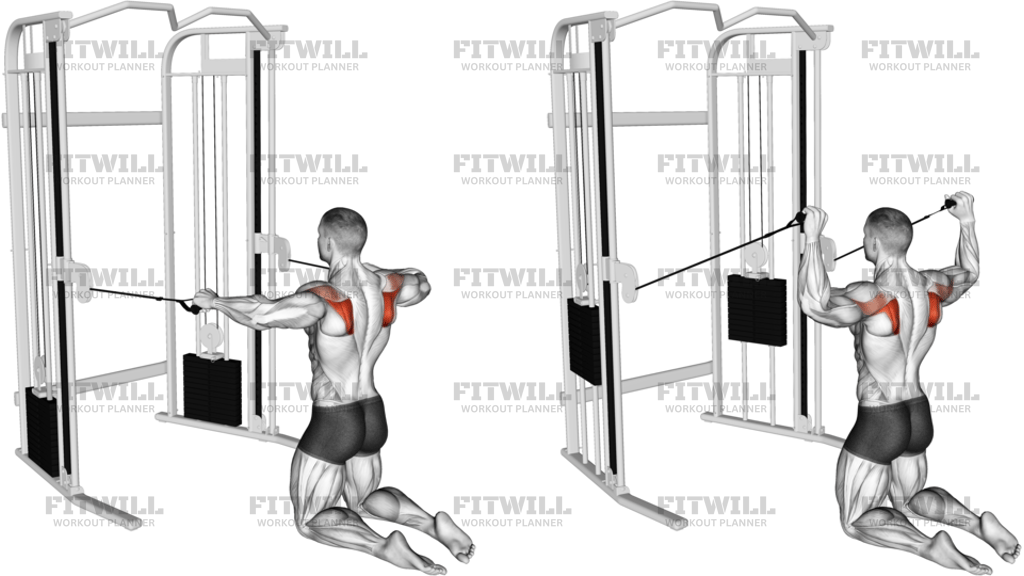
Cable Seated Shoulder Internal Rotation
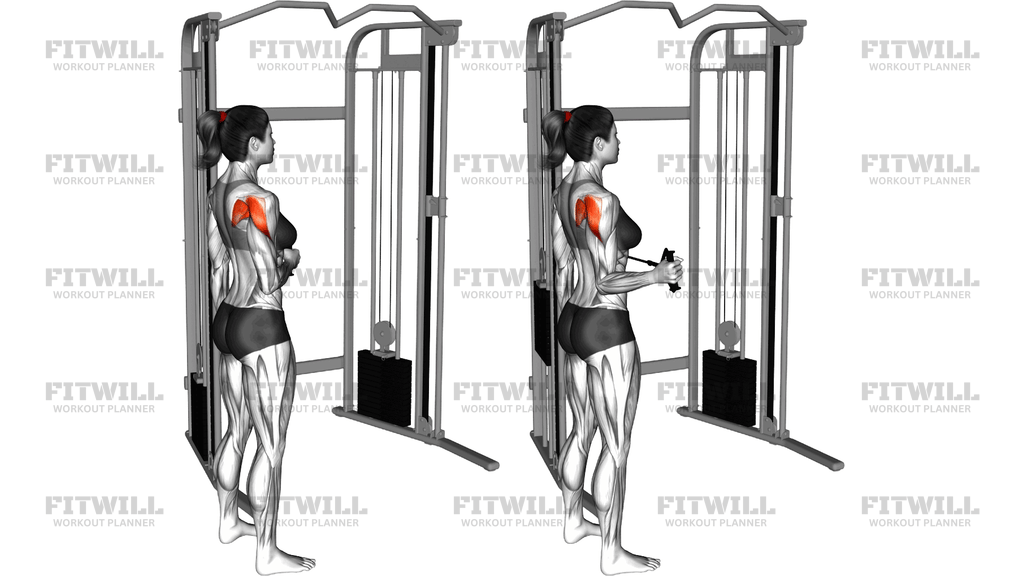
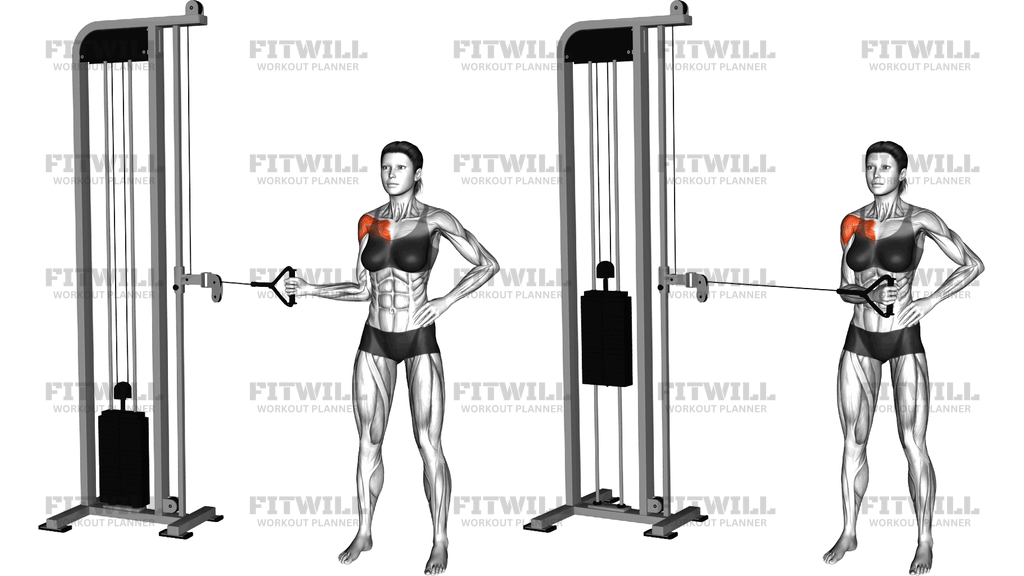
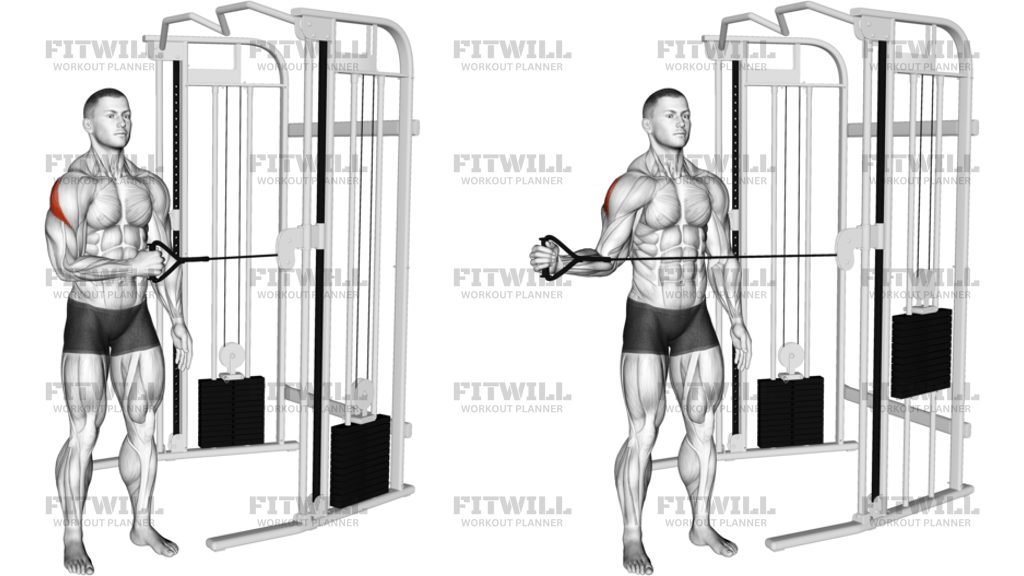
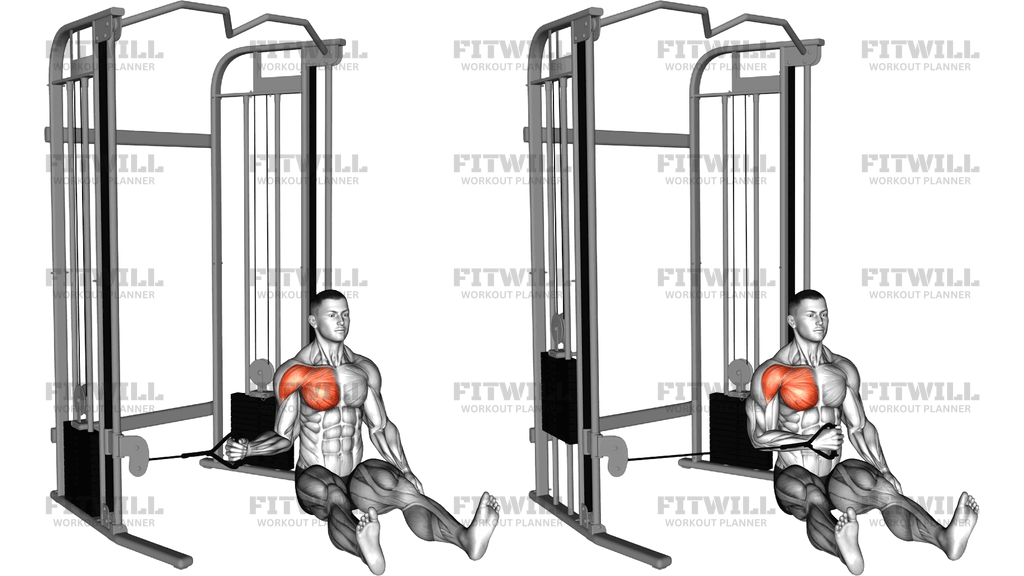
Cable Seated Shoulder Internal Rotation is a low-load rotator cuff exercise that trains shoulder internal rotation while the arm stays bent at roughly ninety degrees and the body stays supported. The seated setup makes the motion easier to control, which is important because the goal is shoulder precision rather than moving a lot of weight.
The main target is the subscapularis, with the pectoralis major, latissimus dorsi, and core helping stabilize the position. It works best when the elbow stays close to the side or supported, the torso stays quiet, and the forearm rotates inward smoothly instead of the shoulder hiking up or the wrist doing the work. That makes Cable Seated Shoulder Internal Rotation useful for rotator cuff control, rehab-style work, and very precise shoulder preparation.
Set the cable at elbow height, sit in a stable position, and hold the handle with the elbow bent to about ninety degrees. Start from a neutral shoulder rotation, then rotate the forearm inward across the body with a short, controlled range. Pause briefly near the end, return slowly to the start, and keep the motion small enough that the shoulder stays organized the whole time.
Cable Seated Shoulder Internal Rotation is often used in warmups, prehab work, or rehab-style programs where light resistance and control matter more than load. It can be valuable for lifters who want to train shoulder rotation without adding stress from bigger compound lifts. Good reps are smooth, quiet, and deliberate, with no body sway and no urge to chase a bigger range than the shoulder can control cleanly.
If the shoulder pinches or the torso starts helping, reduce the load and shrink the range. The goal is a strict internal-rotation drill that feels controlled and pain-free.
[ Workout Log & Planner ]
Put your next workout in Fitwill
Keep your plan and training log ready when you are.


Instructions
- Set the cable at elbow height and sit in a stable position.
- Hold the handle with your elbow bent about ninety degrees.
- Keep the elbow close to your side or lightly supported before starting.
- Start from neutral shoulder rotation with the torso still.
- Rotate the forearm inward across the body with a smooth, small motion.
- Pause briefly at the end range without shrugging the shoulder.
- Return slowly to the start position while keeping the elbow fixed.
- Repeat for the planned reps on each side with the same range and tempo.
Tips & Tricks
- Use very light resistance; this is a control exercise, not a strength test.
- Keep the elbow anchored in place so the shoulder rotation stays isolated.
- If the shoulder hikes up, reduce the load and shorten the range immediately.
- The hand and forearm should rotate, but the torso should stay quiet.
- Work only in a pain-free range and stop short of any pinchy end position.
- Slow reps are better here because they make the rotator cuff do the actual work.
- Match both sides carefully so the weaker side gets the same quality of movement.
- If the setup feels awkward, adjust the elbow support before adding more load.
Frequently Asked Questions
What muscle does Cable Seated Shoulder Internal Rotation target most?
It mainly targets the subscapularis, which is the key internal rotator of the shoulder.
Is Cable Seated Shoulder Internal Rotation a rehab exercise?
Yes, it is commonly used in rehab and prehab contexts.
Should I go heavy on Cable Seated Shoulder Internal Rotation?
No, this is usually trained with low load and precision.
Can beginners do Cable Seated Shoulder Internal Rotation?
Yes, especially with coaching and very light resistance.
What if shoulder pain appears during Cable Seated Shoulder Internal Rotation?
Stop, reduce the range and load, and reassess the technique before continuing.
Why use a seated position for this exercise?
It helps isolate shoulder rotation and limits body compensation.
What rep range works well here?
Higher controlled reps are often used because the load should stay very light.