Cable Side Bend
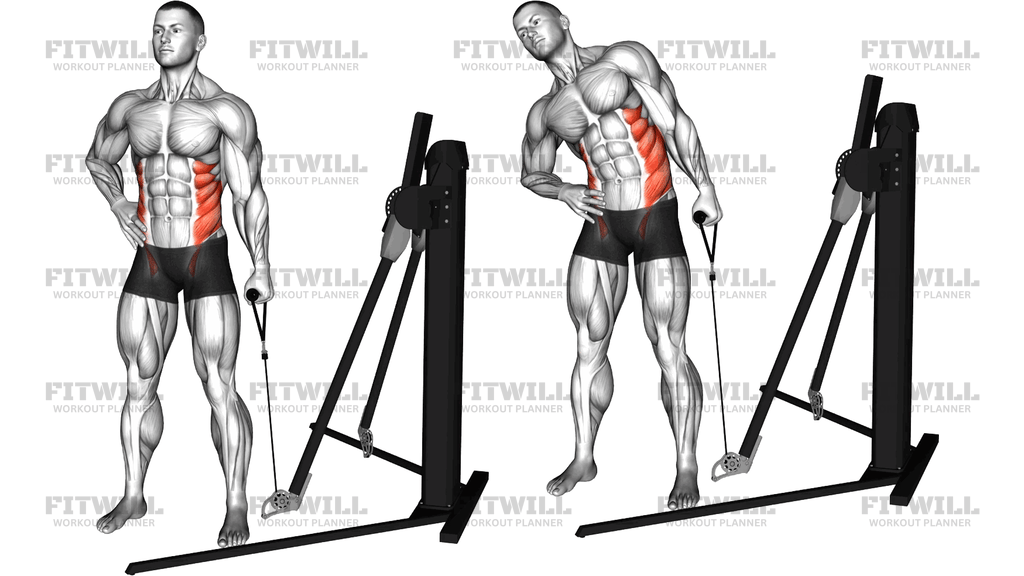
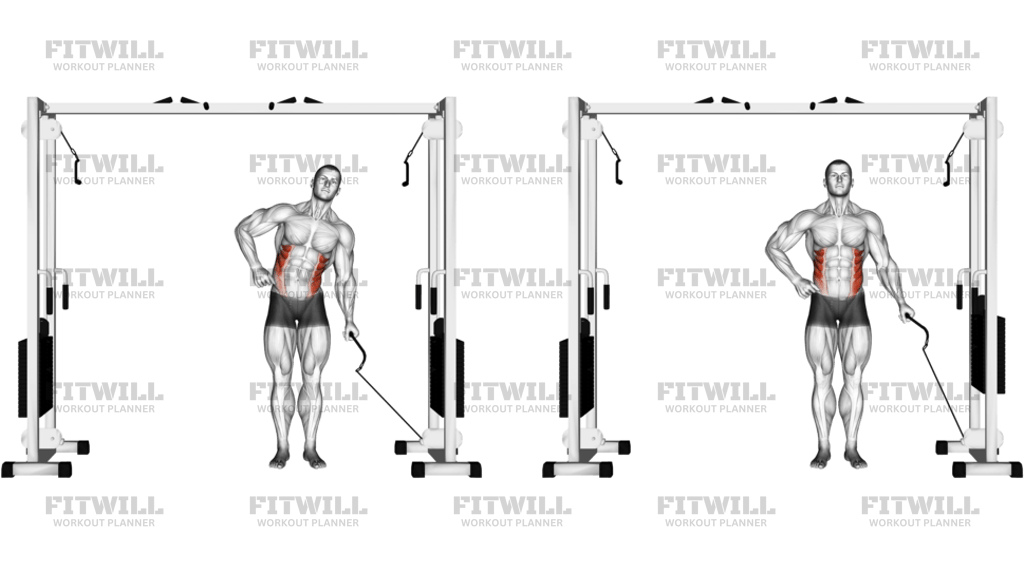
Cable Side Bend is a direct oblique exercise that trains lateral trunk flexion under steady cable tension. It is simple in appearance, but the value comes from how cleanly you can keep the ribcage and pelvis stacked while the torso bends to one side. When the rep is good, the waist shortens on the working side, the hips stay mostly square, and the cable keeps the obliques active all the way through the return.
The main target is the external obliques, with the rectus abdominis, erector spinae, and gluteus medius helping stabilize the movement. That makes the exercise useful when you want the midsection to work as a brace and a mover at the same time. It can help build stronger side-bending control, but it also rewards patience because the benefit drops quickly if the set turns into a lean, a twist, or a fast swing of the torso.
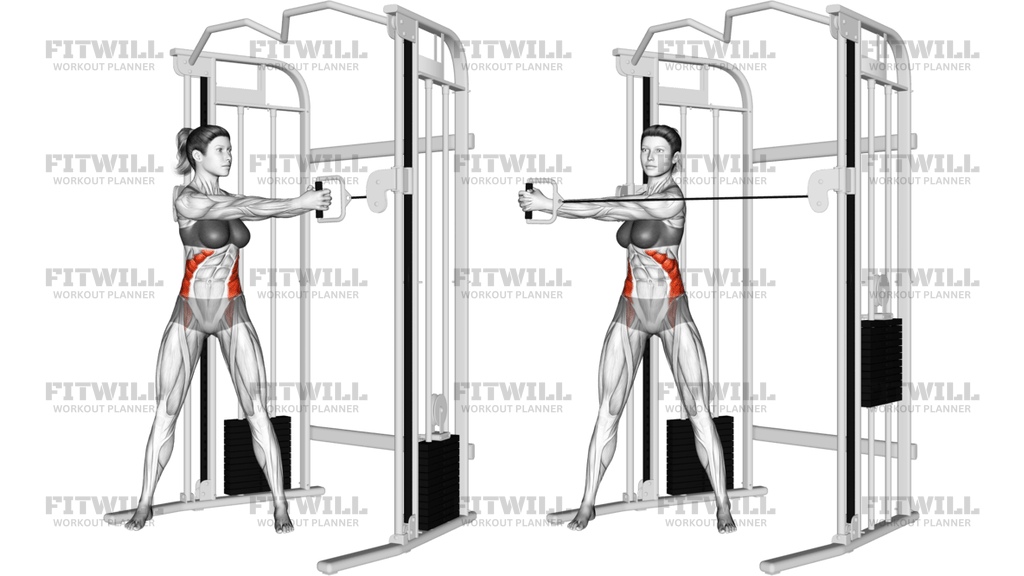
Set the cable to a height that lets the handle line up with your torso and stand sideways to the machine with your feet about shoulder width apart. Grip the handle, stack the ribs over the pelvis, and feel the standing side of your body brace before the first rep. The starting position should feel tall and organized, not stretched out or collapsed. If your stance is too narrow or your shoulders drift forward, the exercise becomes harder to control than it needs to be.
From there, bend the torso toward the loaded side in a smooth arc. The motion should feel like the waist is shortening and the ribs are gliding toward the hip, not like the body is folding forward or spinning. Pause briefly in the shortened position, then return slowly to upright. Keep the head and chest quiet, because extra motion in the upper body usually shows up as lost tension in the obliques and a noisier rep overall.
Cable Side Bend fits well as an accessory core movement, especially after compound lifts or in a focused trunk-training block. It is also a good option when you want direct oblique work without using a machine that locks the path. Use a controlled range that you can repeat cleanly on both sides, and let the set end when posture starts to change. A smaller, stricter side bend usually trains the waist better than a bigger rep that turns into momentum.
[ Workout Log & Planner ]
Put your next workout in Fitwill
Keep your plan and training log ready when you are.


Instructions
- Set the cable handle to a height that lines up well with your torso.
- Stand sideways to the machine with your feet about shoulder width apart.
- Grip the handle and stack your ribs over your pelvis before the first rep.
- Keep your chest tall and your shoulders relaxed.
- Brace your core so the trunk stays organized through the whole movement.
- Bend the torso toward the loaded side in a smooth side arc.
- Pause briefly when the working side waist feels shortened.
- Return slowly to upright without twisting or leaning forward.
- Repeat for the planned reps, then switch sides and match the work.
Tips & Tricks
- Choose a load that lets you keep the torso clean and steady from start to finish.
- Think about shortening the side waist, not reaching for a bigger lean.
- Keep the hips and chest facing forward so the rep stays in the side plane.
- Exhale as you bend to help the ribs move without losing trunk control.
- If you feel the lower back taking over, reduce range before you reduce effort.
- A brief pause in the bottom position makes the obliques easier to feel.
- Let the return phase be slow enough that the cable never yanks you upright.
- Match the rep quality on both sides instead of chasing a bigger side-to-side stretch.
Frequently Asked Questions
What does Cable Side Bend target most?
It mainly targets the external obliques on the side of the waist.
Should I bend very deep?
No, use only as much range as you can control while keeping the torso stacked and the movement clean.
Can I use one hand only?
Yes, single-handle execution is the standard version for most people.
Is Cable Side Bend good for beginners?
Yes, as long as the load is light and the torso stays controlled instead of collapsing sideways.
Why do I feel my lower back?
Usually because the load is too heavy, the range is too large, or the core brace is not staying set.
How should I breathe?
Exhale as you bend and inhale as you return to standing tall.
Should both sides be trained equally?
Yes, training both sides evenly helps keep the torso balanced.
What is the biggest mistake to avoid?
Letting the movement turn into a twist, a forward lean, or a fast swing through the bottom.