Cable Side Bend Crunch Bosu Ball
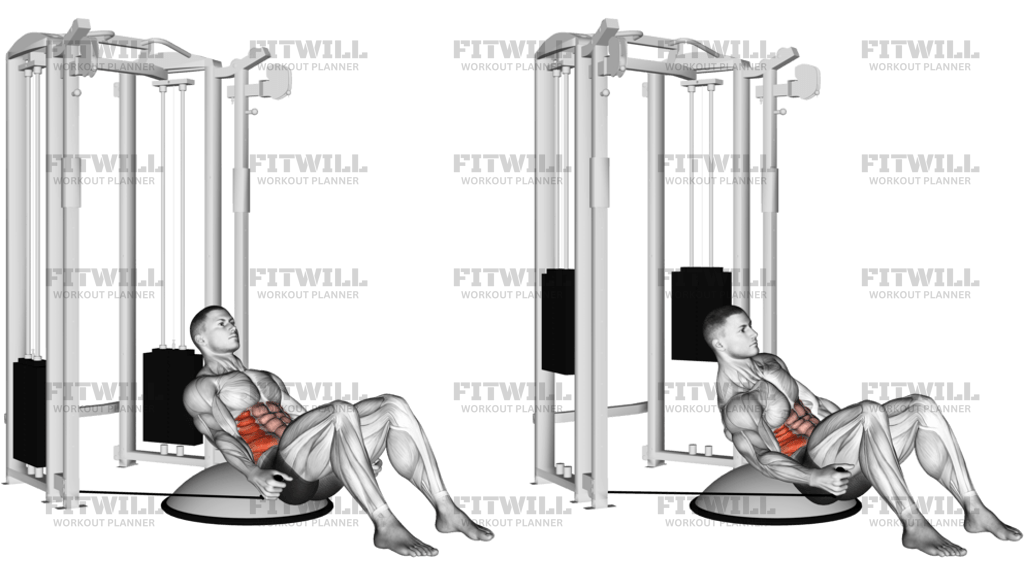
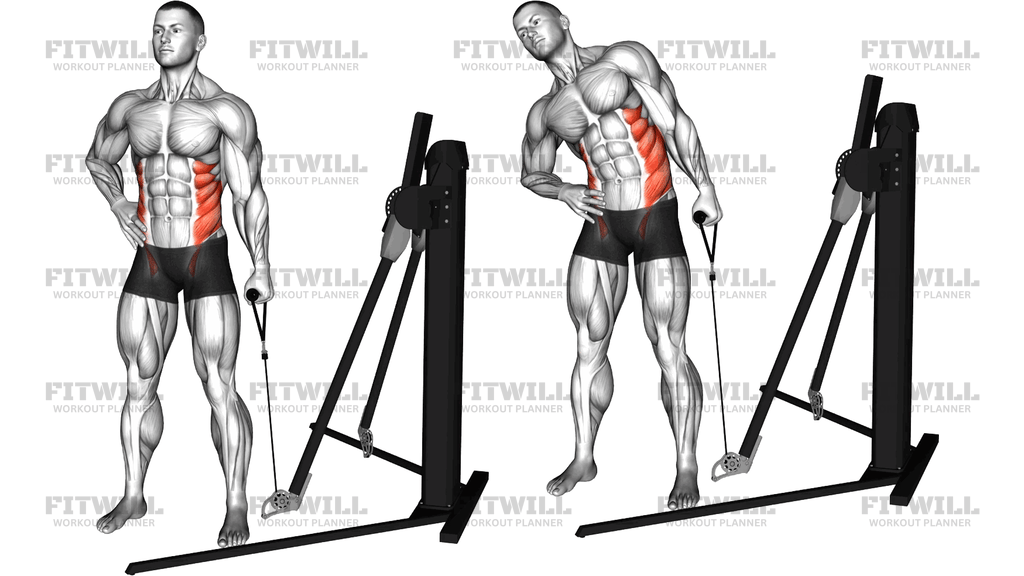
Cable Side Bend Crunch Bosu Ball is a loaded oblique exercise that combines a cable side bend with a compact crunch pattern while the BOSU ball adds an extra balance demand. The setup is awkward on purpose: the cable provides constant tension, the BOSU asks the hips and feet to stay organized, and the torso has to do the work without letting the shoulders or arms steal the rep. That combination makes it useful for athletes and general lifters who want oblique work that feels active, precise, and a little less forgiving than a plain standing cable side bend.
The primary target is the external obliques, with the rectus abdominis, hip flexors, and erector spinae helping stabilize the trunk. Because the BOSU introduces instability, the exercise also asks the feet, ankles, and glutes to stay planted while the ribcage moves toward the loaded side. When the rep is clean, you should feel the side of the waist shorten and the trunk tighten without the shoulders twisting wildly or the lower back collapsing into the movement.
Start by setting the cable at about upper-chest to shoulder height and standing on the BOSU with enough width to feel balanced. Hold the handle with both hands or the near-side hand depending on the version you are using, then stack the ribs over the pelvis before the first rep. From there, bend and crunch toward the cable rather than trying to chase a huge range of motion. The best path is compact and controlled, with the torso folding slightly to the loaded side while the head stays in line with the spine.
The top position should feel like a strong oblique squeeze, not a yank. Pause briefly there, then return slowly to neutral so the cable does not pull you back into a sloppy start. The BOSU makes that return phase more important, because any rush tends to show up immediately in the ankles, hips, or lower back. Use a pace that lets you stay tall, breathe deliberately, and keep the movement looking almost identical on every rep.
Cable Side Bend Crunch Bosu Ball works well as an accessory core drill after main lifts, especially when you want to train the waist without using heavy spinal loading. It can also fit into a core circuit where balance and anti-rotation control matter. If the BOSU makes the exercise too unstable to feel the obliques, reduce the load or move to the floor version first. The goal is not to survive the wobble; the goal is to create a clean, repeatable side-flexion crunch that lights up the waist and stays under control from the first rep to the last.
[ Workout Log & Planner ]
Put your next workout in Fitwill
Keep your plan and training log ready when you are.


Instructions
- Set the cable handle to upper-chest or shoulder height.
- Stand on the BOSU with a stance wide enough to feel balanced and steady.
- Hold the handle with both hands or the near-side hand, depending on the version you are doing.
- Stack your ribs over your pelvis and brace your core before the first rep.
- Pull the shoulder girdle down so the neck stays long and relaxed.
- Bend and crunch toward the cable in a compact side-flexion path.
- Pause briefly when the working side waist feels fully shortened.
- Return to neutral slowly without letting the cable yank you off balance.
- Keep the hips quiet and repeat for the planned reps on each side.
Tips & Tricks
- Use a light load first; the BOSU makes this harder than it looks.
- Think about shortening the side of your waist, not swinging your torso.
- Keep the movement compact so the obliques stay in control instead of the lower back.
- If your ankles are wobbling hard, widen your stance or step off the BOSU.
- Let the arms guide the cable, but do not pull the rep with them.
- Exhale as you crunch so the ribs can close without bracing too hard.
- A brief pause at the bottom or top makes the oblique contraction easier to feel.
- If the neck tightens, lower the cable path and keep the chin gently tucked.
Frequently Asked Questions
What muscles does Cable Side Bend Crunch Bosu Ball work?
It mainly trains the external obliques, with the abs, hip flexors, and lower back helping stabilize the movement.
Why use the BOSU ball for this exercise?
The BOSU adds an instability challenge so the waist has to work while the feet, ankles, and hips stay organized.
Is this a good beginner core exercise?
Only if the BOSU version feels controlled; most beginners should learn the same pattern on the floor or standing on stable ground first.
Should I use one hand or two hands on the handle?
Either can work, but the near-side hand version usually feels simpler and makes the oblique line easier to feel.
How far should I bend?
Bend only as far as you can while keeping the ribs stacked and the lower back from taking over.
What if I feel this mostly in my lower back?
Reduce the load, shorten the range, and make sure the movement is coming from the waist rather than a big torso lean.
Can I do this without the BOSU?
Yes, the standing cable side bend crunch is a simpler version and is often the better choice for pure oblique loading.
What is the biggest mistake to avoid?
Letting the body twist or sway instead of keeping the side bend controlled and direct.