Cable Side Bend
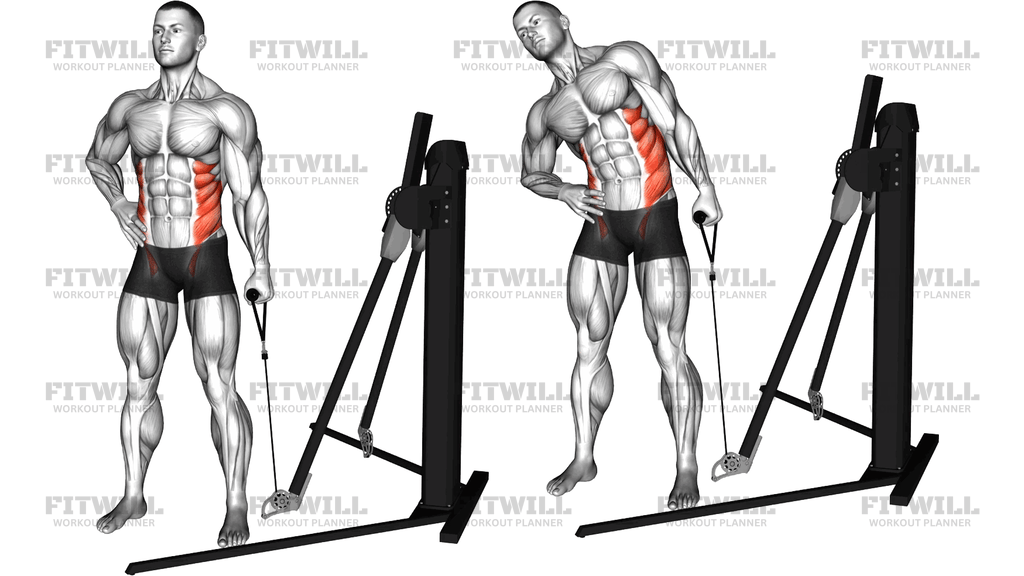
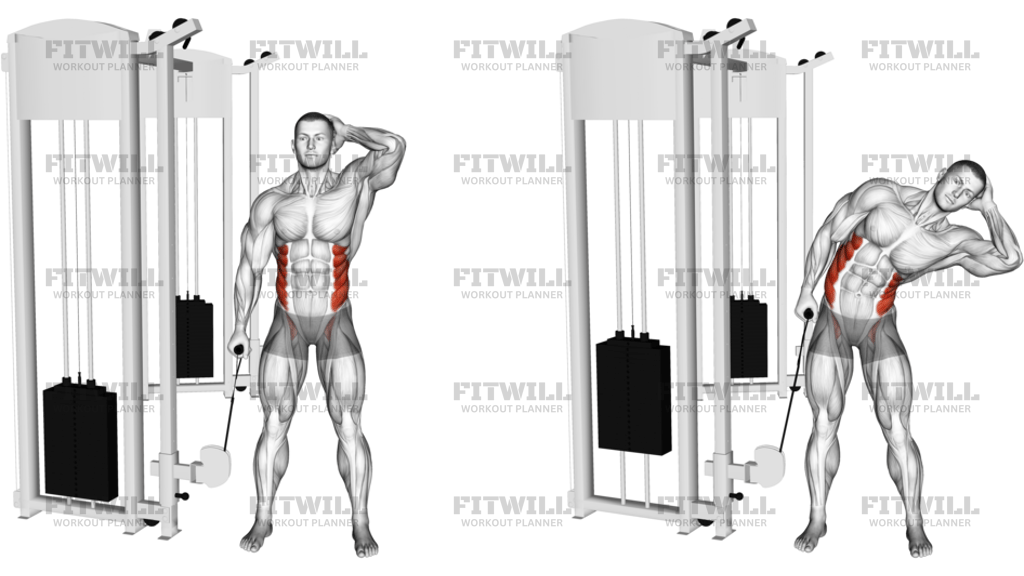
Cable Side Bend is a standing cable exercise for the obliques that loads the trunk through side-bending while the cable keeps constant tension on the working side. The image shows a low pulley, a single handle, a side-on stance, and one hand held behind the head to keep the torso honest. That setup matters: it prevents the shoulders from drifting forward and makes the ribcage-to-pelvis relationship the real focus of the repetition.
This movement is primarily about the external obliques, with the rectus abdominis and deeper core muscles helping stabilize the spine while the torso travels through lateral flexion. Done well, it trains the side of the waist to resist and produce motion without turning the rep into a shrug, a twist, or a hip shift. The result is a useful accessory exercise for core strength, trunk control, and better tolerance for side-to-side loading.
The working setup should be deliberate. Stand next to the cable stack with the pulley low, plant your feet firmly, and hold the handle on the outside hand. Keep the free hand behind your head, lift the chest tall, and let the arm holding the handle stay long without yanking the shoulder up toward the ear. From there, the torso bends smoothly to the side under control, then comes back to a tall neutral position against the cable.
The quality of the repetition depends on how cleanly you move the ribs and pelvis. Keep the hips mostly stacked, let the trunk do the work, and avoid turning the torso toward the machine or swinging through the bottom. The best reps feel like a controlled arc from the standing position into a side bend and back out again, with no bounce at the end range and no loss of posture when fatigue builds.
Use Cable Side Bend as accessory core work, in an ab-focused block, or as a warm-up for sessions that need trunk stiffness and lateral control. It is usually best performed with light to moderate resistance, slower tempo, and enough control that the same path is repeated every rep. If the torso starts to drift, the shoulder hikes, or the neck takes over, the load is too heavy for the purpose of the exercise.
[ Workout Log & Planner ]
Put your next workout in Fitwill
Keep your plan and training log ready when you are.


Instructions
- Set the cable pulley low and attach a single handle.
- Stand side-on to the stack with your feet about hip-width apart and your body tall.
- Hold the handle in the outside hand and place the free hand behind your head.
- Keep the working arm long and the shoulder packed down away from your ear.
- Brace your midsection and keep your ribs stacked over your pelvis before you start.
- Bend your torso sideways toward the cable side in a smooth arc without twisting.
- Pause briefly near the bottom, then return to a tall neutral position under control.
- Exhale as you bend back up and repeat for the planned reps before carefully resetting the handle.
Tips & Tricks
- Keep the movement in the torso; if the hips slide or shift, the load is too heavy.
- Let the cable pull you into a controlled side bend instead of yanking the handle with the arm.
- Keep the elbow of the hand behind your head wide so you do not crunch the neck forward.
- Do not rotate your chest toward the stack; this is a side bend, not a standing woodchop.
- Use a slower lowering phase so the obliques stay loaded through the whole range.
- Stop short of any pinching in the low back or a sharp stretch at the side of the waist.
- Choose a weight that lets you return to upright without leaning backward at the top.
- Treat each rep like a clean trunk arc, not a momentum rep driven by the shoulders.
Frequently Asked Questions
What does Cable Side Bend work most?
It mainly targets the external obliques on the side of the waist, with the deeper core helping stabilize the trunk.
Why is one hand behind the head in this exercise?
It helps keep the torso tall and prevents the working side from cheating by shrugging the shoulder or pulling with the arm.
Should I bend straight to the side or twist too?
Bend laterally in one clean arc. Twisting the ribcage toward the stack turns it into a different movement and reduces the oblique emphasis.
How close should I stand to the cable stack?
Stand close enough that the handle starts next to your outside thigh with tension already on the cable, but not so close that the stack bumps your leg.
Can beginners do Cable Side Bend?
Yes. Use a light load, smaller range, and a very slow return to upright until you can keep the torso and hips stacked.
What is the most common form mistake?
People usually lean back, twist, or shrug the shoulder instead of letting the side of the trunk do the work.
Where should I feel the rep?
You should feel the working side of the waist and outer abdominal wall, not the neck or the lower back dominating the movement.
How can I make this exercise harder without cheating?
Use a slightly heavier stack, slow the lowering phase, or add a brief pause at the bottom while keeping the same clean side-bend path.