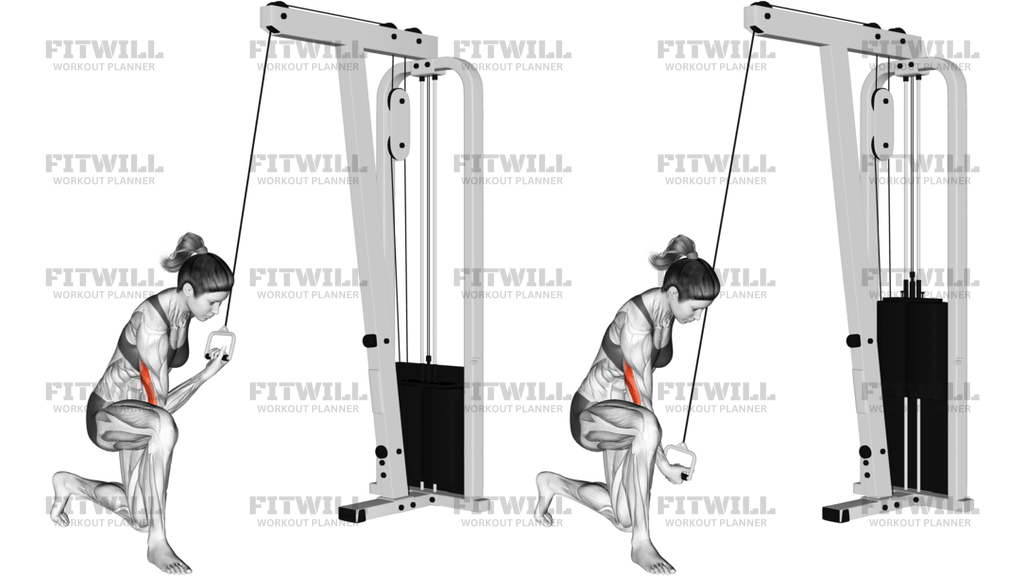
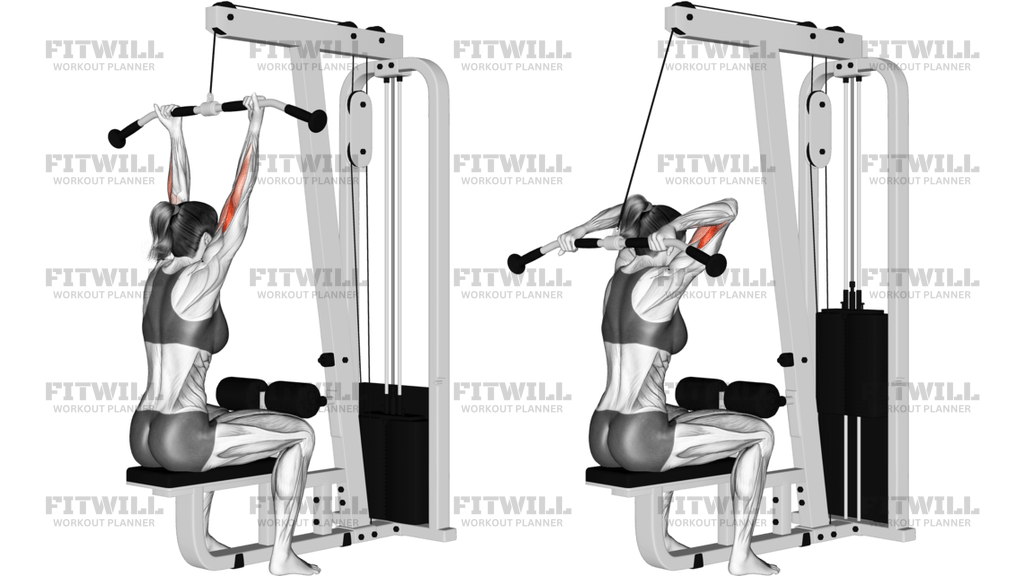
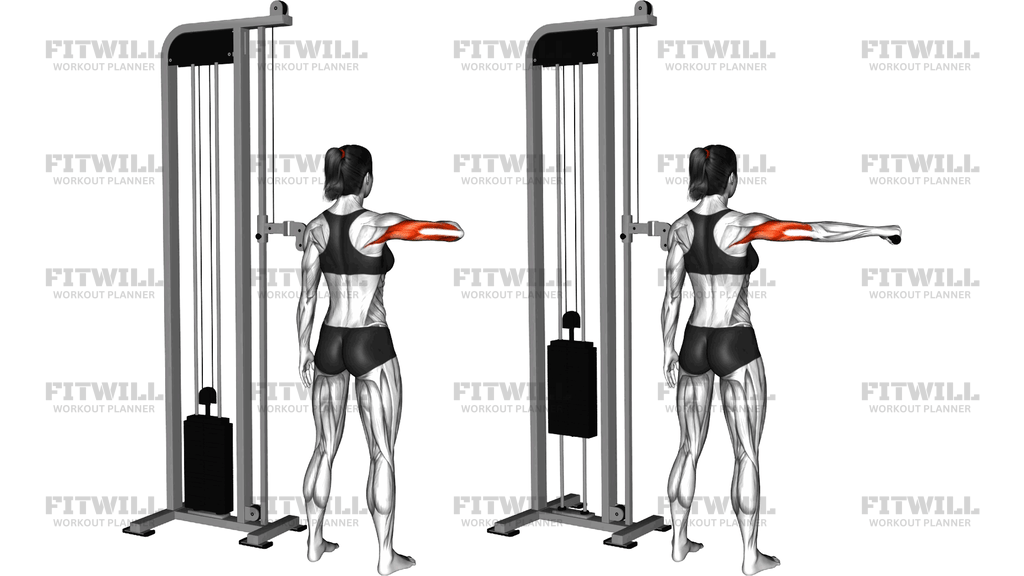
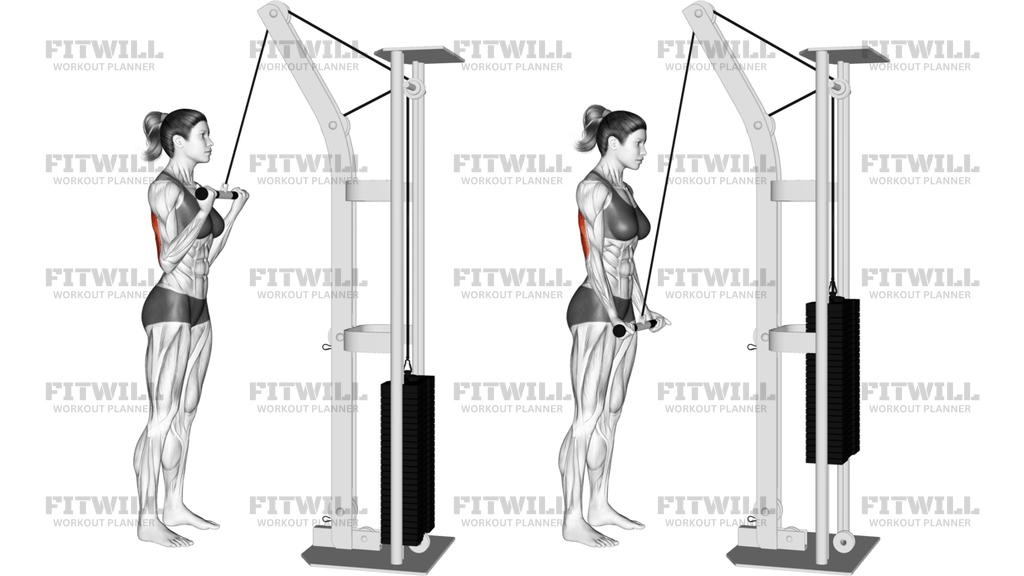
Cable Standing Back Wrist Curl
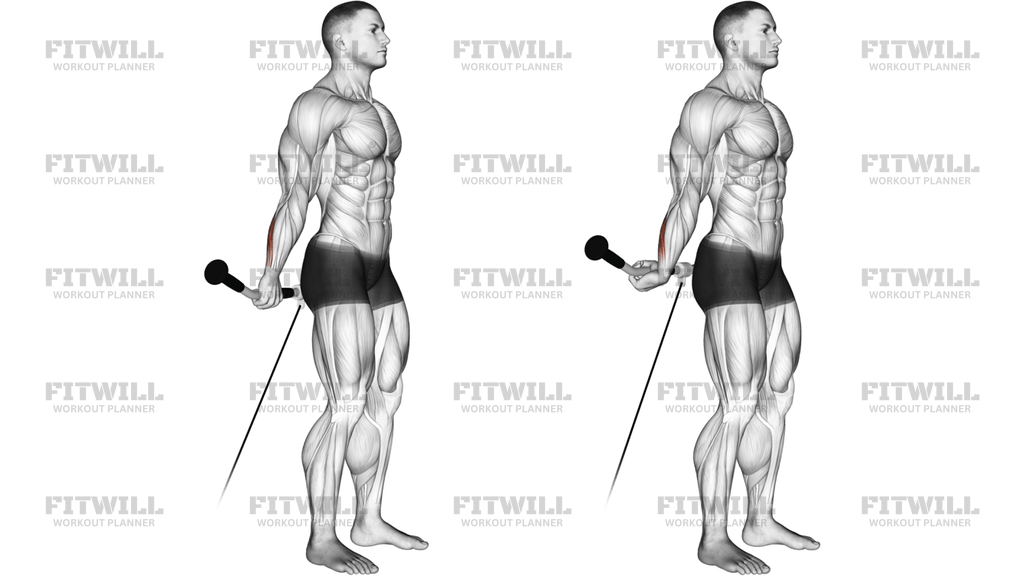
Cable Standing Back Wrist Curl is a forearm isolation exercise built around controlled wrist flexion against cable resistance. The cable keeps tension on the wrist flexors throughout the rep, which makes the exercise useful when you want the forearms to do the work without the rest of the body turning it into a swing. The movement is small, but it can be surprisingly demanding if you keep the elbows fixed and let the wrists carry the load.
The primary target is the wrist flexors of the forearm, with the brachioradialis, biceps brachii, and brachialis helping stabilize the upper arm. That means the goal is not a big arm curl or a shoulder-driven lift; the goal is a clean wrist-only curl with the forearm held steady. When the rep is done well, the hands move through a compact arc while the forearms stay quiet and the cable tension stays smooth.
Set a low cable and use a straight bar or handle that lets you grip comfortably. Stand tall with the elbows close to the torso and the forearms positioned so the wrists can move freely. Depending on the setup, you may face away from the machine or stand slightly offset, but the important part is that the wrists start just a little extended and the shoulders stay relaxed. If the start position feels cramped, the range of motion will usually get sloppy very quickly.
From the bottom, curl the wrists upward into flexion, then pause briefly at the top before lowering under control. The elbows should stay still, and the torso should not rock to help finish the rep. Because the movement is small, any cheating shows up fast, so the best reps look smooth and almost boring. That is exactly what you want here: a deliberate wrist path, a stable upper arm, and a clear forearm squeeze at the top.
Cable Standing Back Wrist Curl fits well in an accessory block after upper-body work, on a forearm-focused day, or at the end of a session when you want direct wrist flexor training with limited setup. Use lighter to moderate load and enough reps to build tension without irritating the wrists. If the hands or wrists start to feel cranky, shorten the range a little and slow the lowering phase instead of forcing more weight.
[ Workout Log & Planner ]
Put your next workout in Fitwill
Keep your plan and training log ready when you are.


Instructions
- Set a low cable and attach a straight bar or handle.
- Stand tall with the elbows tucked close to your torso.
- Use an underhand grip and let the wrists start slightly extended.
- Keep the shoulders relaxed and the upper arms still.
- Curl the wrists upward into flexion without turning it into an arm curl.
- Pause briefly at the top to feel the forearms contract.
- Lower the wrists slowly back to the start position.
- Repeat with the same wrist-only path on every rep.
Tips & Tricks
- Use a load that lets you keep the wrist path clean instead of jerking through the rep.
- Keep the elbows frozen so the forearms, not the upper arms, drive the movement.
- A short pause at the top helps you feel the wrist flexors work.
- Do not let the shoulders roll forward; that usually means the set is getting too heavy.
- Slow lowering is valuable here because the forearms often respond well to controlled eccentrics.
- Keep the grip firm but not death-grip tight.
- If the wrists feel pinchy, reduce the range before reducing control.
- Higher reps are usually more useful than chasing heavy loads.
Frequently Asked Questions
What muscles are trained most?
The wrist flexors of the forearm are the primary target.
Is Cable Standing Back Wrist Curl similar to dumbbell wrist curls?
Yes, but the cable keeps tension more consistent through the full range.
How heavy should this be?
Usually a light to moderate load is best so the wrists can flex without help from the rest of the body.
Should elbows move during reps?
No, keep the elbows still so the movement stays isolated to the wrists.
Can beginners use this exercise?
Yes, it is beginner-friendly when the load stays light and the range stays controlled.
Why is my biceps working?
A little stabilizing work is normal, but the exercise should not turn into an elbow curl.
How many reps are common?
Higher reps are common because forearm isolation work usually responds well to controlled volume.
What is a common mistake?
Using body momentum or letting the shoulders help finish the wrist curl.