Cable Bent-Over Reverse-Grip Row
Cable Bent-Over Reverse-Grip Row is a bent-over pulling exercise that uses a low cable and an underhand handle grip to train the lats with help from the upper back, biceps, and forearms. The hinge position changes the demand compared with an upright row: the torso stays fixed, the spine stays long, and the cable has to be controlled through a longer arc while you resist being pulled forward.
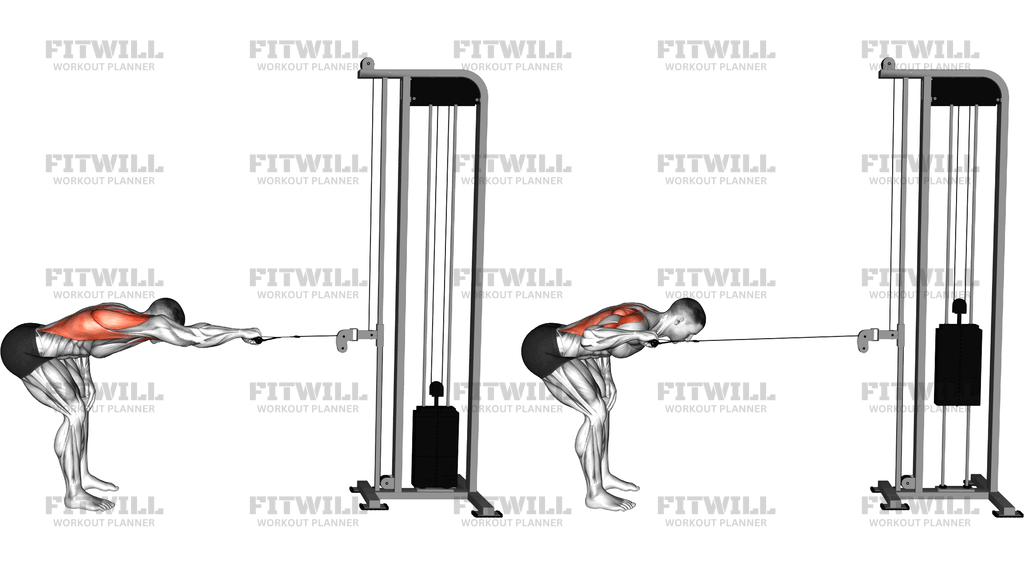
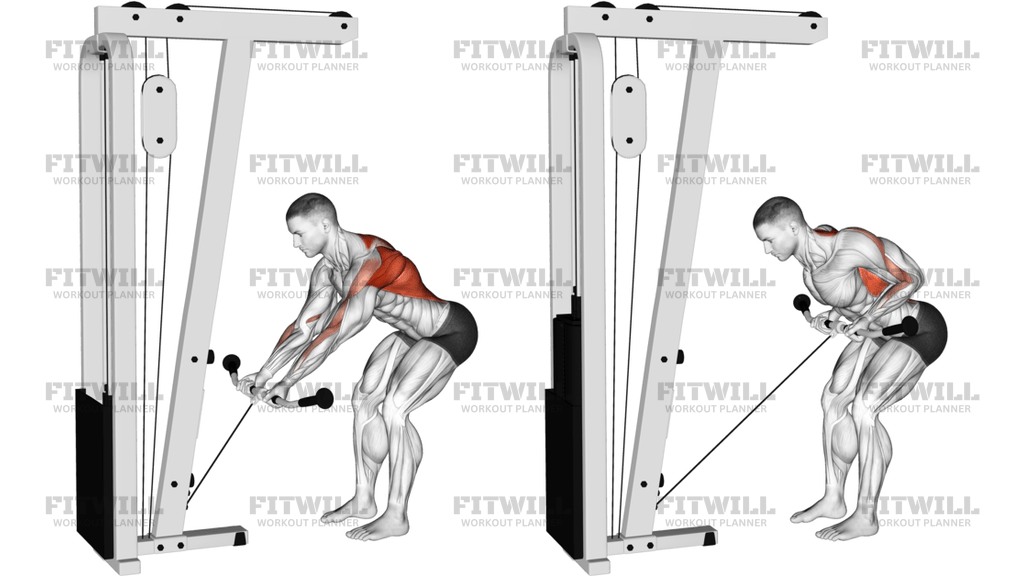
The reverse grip shifts more emphasis toward shoulder extension and elbow flexion, which is why many lifters feel this variation strongly in the lower lats and the biceps. The image shows a hip hinge with soft knees, a neutral neck, and the handle being pulled toward the lower ribs or upper abdomen. That setup matters because if the hips drift, the chest rises, or the lower back rounds, the movement turns into a body swing instead of a strict row.
This exercise works best when you create tension before the first pull. Plant your feet, hinge until the torso is almost parallel to the floor, and keep the cable line steady as you row. Each rep should start from a controlled reach, then finish with the elbows driving behind the torso without jerking the shoulders up. The goal is a smooth pull, a brief squeeze, and a controlled return that keeps the cable from yanking you out of position.
Use a load that lets you hold the hinge, keep the wrists stacked, and pause at the top without shrugging. Because the body is unsupported, this row is more demanding on posture than a seated cable row, so it is useful for back days, accessory pull work, or any program that needs lat-focused rowing with a clear technical challenge. If the lower back starts to take over, reduce the load and shorten the range until the torso stays locked in place.
Done well, Cable Bent-Over Reverse-Grip Row gives you a direct lat stimulus with a strong arm assist and very little momentum. That makes it a good choice when you want strict pulling mechanics, better scapular control, and a rowing variation that rewards clean repetition quality over load.
[ Workout Log & Planner ]
Put your next workout in Fitwill
Keep your plan and training log ready when you are.


Instructions
- Set the cable to the lowest pulley and attach the handle, then stand facing the machine with your feet about hip-width apart and your knees softly bent.
- Hinge at the hips until your torso is nearly parallel to the floor, keep a long spine, and let your arms hang straight down with an underhand grip on the handle.
- Brace your midsection and set your shoulders down away from your ears before the first pull.
- Start each rep by pulling the handle toward your lower ribs or upper abdomen, keeping your elbows close to your sides.
- Drive your elbows back until the handle reaches your torso and your shoulder blades move together without rounding your lower back.
- Pause briefly at the top, squeeze the lats and upper back, and avoid shrugging or leaning upright to finish the rep.
- Lower the handle slowly until your arms are straight again and you feel a controlled stretch through the lats.
- Breathe out as you row, breathe in as you return, and reset your hinge before the next repetition.
Tips & Tricks
- Keep your torso angle fixed; if your chest keeps rising rep to rep, the weight is too heavy.
- Think about driving the elbows back and down toward your hips instead of yanking the handle with your hands.
- Keep the wrists neutral even though the grip is underhand, so the forearms do not become the limiting factor.
- Let the shoulders reach slightly forward at the bottom, but do not round the upper back to get extra range.
- Stop the handle near the lower ribs or upper abdomen; pulling higher usually turns the row into a shrug.
- Use a slow lowering phase so the cable does not pull you out of the hinge.
- If your lower back feels the set more than your lats, reduce the load and shorten the torso movement.
- Choose a handle that lets your hands stay close together and your elbows track comfortably beside your torso.
Frequently Asked Questions
What does the underhand cable row emphasize most?
It emphasizes the lats, with a strong contribution from the biceps and upper back because the underhand grip makes the elbow drive more prominent.
Where should the handle travel in the bent-over row?
Pull the handle toward the lower ribs or upper abdomen, not up toward the chest, so the elbows stay tucked and the torso can stay fixed.
Should my torso move during the set?
Only minimally. The hinge angle should stay nearly the same while the arms and shoulder blades do the work.
Is the reverse-grip cable row good for beginners?
Yes, if the load is light enough to keep the hinge, elbow path, and return phase strict from the first rep to the last.
What muscles besides the lats work in this exercise?
The upper back, biceps, and forearms assist the pull, while the rear shoulders help stabilize the shoulder joint in the bent-over position.
Why does the bent-over position matter?
It removes the support of a bench or seat, so your trunk has to stay braced while the cable pulls forward, which makes posture and control more important.
What is the most common mistake with the handle attachment?
People often curl the handle too much or shrug at the top. The pull should stay close to the torso with the shoulders down.
How can I make the row harder without just adding weight?
Slow the lowering phase, pause briefly against the cable at the top, and keep the hinge locked so every rep starts from a dead-still torso.