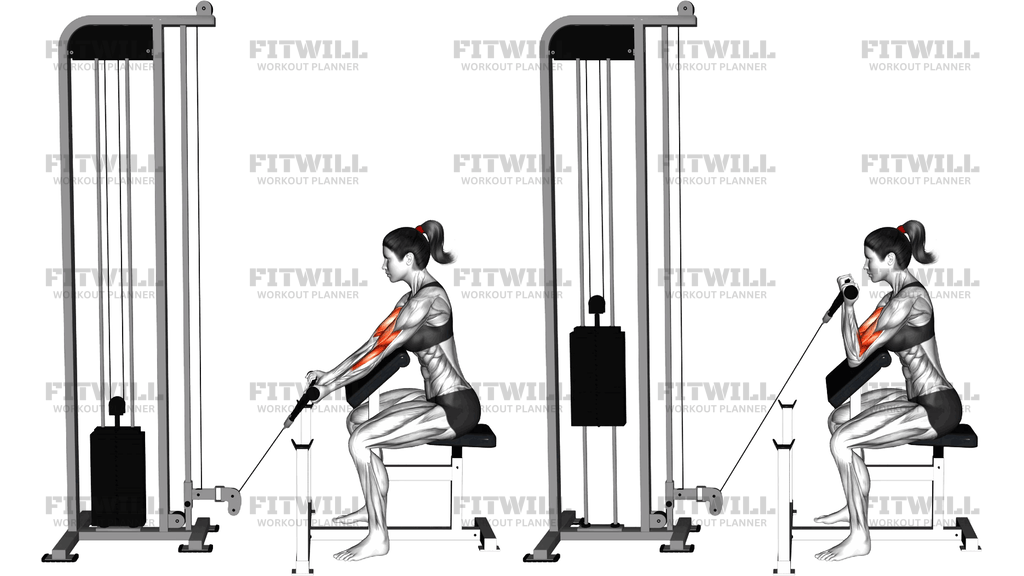
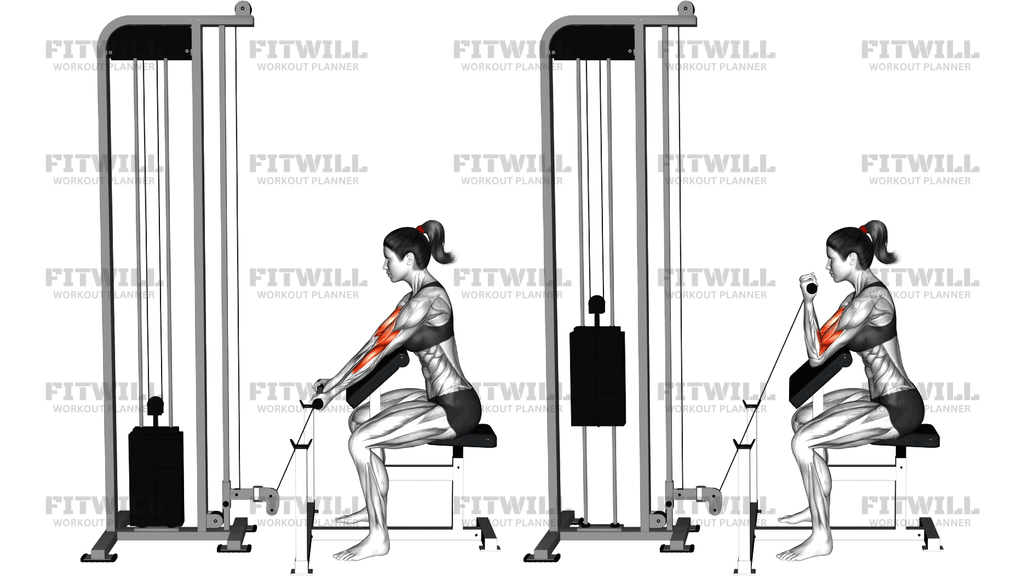
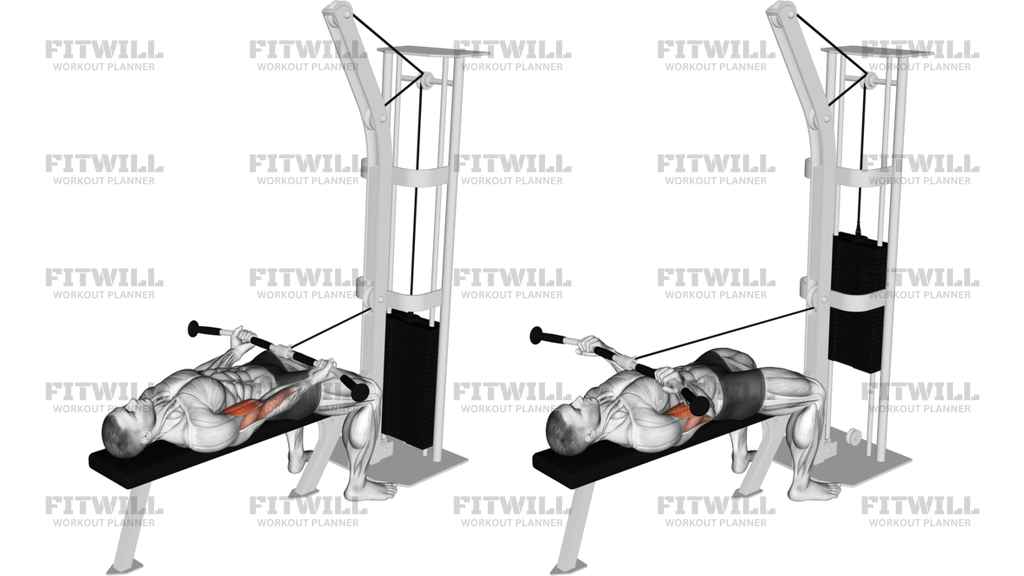
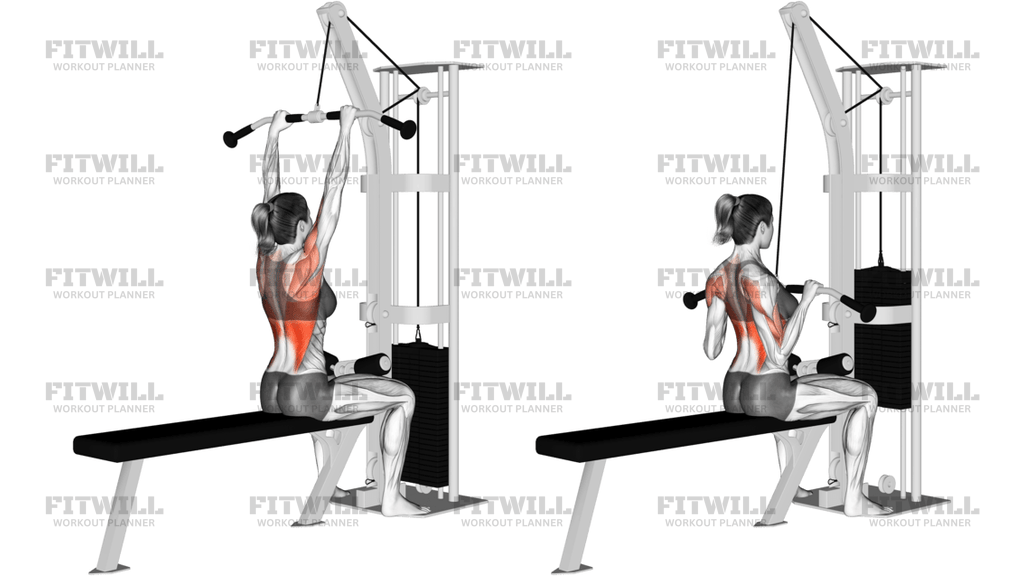
Cable Drag Curl
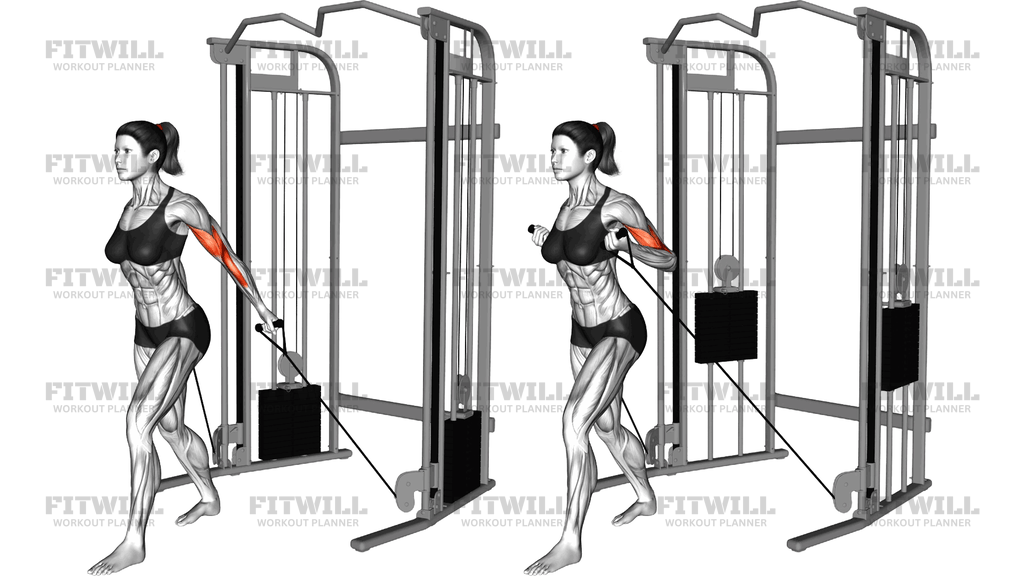
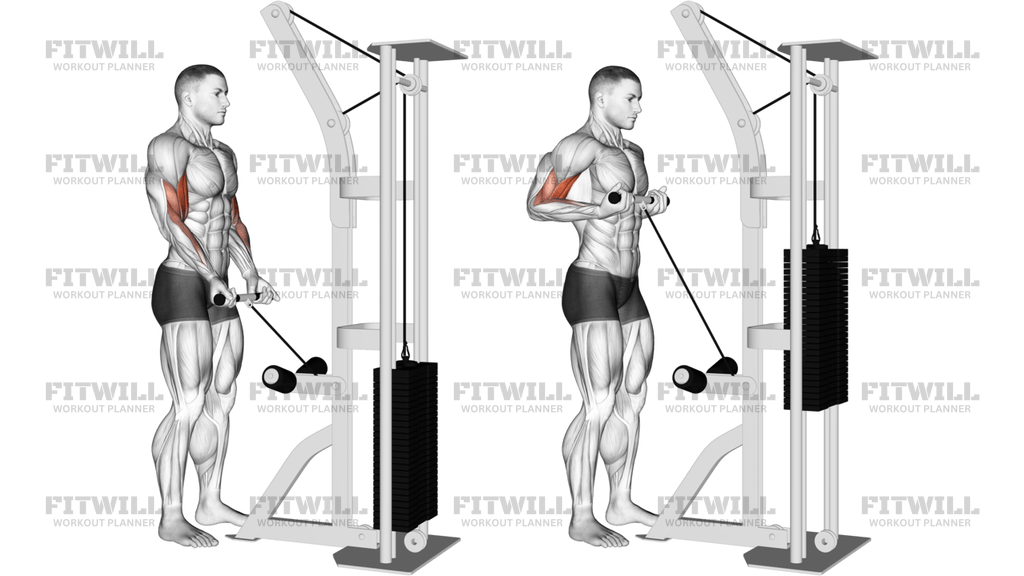
Cable Drag Curl is a standing biceps exercise performed with a cable machine and handle attachment. Instead of letting the elbows drift forward like a standard curl, you keep them pulled slightly behind the torso and let the handles travel close to the body, almost as if you are dragging them up your shirt. That line of pull keeps the cable loaded through the whole rep and makes cheating with the hips or shoulders much harder.
The main training target is the biceps, especially the elbow-flexion work that shows up when the forearm closes toward the upper arm. Brachialis and brachioradialis help with the curl, and the forearms and shoulder stabilizers work to keep the handles and wrists in a clean line. In practice, that means the exercise is useful when you want direct arm work without the loose swing that often shows up in free-weight curls.
The setup matters because the cable angle and your stance decide whether the movement stays strict. Step back far enough that the cable has tension at the bottom, stand tall, and brace before the first rep. Keep the chest open, ribs stacked, and shoulders down so the upper arm can stay pinned while the forearm does the work. If the elbows drift forward or the torso leans back, the exercise stops behaving like a drag curl and turns into a full-body heave.
On each repetition, start with the hands near the thighs, then pull the elbows back while curling the handles up along the front of the body. The hands should stay close to the torso and finish around the lower chest or upper abdomen depending on your cable height and arm length. Lower the handles with control until the arms are almost straight, then repeat without losing cable tension. Exhale through the curl and reset your posture before each rep.
Cable Drag Curl fits well in arm-focused sessions, upper-body accessories, or any program where you want steady tension and strict biceps work. It is also beginner-friendly if the load is light enough to keep the shoulders quiet and the wrists stacked. The safest version is the one where the elbows stay back, the shoulders stay still, and the rep ends before the cable pulls you out of position.
[ Workout Log & Planner ]
Put your next workout in Fitwill
Keep your plan and training log ready when you are.


Instructions
- Attach the handle to a low cable and stand facing the machine with your feet about hip-width apart.
- Step back until the cable is tight at the start, then let your arms hang near your thighs with a neutral grip.
- Set your chest tall, shoulders down, and elbows slightly behind your torso before you start the first rep.
- Brace your abs and keep your upper arms close to your sides as you begin the curl.
- Pull the elbows back and curl the handles upward, dragging them close to the front of your body.
- Finish when the hands reach about lower-chest to upper-abdomen height and the biceps are fully shortened.
- Pause briefly at the top without letting the elbows swing forward or the shoulders roll up.
- Lower the handles slowly until the arms are nearly straight while keeping tension on the cable.
- Reset your posture, breathe, and repeat for the planned number of repetitions.
Tips & Tricks
- Keep the handles close to your shirt or torso so the curl stays in the drag path instead of drifting forward.
- If your elbows travel in front of your ribs, the movement turns into a regular cable curl and loses the drag-curl emphasis.
- Choose a weight that lets you keep the shoulders quiet; if you have to shrug, the load is too heavy.
- A slightly leaned-back torso is fine, but the rep should not become a standing row or a hip thrust.
- Use a smooth tempo on the lowering phase so the cable never goes slack at the bottom.
- Neutral wrists usually feel best; bent wrists often shift work into the forearms and reduce biceps tension.
- Stop the rep when the cable line starts pulling your elbows forward instead of letting them stay back.
- Lower the pulley or step farther from the stack if the top position feels cramped or cuts the range short.
- This exercise responds well to strict, moderate-to-higher repetitions rather than max-effort heaving.
Frequently Asked Questions
What muscle does Cable Drag Curl target most?
The biceps are the main target, with brachialis, brachioradialis, and forearm stabilizers helping on each rep.
How is a drag curl different from a regular cable curl?
In a drag curl, the elbows stay behind the torso and the handles travel close to the body instead of swinging forward.
Where should the handles finish at the top?
They usually finish around the lower chest or upper abdomen, depending on your cable height and arm length.
Should my elbows move forward during Cable Drag Curl?
No. The elbows should stay slightly behind the torso so the cable stays in the drag-curl path.
Is this a good beginner biceps exercise?
Yes, if the load is light enough to keep the shoulders still and the handles traveling close to the torso.
Why do my shoulders take over this movement?
Usually the weight is too heavy or the elbows are drifting forward, which turns the curl into a shoulder-driven swing.
What grip works best on the handle attachment?
A neutral or slightly supinated grip is usually the easiest way to keep the wrists stacked and the curl strict.
Can I use this instead of dumbbell curls?
Yes. It is a strong alternative when you want constant cable tension and less ability to cheat through the hips.