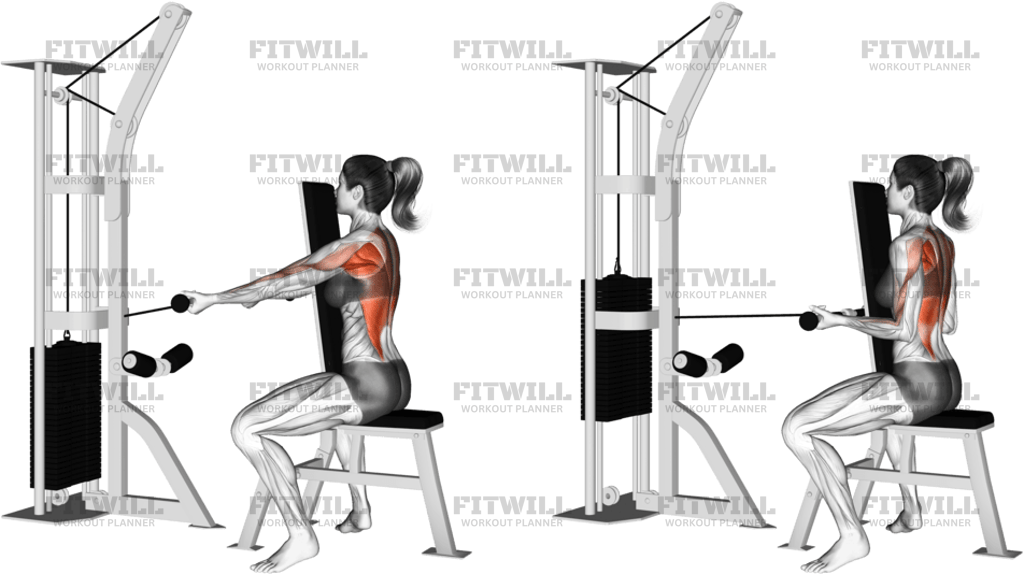
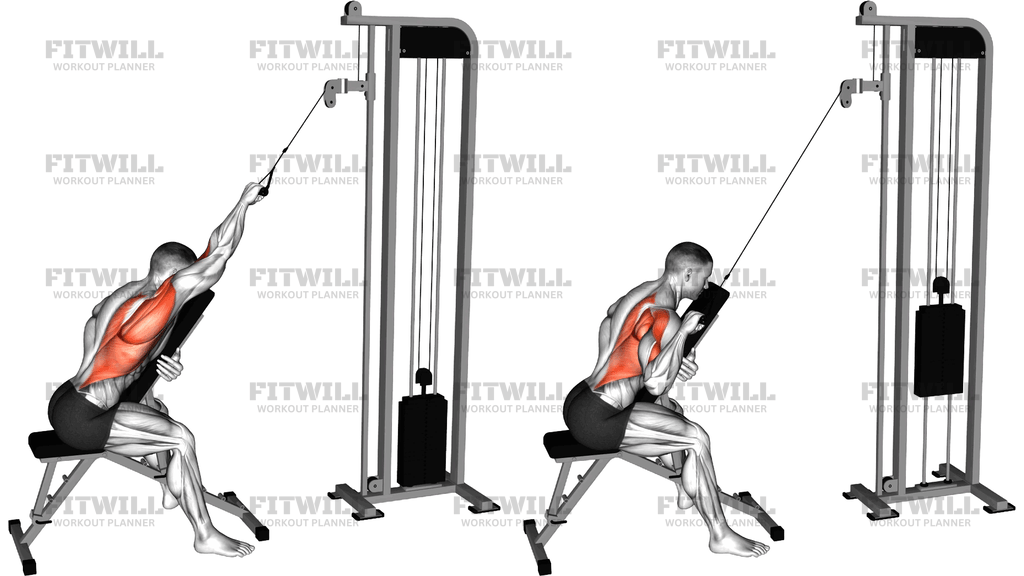
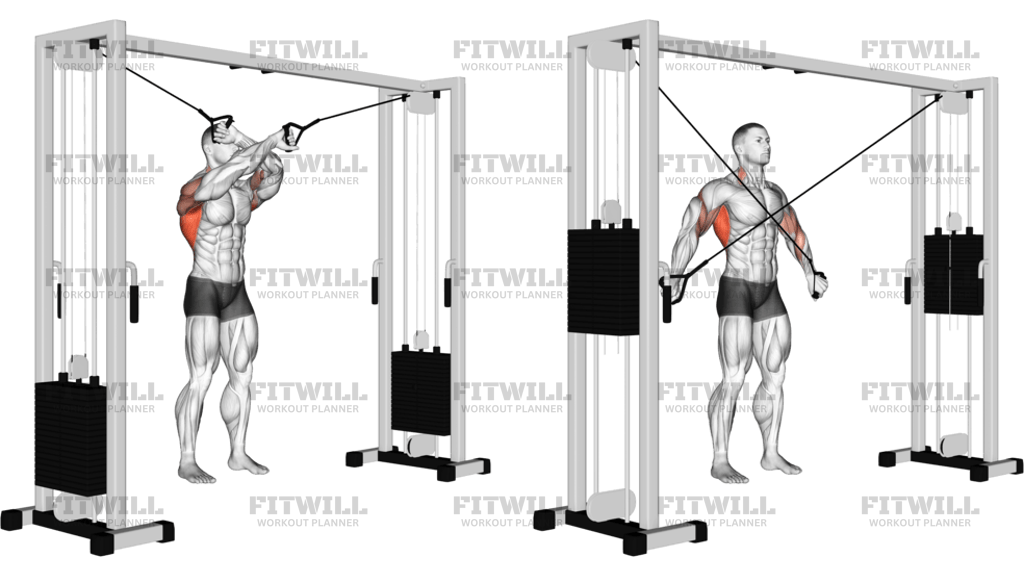
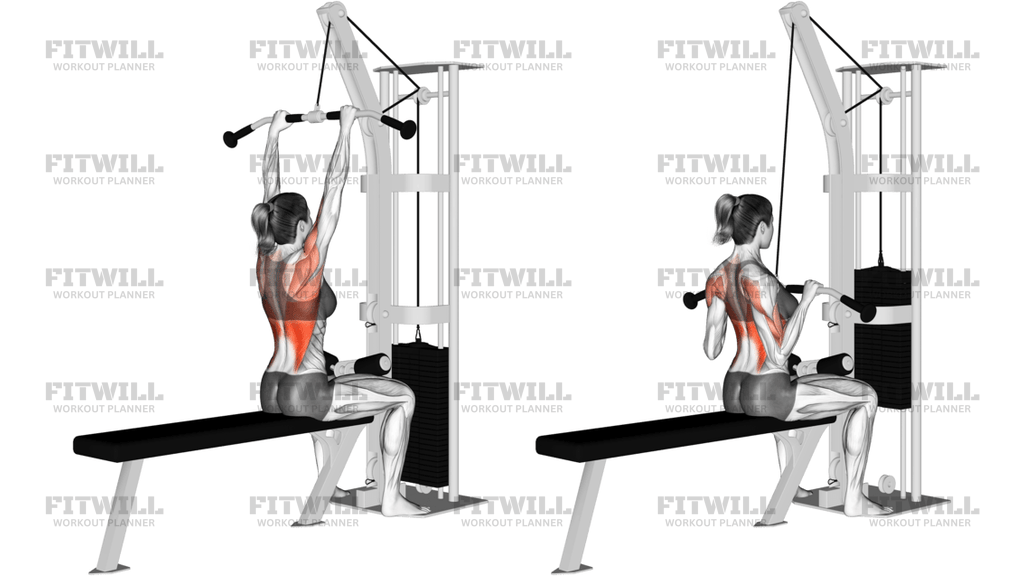
Cable Underhand Pulldown
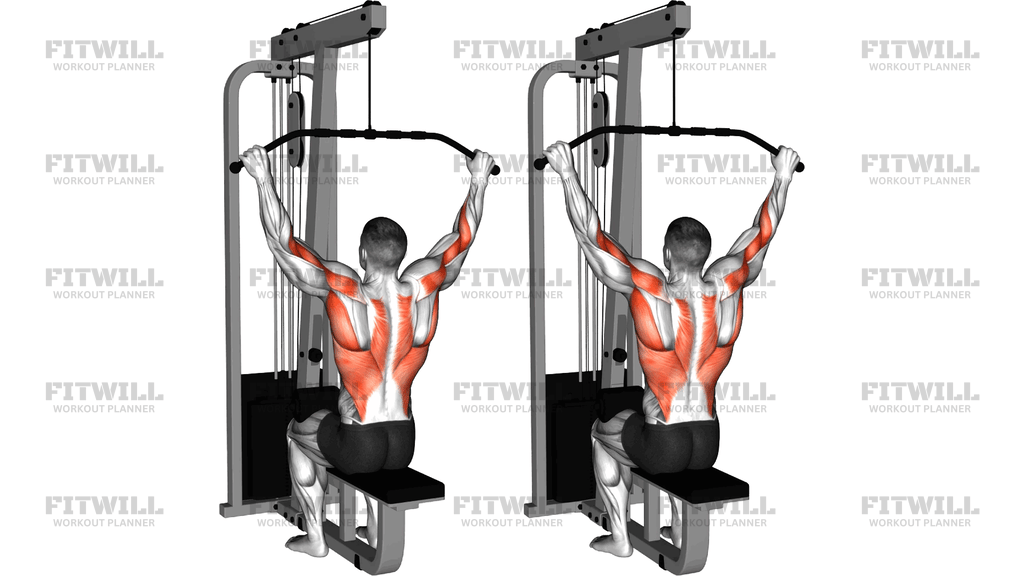
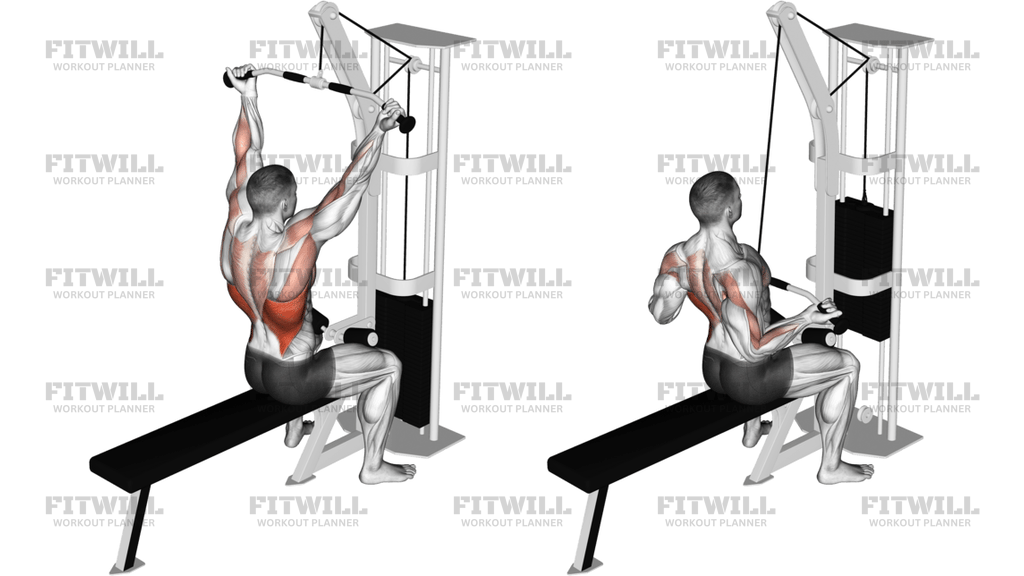
Cable Underhand Pulldown is a vertical pulling movement that uses a supinated grip to bias the lats while bringing the biceps into the mix. The underhand position can feel natural for many lifters because it keeps the arms in a comfortable line and makes the bottom of the rep feel strong and direct. The exercise is still a lat movement first, but the grip changes the feel enough that the biceps and forearms contribute more than they would in a neutral or overhand pulldown.
The primary target is the latissimus dorsi, with the biceps brachii, rhomboids, and forearm flexors assisting the pull and stabilizing the setup. That means the chest should stay lifted, the shoulders should stay down, and the elbows should drive toward the torso rather than the torso driving itself backward. When the rep is clean, the bar travels down because the upper back and lats are pulling, not because the body is leaning and swinging.
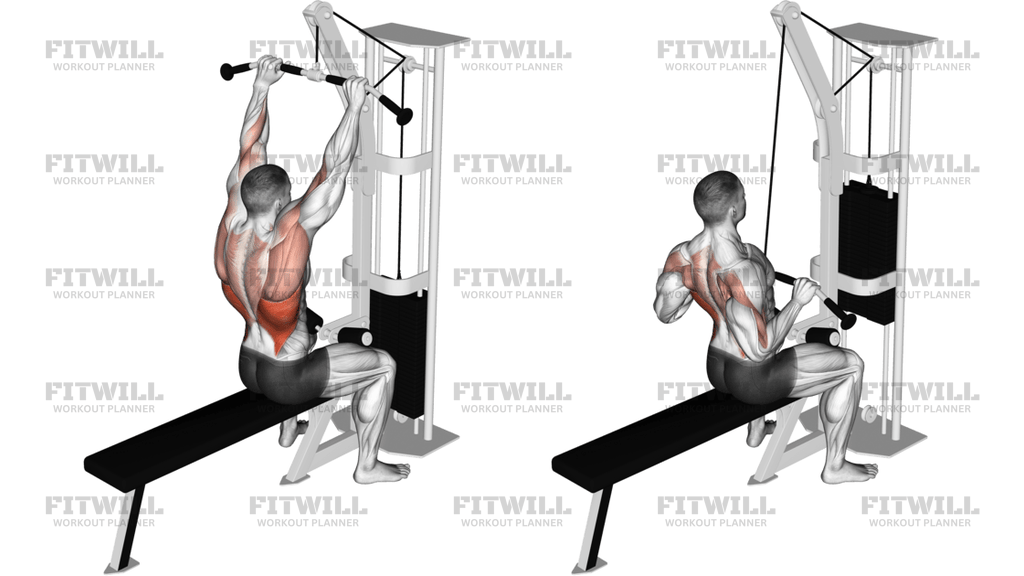
Set the straight bar on a high pulley and sit or kneel in a stable pulldown position. Use a shoulder-width underhand grip and brace your core before the first rep. The start should feel tall and organized, with enough tension to know the lats are engaged but not so much that you have to jerk the weight off the stack. If the shoulders hike up or the chest collapses, the setup needs a reset before the set continues.
Pull the bar toward the upper chest line, pause briefly at the bottom, and raise it slowly back to the full stretch. The return phase is important because it keeps the lats under tension and prevents the stack from pulling you open. Keep the wrists neutral, lead with the elbows, and resist the urge to lean backward to make the rep feel stronger. The best version of the movement is smooth, front-loaded, and very repeatable.
Cable Underhand Pulldown works well as a scalable pull for lat training, especially on days when you want a comfortable grip and a slightly stronger arm contribution. It can also serve as a pull-up accessory or a beginner-friendly vertical pull. Use moderate resistance, keep the shoulders away from the ears, and stop the set when the torso starts swinging or the lower body starts helping too much.
[ Workout Log & Planner ]
Put your next workout in Fitwill
Keep your plan and training log ready when you are.


Instructions
- Attach the straight bar to a high cable pulley.
- Sit or kneel in a stable pulldown position.
- Use a shoulder-width underhand grip.
- Brace your core and lift your chest.
- Keep your shoulders down before the first rep.
- Pull the bar toward the upper chest line.
- Pause briefly at the bottom.
- Raise the bar slowly to the full stretch.
- Repeat with the same controlled tempo.
Tips & Tricks
- Avoid swinging the torso backward to finish the pull.
- Keep the wrists neutral even though the grip is underhand.
- Think about driving the elbows down, not just curling the bar.
- Do not shrug the shoulders at the top or bottom.
- Exhale during the pulldown to keep the trunk organized.
- Control the upward phase so the lats stay under tension.
- Use a load that preserves posture and a clean path.
- If the forearms dominate too much, lighten the grip pressure.
Frequently Asked Questions
What muscle is primary in underhand pulldown?
The latissimus dorsi is the primary target.
Does underhand grip increase biceps work?
Yes, the biceps typically assist more with an underhand grip.
Can beginners do Cable Underhand Pulldown?
Yes, it is beginner-friendly with moderate resistance.
Should I pull to the chest or behind the neck?
Pull to the front of the chest; behind-the-neck variations are generally less comfortable.
What common mistake should I avoid?
Using momentum and leaning excessively backward.
How many reps are typical?
Moderate rep ranges are common for pulldowns.
Is Cable Underhand Pulldown a substitute for pull-ups?
It can support similar muscle groups as a scalable alternative.
Why do forearms fatigue first?
Grip tension may be too high, so adjust load and hand pressure.