Donkey Calf Raise
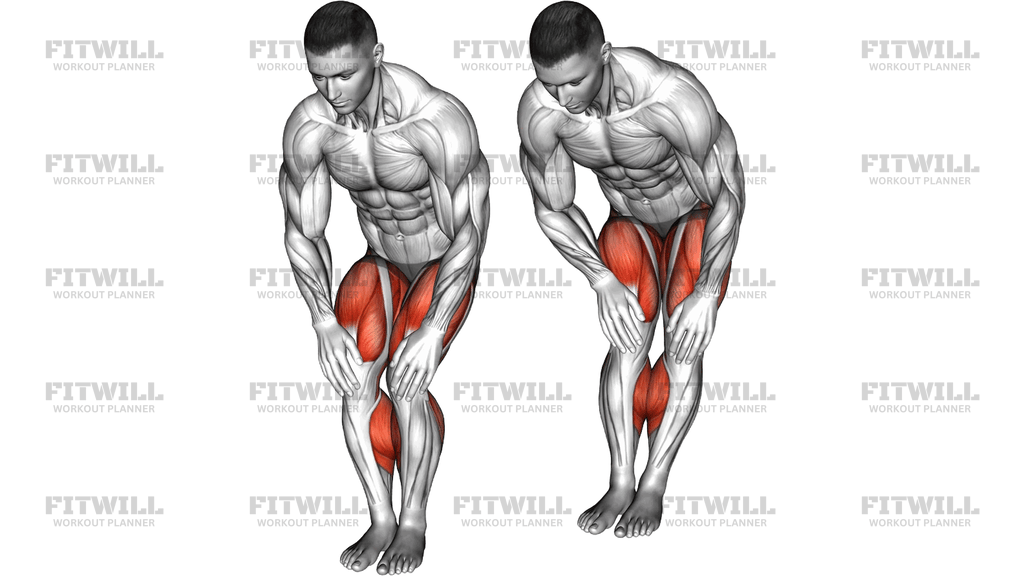
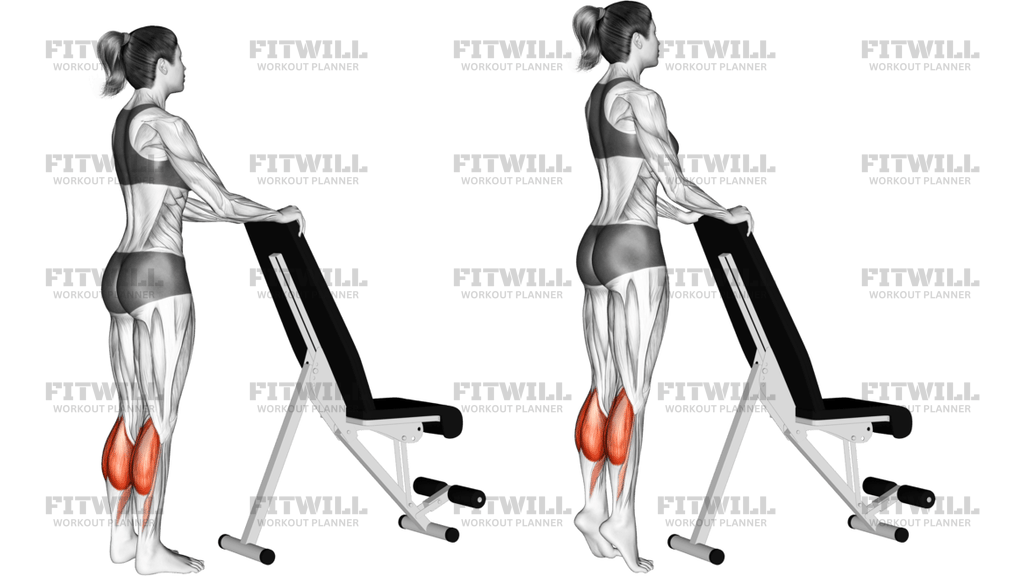
Donkey Calf Raise is a bent-over calf exercise that loads the gastrocnemius and soleus while the trunk stays hinged over a bench for support. In the image, the hands are braced on the bench, the hips stay high, and the balls of the feet sit on a small block so the heels can drop below the forefoot. That setup matters because the angle of the torso and the foot placement decide whether the set stays on the calves or turns into a rushed bounce.
The exercise is simple, but the details are not. A solid hand position on the bench, a steady hip hinge, and a quiet knee angle keep the line of force where it belongs. The calves work through a long stretch at the bottom and a hard contraction at the top, while the rest of the body provides a stable platform. If the stance shifts, the tempo speeds up, or the knees start to pump, the movement loses its calf emphasis quickly.
Use it as direct calf hypertrophy work, especially when standing calf raises feel too upright or too easy to cheat. The bent-over position usually makes the gastrocnemius work hard, while the deep ankle motion also challenges the soleus and the small stabilizers around the foot and ankle. The block or step should be stable enough that the heel can travel freely without wobbling or rolling the arch inward.
Quality donkey calf raises are controlled, deliberate, and repeatable. Lower until you feel a clear calf stretch, drive through the big toe and second toe area to rise, and pause at the top before starting the next rep. Keep breathing steady and reset if the setup changes. This is an accessory movement, so it should build calf strength, ankle control, and loading tolerance without turning into a bounce-driven test of balance.
Fitwill
Log Workouts, Track Progress & Build Strength.
Achieve more with Fitwill: explore over 9600 exercises with images and videos, access built-in and custom workouts, perfect for both gym and home sessions, and see real results.
Start your journey. Download today!




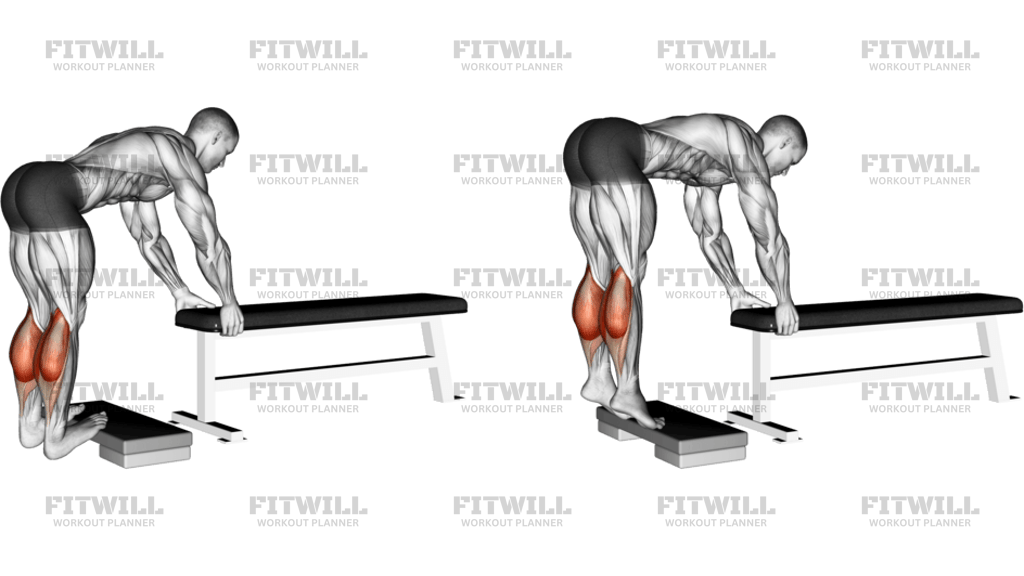
Instructions
- Stand on a stable block or step with the balls of your feet and let your heels hang off the back edge.
- Hinge forward and place both hands firmly on a bench or other solid support in front of you.
- Keep your hips high, your torso folded, and your knees softly bent without pumping them.
- Set your weight over the forefoot and let the arches stay active instead of collapsing inward.
- Lower your heels slowly until you feel a strong stretch through both calves.
- Drive through the big toe and second toe area to raise your heels as high as you can control.
- Squeeze the calves briefly at the top without shrugging, bouncing, or shifting your hands.
- Lower back to the stretch under control and repeat for the planned number of reps.
Tips & Tricks
- Keep the bench support light enough that your upper body stays fixed, but firm enough that balance never becomes the limiter.
- Let the heels travel below the forefoot only if the step is stable and your ankles can tolerate the extra stretch.
- Think about lifting the heel straight up instead of rocking onto the toes or folding more at the hips.
- If the knees start to bend and straighten, shorten the range and make the calves do the work instead of the legs.
- A one-second pause at the top usually reveals whether you are using the calves or bouncing through momentum.
- Keep pressure through the first and second toes so the foot stays tripoded and the arch does not dump inward.
- Use a slower lowering phase than lifting phase to make the stretch and contraction more distinct.
- Add load only after bodyweight reps stay smooth, quiet, and symmetrical from the left foot to the right foot.
Frequently Asked Questions
What muscles does Donkey Calf Raise work?
It mainly targets the gastrocnemius and soleus, with the foot and ankle stabilizers helping keep the body steady on the block and bench.
Is Donkey Calf Raise good for beginners?
Yes, if you start with bodyweight and a low, stable step. Beginners should learn the bent-over setup and the full heel drop before adding load.
How high should my heels come up on the bench-supported setup?
Raise the heels as high as you can without shifting your hands or losing the foot tripod. The top should feel like a hard calf squeeze, not a torso swing.
What is the most common mistake with donkey calf raises?
The most common mistake is bouncing through the bottom or turning the move into a hip hinge. The calves should be moving the load, not the torso.
Do I need a bench and block for this exercise?
A sturdy bench or support in front and a small block or step under the forefeet make the setup match the classic donkey position. A stable edge is more important than a tall one.
Should my knees stay straight during Donkey Calf Raise?
Keep them softly bent and mostly fixed. A tiny bend protects the joint, but too much knee motion turns the exercise into a partial squat rhythm.
How many reps should I do?
This movement usually works well for moderate to high reps, especially when you want a slow stretch and a brief squeeze at the top.
What should I feel during each rep?
You should feel a strong stretch in the calves at the bottom and a hard contraction near the top, with the feet staying planted and the hands staying steady.
Can I use this as a finisher?
Yes. It fits well at the end of a lower-body session when the calves are already warm and you can focus on clean control instead of heavy loading.