Roll Calves
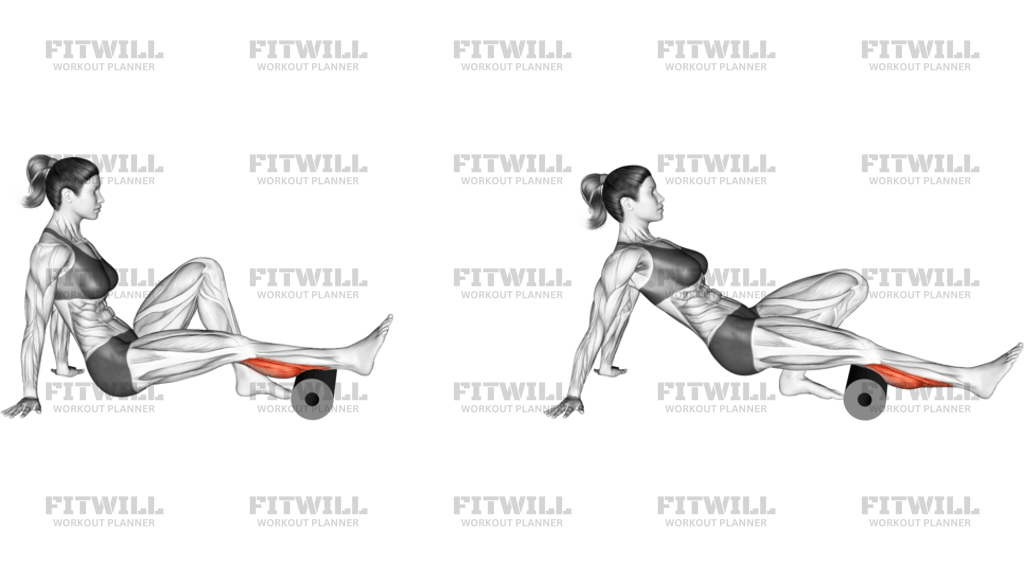
Roll Calves is a foam-rolling mobility drill for the lower leg. It is used to ease tightness in the calf complex, improve the way the ankle feels during walking or running, and give the tissue a calmer, more workable sensation before or after lower-body training. The exercise is not about speed or brute force; it is about slow pressure, controlled weight shifts, and finding the parts of the calf that need attention most.
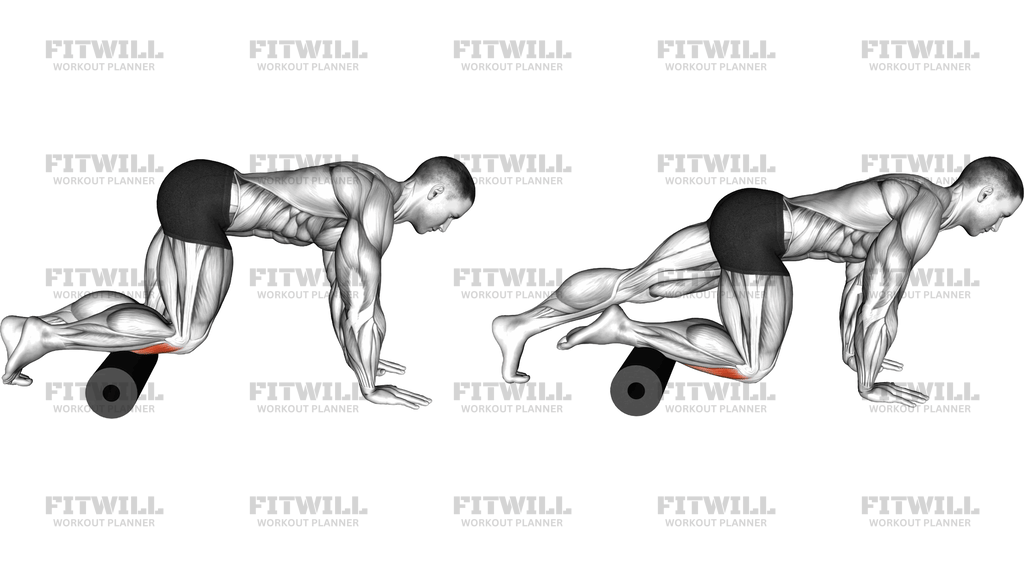
The main target is the calf muscle group, especially the thicker muscle belly above the Achilles tendon. Because the roller sits under your lower legs while your hands support part of your body weight on the floor, the setup determines how much pressure you get and how well you can control it. If the roller is too low, it can irritate the tendon; if it is too high, it misses the area that usually feels tight.
Good execution starts by lifting the hips just enough to let the foam roller press into the calves, then moving slowly from just above the heel to just below the back of the knee. Small passes work better than fast sweeping motions, and brief pauses over tender spots are more useful than forcing a bigger range. Breathing matters here because a long exhale helps the calf relax into the roller instead of tensing against it.
Roll Calves is especially useful after running, jumping, hiking, calf raises, or any session that leaves the lower legs feeling stiff. It can also be used in the warm-up when the ankles feel blocked, but the pressure should stay comfortable enough that you can keep your face, shoulders, and breathing relaxed. The goal is a smoother, looser calf, not a sharp, painful grind.
For safety, keep the roller on the muscle belly and away from the knee joint and Achilles tendon. If one calf is more sensitive, use more weight through the hands or roll one leg at a time so you can control the pressure precisely. Done well, Roll Calves is a simple recovery tool that helps the lower legs feel better without needing a lot of time or equipment.
[ Workout Log & Planner ]
Put your next workout in Fitwill
Keep your plan and training log ready when you are.


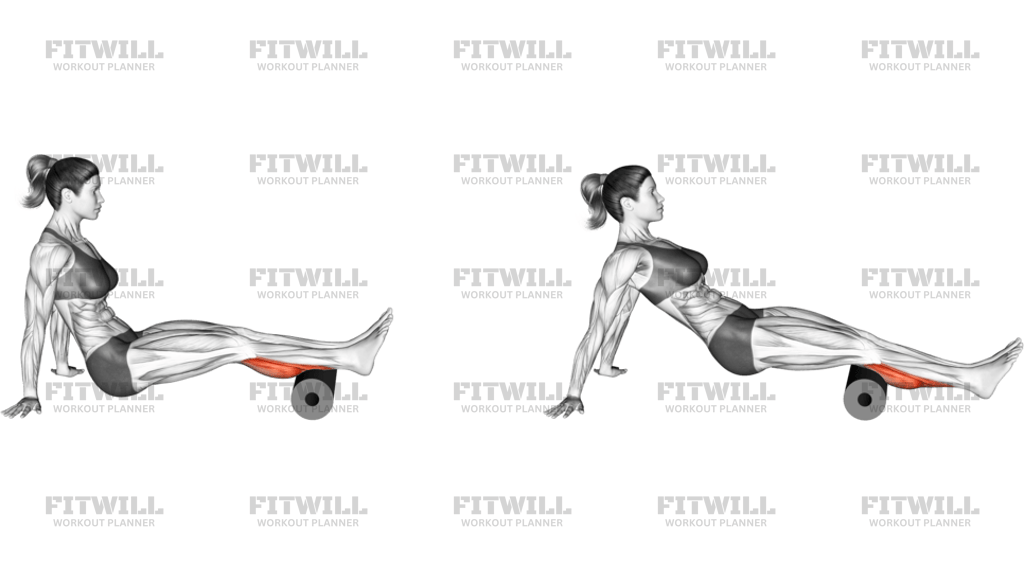
Instructions
- Sit on the floor with the foam roller under your calves and place your hands behind you on the floor for support.
- Straighten your legs in front of you and lift your hips so your lower legs rest on the roller and your weight is shared between your hands and the calves.
- Keep the ankles relaxed and point your toes in a neutral position before you begin the first pass.
- Roll slowly from just above the Achilles tendon to just below the back of the knee, covering the full calf muscle.
- Keep the movement small and deliberate instead of bouncing or sweeping quickly across the muscle.
- Pause on a tender spot for one or two breaths and let the calf soften into the roller.
- Use your hands to take pressure off the roller if the sensation becomes too intense, or shift a little more weight forward if you need more pressure.
- If you want to bias different fibers, turn the toes slightly inward or outward on separate passes while keeping the hips lifted.
- Lower your hips, slide the roller away, and sit up slowly before standing.
Tips & Tricks
- Keep the roller on the fleshy part of the calf, not directly on the Achilles tendon or behind the knee.
- Use your arms to control pressure; the more weight you keep in your hands, the gentler the roll becomes.
- Slow passes work better than long nonstop strokes because they let you find the tightest parts of the muscle belly.
- If the outer calf feels tighter, slightly turn the toes inward on that pass; if the inner calf feels tighter, try a mild outward turn.
- Exhale during the tender part of the roll instead of holding your breath against the pressure.
- Keep the shoulders stacked over the hands so the hips do not collapse backward and unload the roller too much.
- Stop short of sharp tendon pain, numbness, or a bruised feeling; the pressure should feel firm, not aggressive.
- Use shorter holds after hard running or calf training, and longer pauses when the lower legs feel especially stiff.
Frequently Asked Questions
What does Roll Calves target most?
It mainly targets the calf complex, especially the gastrocnemius and soleus along the back of the lower leg.
Is Roll Calves a stretch or a massage drill?
It is a foam-rolling mobility drill. The goal is to apply controlled pressure to the calf muscles, not to load them like a strength exercise.
Where should the foam roller sit during Roll Calves?
Place it under the calf muscle belly, a few inches above the Achilles tendon and below the back of the knee.
How much body weight should I use in Roll Calves?
Use enough pressure to feel a firm release, but keep enough weight in your hands that you can breathe and relax without bracing hard.
Can I roll both calves at the same time?
Yes. Rolling both calves together is fine for general recovery, while one leg at a time gives you more pressure and control if one side is tighter.
Why does Roll Calves sometimes cramp my lower legs?
That usually means the pressure is too strong or you are staying on one spot too long. Back off with your hands and use shorter, slower passes.
When is the best time to do Roll Calves?
It works well after running, jumping, hiking, or calf training, and it can also be used lightly in a warm-up when the ankles feel stiff.
When should I avoid Roll Calves?
Skip it if the pressure causes sharp Achilles pain, bruised tissue pain, or numbness and tingling. In those cases, use a gentler mobility option.