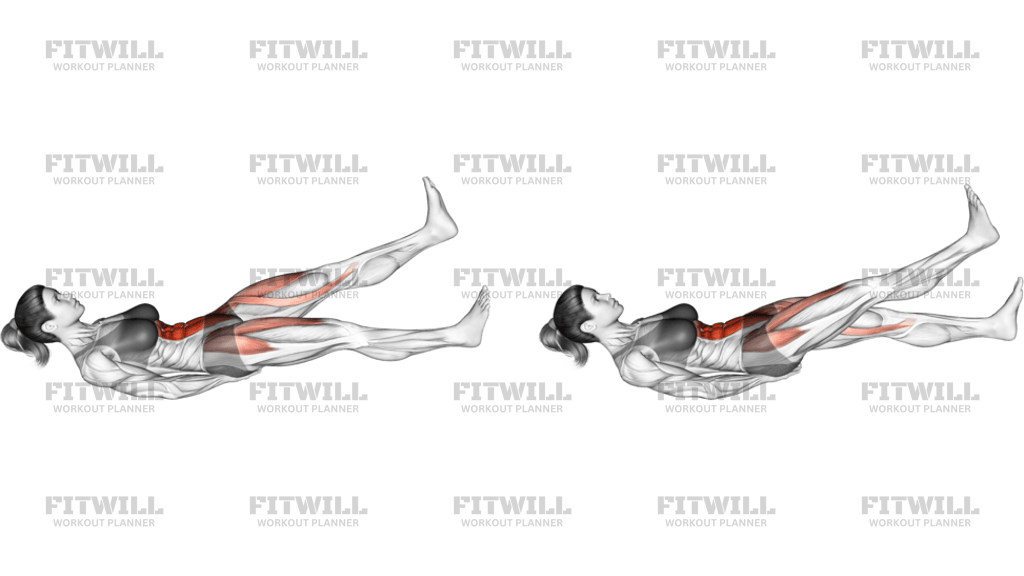
Hip Raise Crunch
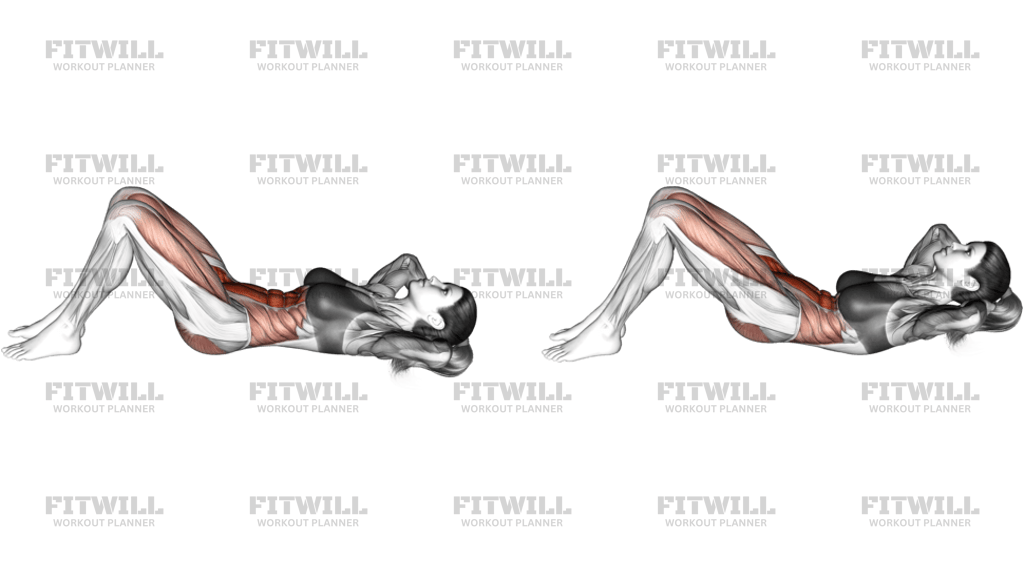
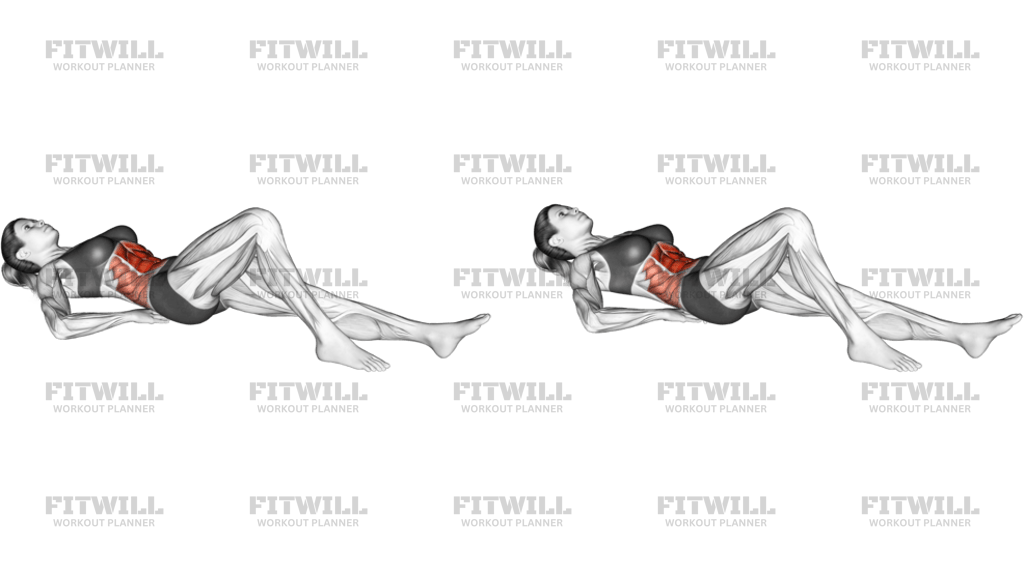
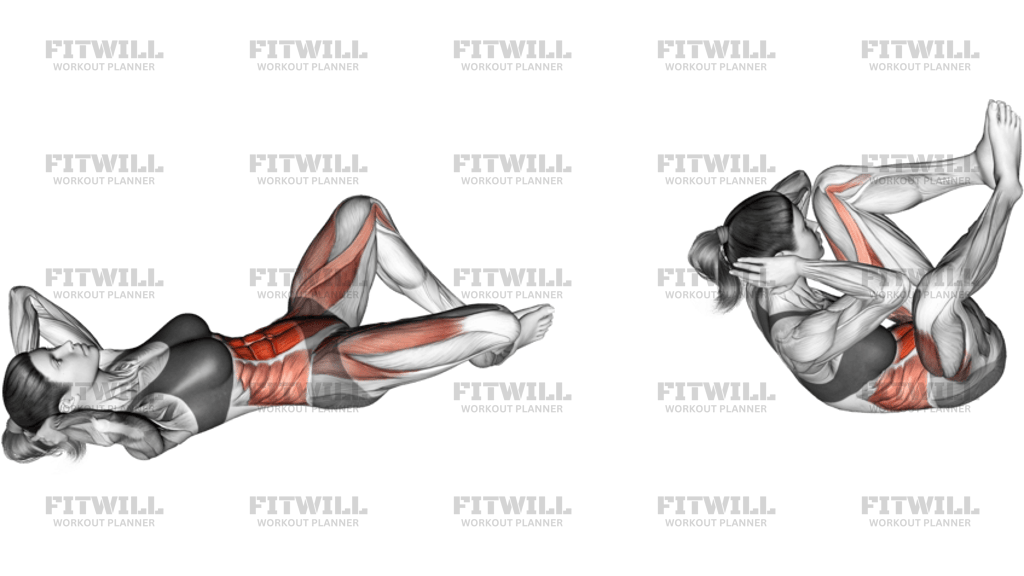
Hip Raise Crunch is a floor-based core exercise that combines a short crunch with a small hip raise. You start on your back with the knees bent, feet planted, and hands lightly supporting the head. From there, the ribcage curls toward the pelvis while the hips lift just enough to add a stronger abdominal contraction without turning the movement into a full bridge.
The exercise mainly targets the rectus abdominis, with help from the obliques and deep core to control rib position and pelvic tilt. The hip flexors and glutes assist during the raise, but the rep should still feel like an abdominal curl with a coordinated pelvis tuck, not a swinging leg drive. Because the lever is short, setup matters: if the feet are too far away or the lower back arches, the movement shifts away from the abs and into the hips and spine.
The clean version starts by bracing the trunk, gently pressing the low back toward the floor, and keeping the elbows open so the head does not get pulled forward. As you exhale, lift the shoulders a few inches and then tuck the pelvis to raise the hips a small distance off the floor. The top position is compact and controlled, with the ribs drawn down and the neck relaxed. Lower in the same order, letting the hips settle before the shoulders if needed.
Hip Raise Crunch is useful when you want a simple bodyweight core drill that trains spinal flexion and pelvic control together. It fits well in warm-ups, core circuits, and abdominal finishers, especially for people who need to learn how to curl the torso without overusing momentum. Keep the range pain-free and stop the set if the neck starts taking over or if the lower back begins to arch as the hips rise.
Fitwill
Log Workouts, Track Progress & Build Strength.
Achieve more with Fitwill: explore over 9600 exercises with images and videos, access built-in and custom workouts, perfect for both gym and home sessions, and see real results.
Start your journey. Download today!




Instructions
- Lie on your back with your knees bent, feet flat on the floor, and feet about hip-width apart.
- Place your hands lightly behind your head or at your temples and keep your elbows open.
- Exhale, tuck your chin slightly, and press your low back gently into the floor.
- Lift your shoulder blades a few inches off the floor without pulling on your neck.
- As you keep the crunch, tuck your pelvis and raise your hips just a few inches.
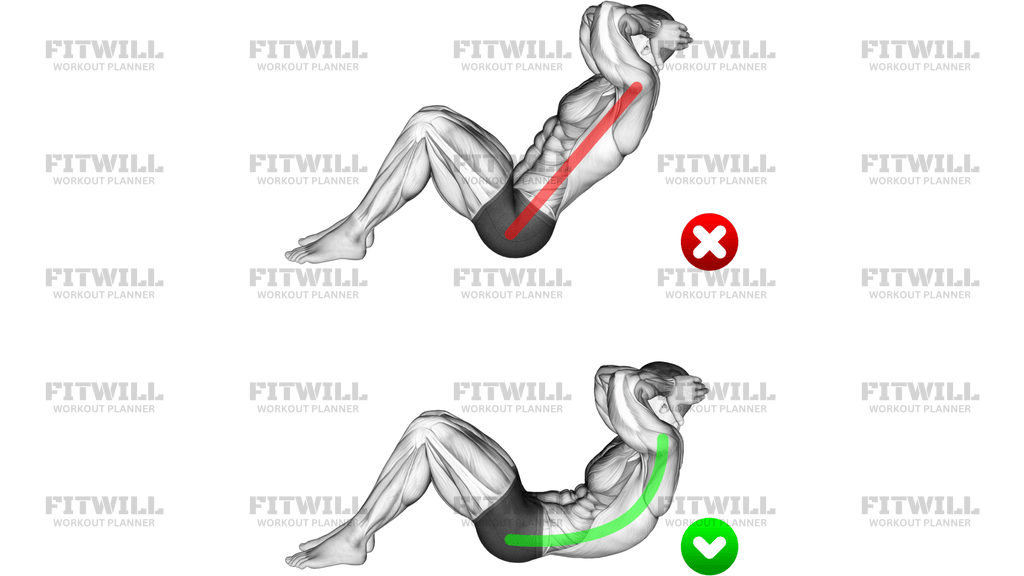
- Keep the movement compact so the ribs move toward the pelvis instead of the torso rocking forward.
- Pause briefly at the top while the abs stay tight and the neck stays relaxed.
- Lower your hips and shoulders slowly back to the floor, then reset your breath before the next rep.
Tips & Tricks
- Keep your hands light behind the head; they are there for support, not for yanking the neck forward.
- Think about curling the ribs toward the pelvis first, then adding the small hip raise.
- A short range is correct here; the top should feel like a strong tuck, not a big bridge.
- Press through the heels and midfoot so the legs help stabilize without taking over.
- Exhale as the shoulders and hips lift to help keep the ribs from flaring.
- If your low back arches, move your feet a little closer to your hips and shorten the rep.
- Keep the elbows wide so the chest can stay open while the chin remains slightly tucked.
- Lower slowly enough that each rep starts from a controlled floor contact instead of a drop.
Frequently Asked Questions
What muscles does Hip Raise Crunch work?
It mainly works the rectus abdominis, with help from the obliques and deep core. The hip flexors and glutes assist during the small raise, but the abs should drive the curl.
Is Hip Raise Crunch good for beginners?
Yes, as long as you keep the range small and avoid pulling on the neck. Beginners often do best with slow reps and no extra load.
Where should my feet be in the Hip Raise Crunch?
Keep your feet flat and about hip-width apart, with the heels close enough that you can press the floor without your low back arching.
Should I lift my hips high at the top?
No. The hip raise should be small and controlled, just enough to add a strong pelvic tuck without turning the rep into a bridge.
Should my shoulders come off the floor?
Yes, but only enough to clear the shoulder blades. If you are sitting all the way up, the movement has become a different exercise.
Why do my neck or upper traps take over?
That usually means the hands are pulling too hard or the chin is too tucked. Keep the hands light and let the ribs move toward the pelvis instead.
How do I make the Hip Raise Crunch harder?
Slow the lowering phase, hold the top briefly, or add reps before adding load. Keep the same compact range so the harder version still looks like the same exercise.
What is the biggest mistake in Hip Raise Crunch?
Using momentum by rocking the torso or throwing the hips up too high. The rep should stay compact, smooth, and controlled from start to finish.