Hanging Straight Twisting Leg Hip Raise
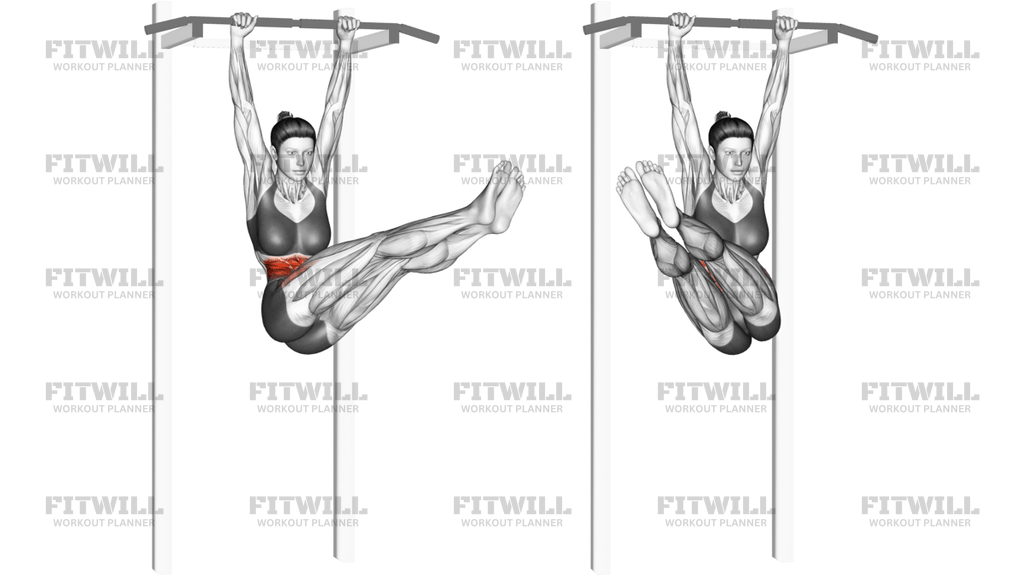
Hanging Straight Twisting Leg Hip Raise is a bodyweight hanging core exercise that trains the lower abs, obliques, hip flexors, grip, and shoulder stabilizers through a strict hanging raise. The image shows the legs staying long rather than bent, with the pelvis tucking and the lower body rotating as the legs rise. That combination makes the movement more demanding than a simple knee raise because the trunk has to resist swing while the hips and abs control both lift and twist.
The exercise is useful when you want direct anti-swing core work with a strong hip flexion component. The hanging position forces the lats, forearms, and shoulder girdle to support bodyweight while the abdominals organize the pelvis. The twist adds an oblique emphasis, but the rep should still look controlled and compact rather than like a big swinging kick. The visible effort in the image comes from the lower torso and the front of the hips, not from momentum.
Setup matters because this movement gets messy quickly if you start from a loose dead hang and swing into the first rep. Grip the bar firmly, let the shoulders stay active, and create a still body before lifting. From there, raise the straight legs while keeping them together, then rotate the pelvis and legs slightly so one side of the lower abdomen has to work harder through the top of the rep. The return should be slow and deliberate so the swing does not build from rep to rep.
Use this exercise as accessory core work, in a calisthenics session, or as part of a hanging abs circuit after the main lifts. It is demanding enough that most trainees should start with a smaller range, bent-knee version, or reduced twist before progressing to straight legs. Clean body position matters more than height, so the best repetition is the one you can repeat without jerking the torso, flaring the ribs, or losing the pelvic tuck.
If the movement feels mostly in the hip flexors or lower back, the range is probably too large or the body is swinging. Keep the ribs down, the legs together, and the lowering phase under control. When it is done well, the set creates a strong burn through the lower abs and obliques while teaching the body to raise the legs from a stable hanging posture instead of from momentum.
Fitwill
Log Workouts, Track Progress & Build Strength.
Achieve more with Fitwill: explore over 9600 exercises with images and videos, access built-in and custom workouts, perfect for both gym and home sessions, and see real results.
Start your journey. Download today!




Instructions
- Hang from the pull-up bar with both hands shoulder-width apart and let the body settle into a still position.
- Keep the shoulders active, the ribs down, and the legs together with the toes pointed forward.
- Engage your abs and slightly tuck the pelvis before the first rep so the lift starts from the trunk, not from a swing.
- Raise both straight legs in front of you while keeping them long and together.
- As the legs come up, rotate the hips and lower body slightly to one side so the obliques help finish the top position.
- Pause briefly at the top with control, without kicking or leaning back.
- Lower the legs slowly to the starting hang while keeping tension in the abs and grip.
- Reset the swing before the next repetition and repeat for the planned reps.
Tips & Tricks
- If the bar swing starts increasing, pause between reps until the body goes still again.
- Keep the legs together so the twist comes from the pelvis and torso, not from one leg drifting away.
- Think about curling the pelvis upward as the legs rise; that helps the lower abs do more of the work.
- Do not turn the shoulders aggressively with the twist; the rotation should stay small and controlled.
- A slight bend in the elbows is fine, but avoid shrugging or hanging passively through the shoulders.
- Use a smaller range if the straight-leg version forces you to arch your lower back.
- Exhale as the legs rise and rotate, then inhale on the controlled lower.
- If your grip fails before your abs do, shorten the set or use fewer reps per set.
Frequently Asked Questions
What does Hanging Straight Twisting Leg Hip Raise train the most?
It primarily challenges the lower abs and obliques, while the hip flexors, grip, and shoulder stabilizers help support the hanging position.
Is the straight-leg version too hard for beginners?
Often yes. Many beginners should start with a hanging knee raise or a smaller range before progressing to straight legs and a twist.
Should I swing to get my legs higher?
No. Swinging makes the rep easier but removes tension from the abs and usually turns the exercise into momentum work instead of core work.
How much should I twist at the top?
Only a small, controlled twist is needed. The goal is to feel the obliques help, not to spin the torso or whip the legs side to side.
Why do I feel this in my hip flexors more than my abs?
That usually means the pelvis is not tucking enough or the range is too large. Shorten the lift slightly and focus on curling the hips upward.
Can I bend my knees if straight legs are too difficult?
Yes. Bent knees reduce the lever arm and let you keep the movement strict before you progress back to straight legs.
How do I keep the set from turning into a pull-up bar endurance drill?
Use strict sets with full resets, keep the shoulders active, and stop before grip fatigue forces you to lose the leg path.
What is a good progression for this movement?
Progress from hanging knee raises to straight-leg raises, then add the twisting component only after you can control the no-twist version cleanly.