Hanging Straight Leg Raise
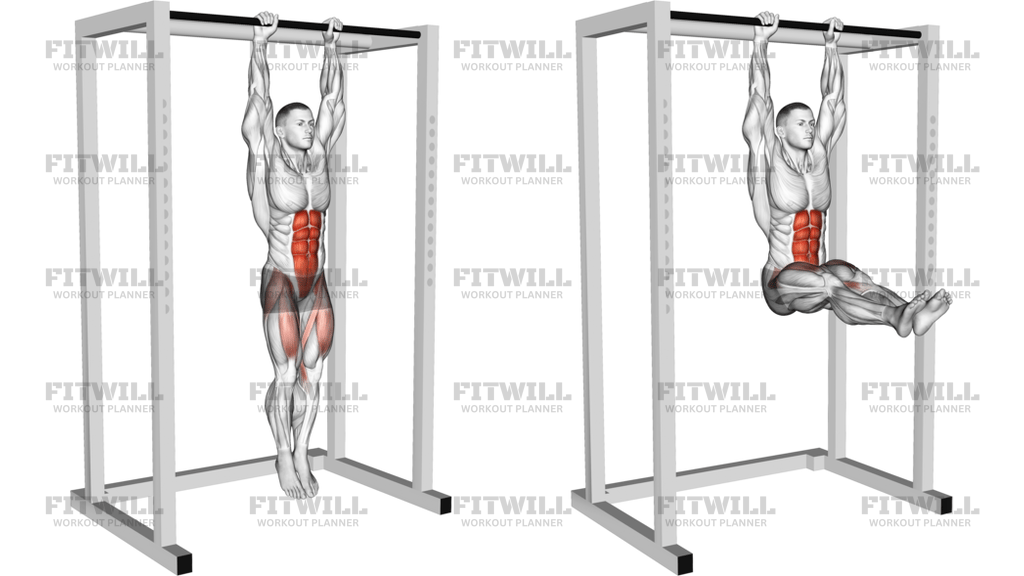
Hanging Straight Leg Raise is a bodyweight core exercise done from a secure overhead bar. The movement asks you to keep your torso quiet while you lift straight legs in front of you, so it challenges the abs, hip flexors, grip, and shoulder stabilizers at the same time. Because the body is suspended, even a small amount of swinging changes the exercise quickly, which is why the setup and control matter as much as the lift itself.
The exercise is especially useful when you want a stricter hanging core drill than a simple knee raise. Keeping the legs long increases the leverage on the trunk and makes it harder to cheat with momentum. It also exposes whether the shoulders can stay active and whether the pelvis can stay tucked instead of arching the lower back to create fake range.
A good Hanging Straight Leg Raise starts with an active hang, ribs down, and the legs held together before the first rep. From there, the legs travel forward under control until the pelvis begins to curl and the abdominals take over the finish of the rep. If hamstrings or low-back tension limit a true straight-leg position, a slight knee softness is usually better than forcing a sloppy swing.
This movement fits well in core training, gymnastics-style bodyweight work, or upper-body sessions where you want an abdominal drill that also challenges grip and shoulder endurance. It can be scaled by reducing range, slowing the lowering phase, or bending the knees slightly, and it can be progressed by raising the legs higher without losing the hang position or by pausing at the top.
Safety comes from staying strict. If the body starts rocking, the shoulders shrug, or the lower back takes over, the set is too hard or the range is too long. Keep the descent controlled, reset the dead hang between reps if needed, and stop before the movement turns into a kick or a swing.
[ Workout Log & Planner ]
Put your next workout in Fitwill
Keep your plan and training log ready when you are.


Instructions
- Grip a secure pull-up bar with both hands about shoulder-width apart and hang with your feet off the floor.
- Set your shoulders down and slightly back so you are hanging actively instead of collapsing into the joints.
- Bring your ribs down, tighten your midsection, and keep your legs together before the first rep starts.
- Keep the knees straight or only softly unlocked as you begin lifting both legs forward.
- Raise the legs under control until they reach about hip height or until your pelvis starts to curl without swinging.
- Pause briefly at the top while keeping the torso quiet and the shoulders active.
- Lower the legs slowly until they return to the start position without letting the body swing back.
- Reset the hang before the next rep if momentum starts building, then repeat for the next controlled raise.
Tips & Tricks
- A slight knee bend is acceptable if straight legs force you to swing or arch your lower back.
- Start each rep from a dead stop; if your feet keep drifting, the set is too heavy on momentum.
- Think about curling the pelvis up at the top instead of just lifting the feet higher.
- Keep the bar grip firm enough that the forearms do not become the limiting factor before the abs do.
- Exhale as the legs rise so the ribs stay down and the lower back does not flare.
- Stop the set when the descent gets fast; the lowering phase should look as strict as the lift.
- If your shoulders shrug toward your ears, shorten the set or use fewer reps per set.
- For a harder version, add a short pause with the legs elevated before lowering.
Frequently Asked Questions
What muscles does Hanging Straight Leg Raise work?
Hanging Straight Leg Raise mainly trains the abs and hip flexors, with the grip, lats, and shoulder stabilizers working hard to keep the body steady. The lower back and obliques help resist swinging and control the pelvis.
Is Hanging Straight Leg Raise harder than a hanging knee raise?
Yes. Straight legs create a longer lever, so the abs have to work harder to keep the pelvis from tilting forward and the body from swinging.
How high should my legs go in Hanging Straight Leg Raise?
Raise them as high as you can without turning the rep into a kick or losing the active hang. For most people, hip height with a visible pelvic curl is a better target than forcing the feet to the bar.
Can I bend my knees a little during Hanging Straight Leg Raise?
Yes. A slight bend is a smart regression if straight legs make you arch, swing, or lose control through the lowering phase.
Why do I swing when I do Hanging Straight Leg Raise?
Swing usually comes from starting the rep with too much momentum, lifting too high too fast, or letting the shoulders and ribs drift out of position. Reset between reps and shorten the range if needed.
What is the most common mistake in Hanging Straight Leg Raise?
The most common mistake is turning it into a leg kick instead of a controlled abdominal lift. If the torso rocks and the legs whip upward, the abs are no longer driving the movement.
Is Hanging Straight Leg Raise safe for my lower back?
It can be, as long as you keep the ribs down and avoid forcing range by arching the low back. If your back feels pinched, reduce the range or switch to a bent-knee version.
How can I make Hanging Straight Leg Raise harder without adding weight?
Use a slower lowering phase, add a pause at the top, or keep the legs straighter through a larger strict range. More reps only help if you can keep the hang controlled.