Reverse Crunch Version 3
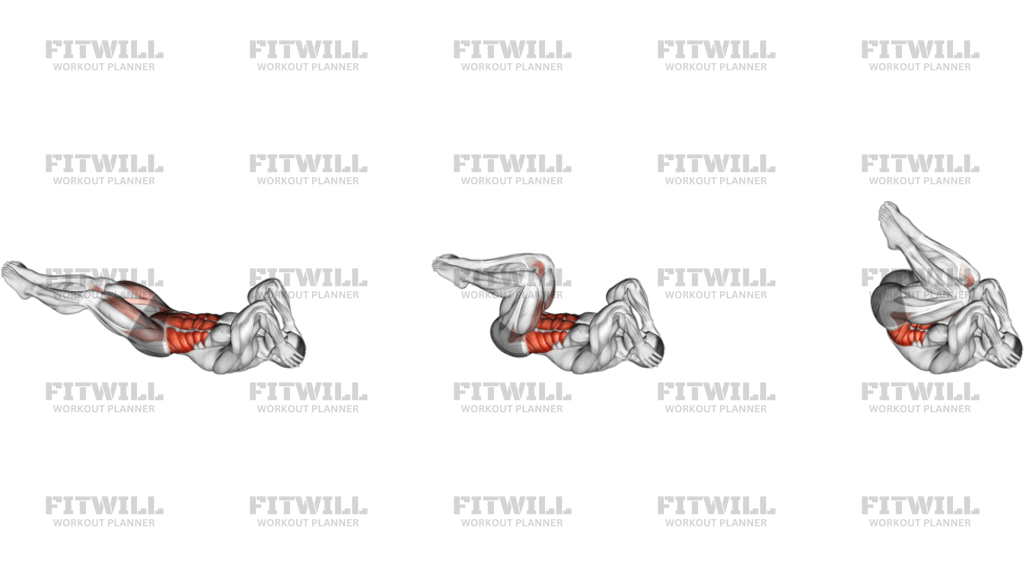
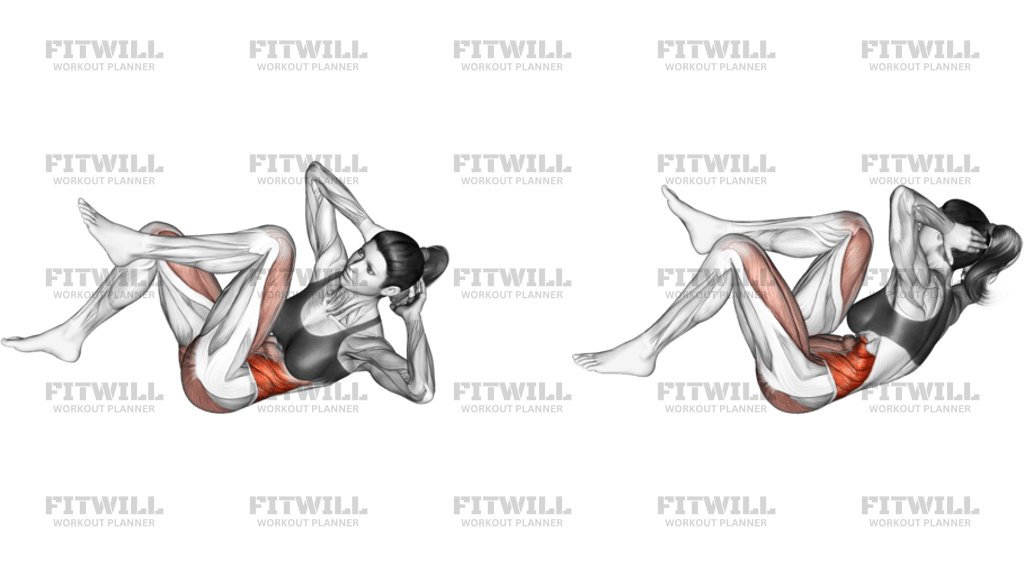
Reverse Crunch Version 3 is a bodyweight floor exercise that trains lower-ab strength, pelvic control, and a clean curling pattern through the torso. The image shows a supine setup with the knees tucking in and the pelvis rolling up, so the goal is not just to lift the legs but to curl the tailbone off the floor with control. That makes it a useful option for core sessions, warm-ups, or accessory work when you want a compact ab movement that does not require any equipment beyond a mat.
Set up face up on the floor with the back of your head and shoulders relaxed, hands lightly behind your head, and elbows open so you do not pull on the neck. Extend the legs long enough to start with tension, but keep the low back gently pressed toward the floor before each rep. From there, exhale and brace so the ribs stay down and the pelvis can curl instead of the lower back arching away.
Each rep should begin by drawing the knees toward the chest and rolling the hips up only as far as the abs can control. The motion is small and deliberate: the pelvis curls, the thighs move closer to the torso, and the feet travel in a smooth arc rather than a kick. If the movement turns into a swing, shorten the range and slow the tempo until the abs are doing the work again.
Lower under control until the tailbone and low back settle back to the floor, then extend the legs again without losing the tucked rib position. Keep the neck quiet and let the abdomen dictate the speed of the rep, not momentum from the legs. A clean reverse crunch should feel controlled from the first inch of the curl to the last inch of the return.
Reverse Crunch Version 3 fits well as a strict ab finisher, a regression from more aggressive core work, or a drill for learning how to posteriorly tilt the pelvis under load. It also pairs well with plank variations because it teaches you to keep the torso organized while the hips move. Use it when you want a simple floor exercise that rewards precision, not speed, and stop the set when the curl becomes a leg swing.
[ Workout Log & Planner ]
Put your next workout in Fitwill
Keep your plan and training log ready when you are.


Instructions
- Lie face up on a mat with the back of your head and shoulders down, hands lightly behind your head, and elbows open.
- Extend your legs long enough to feel tension through the abs, then press your low back gently into the floor before the first rep.
- Exhale and brace so your ribs stay down and your pelvis is ready to curl upward.
- Draw your knees toward your chest in a smooth arc instead of kicking or swinging your legs.
- Lift your tailbone and lower back slightly off the floor by curling your pelvis toward your ribs.
- Pause for a moment at the top when your knees are closest to your torso and the abs are fully shortened.
- Lower your hips and low back back to the mat under control, keeping the neck relaxed and the movement quiet.
- Re-extend the legs without arching your lower back, then repeat for the planned number of repetitions.
Tips & Tricks
- Keep the elbows wide and let the hands rest lightly behind the head so you do not turn the rep into a neck pull.
- If your lower back arches before the curl starts, bend the knees a little more and shorten the leg extension.
- Think about tucking the pelvis toward the ribs, not just lifting the knees higher.
- Stop the upward phase as soon as the hips start to roll, because kicking farther usually shifts tension away from the abs.
- A slow two- to three-second lowering phase makes this version much harder and keeps the abs under tension longer.
- Keep your feet together or close together so the legs do not drift apart and change the line of the curl.
- Exhale as the knees come in; if you hold your breath, the torso usually stiffens and the pelvis stops moving cleanly.
- If you feel the neck working, place the hands more lightly or reduce how far you curl toward the torso.
Frequently Asked Questions
What muscles does Reverse Crunch Version 3 train most?
It mainly targets the lower abs and the muscles that control posterior pelvic tilt, with the hip flexors and obliques helping to stabilize the movement.
Can beginners do Reverse Crunch Version 3 on the floor?
Yes. Beginners usually do best with bent knees and a smaller curl so they can keep the low back from arching off the floor too early.
Should my hands stay behind my head during Reverse Crunch Version 3?
They can, as shown here, but they should stay light. If you catch yourself pulling on the neck, move the hands to the floor beside you or reduce the curl depth.
How high should my hips lift in Reverse Crunch Version 3?
Only high enough for the pelvis to curl and the tailbone to peel slightly off the floor. If the hips swing or the legs throw momentum, the range is too large.
Why do I feel Reverse Crunch Version 3 in my hip flexors?
That usually happens when the legs are swinging instead of the pelvis curling. Bend the knees more, slow the lowering phase, and focus on bringing the ribs and pelvis closer together.
Do I need to keep my lower back on the floor the whole time?
It should stay controlled against the floor on the way down, then peel up slightly as the pelvis curls. If the back arches hard at the start, the setup or range is too aggressive.
What is the best rep range for Reverse Crunch Version 3?
Most people get good results with 8-15 slow, controlled reps. Use the lower end if the curl is strict and the higher end only if the pelvis stays organized the whole set.
What can I use instead of Reverse Crunch Version 3 if the floor bothers my neck?
Try a reverse crunch with your hands on the floor beside you, or use a smaller knee tuck with less range until you can keep the neck completely relaxed.