Jack Knife On Ball
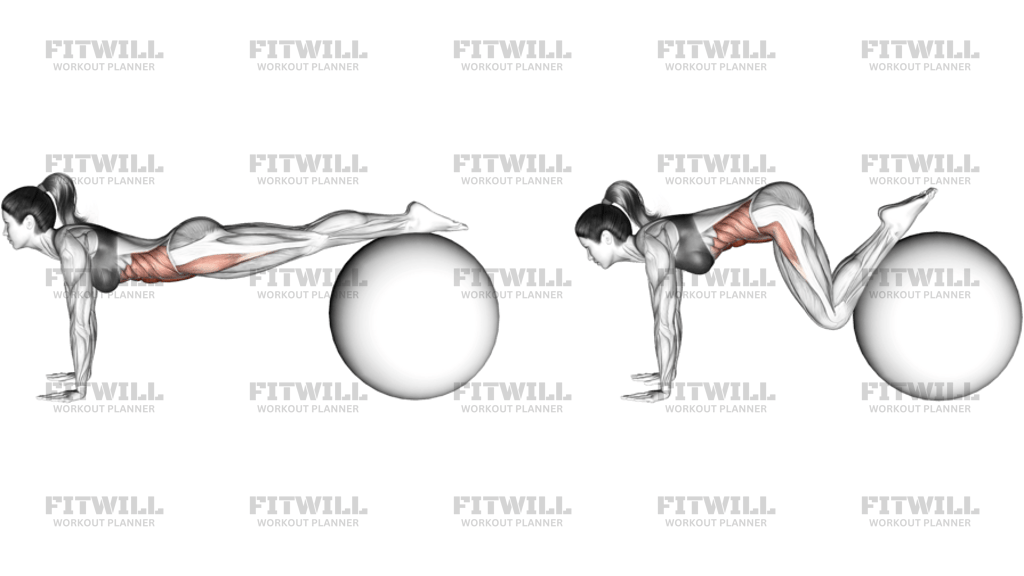
Jack Knife On Ball is a bodyweight core exercise built around a stability ball and a plank-to-pike style fold. It trains the abs to shorten forcefully while the shoulders, hip flexors, and deep core keep the body organized. The movement looks simple, but the unstable ball makes every rep depend on precise control rather than speed. That makes Jack Knife On Ball useful when you want a core drill that challenges body tension instead of just adding more reps.
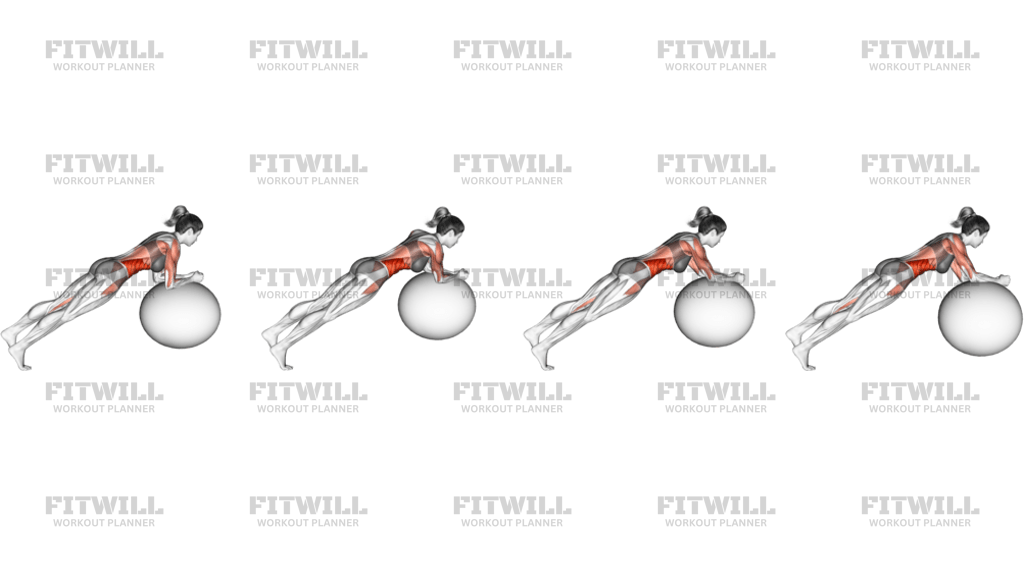
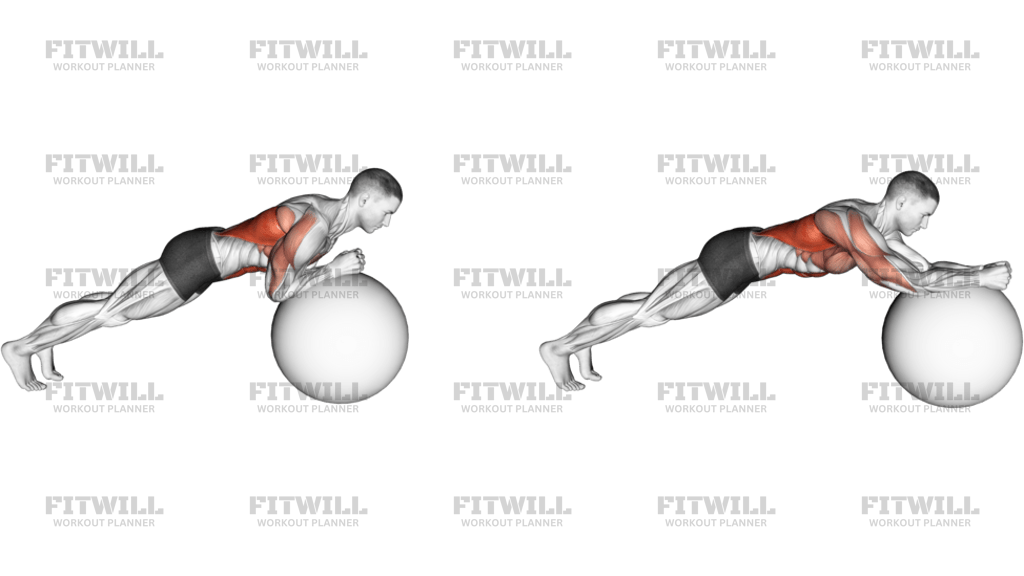
Start with your hands under your shoulders and the ball under your shins or the tops of your feet. The body should begin in a long plank with the ribs pulled down, glutes lightly squeezed, and the neck neutral. If the ball sits too far forward or too far back, the rep gets sloppy and the low back starts doing work it should not have to do. Getting the stack right before the first rep matters more here than on a stable surface because the ball magnifies every shift.
From that plank, exhale and pull the knees toward your chest while lifting the hips and rolling the ball in. Think about shortening the front of the torso instead of just dragging the feet, and keep the hands planted so the shoulders stay active. At the top, the body should form a tight pike or jackknife shape with the abs doing the main work. Then lower slowly, letting the legs extend until you are back in a controlled plank.
Jack Knife On Ball fits well in core circuits, accessory work, or warmups for athletes who need better trunk control during unstable positions. It is also a good test of whether the midsection can hold shape while the hips move through a big range. Use controlled reps and stop before the shoulders drift behind the wrists or the lower back starts to sag. A shorter range with clean tempo is a better choice than chasing a bigger tuck with momentum.
Beginners can scale it by reducing the tuck range, moving the ball closer to the ankles, or doing fewer reps with longer pauses. If the hamstrings cramp or the ball squirms away, the set is usually too aggressive or the setup is off. Keep the movement smooth, breathe out on the fold, and reset carefully between reps so the next repetition starts from a stable plank rather than a collapsing position.
Fitwill
Log Workouts, Track Progress & Build Strength.
Achieve more with Fitwill: explore over 9600 exercises with images and videos, access built-in and custom workouts, perfect for both gym and home sessions, and see real results.
Start your journey. Download today!




Instructions
- Place your hands on the floor under your shoulders and put your shins or the tops of your feet on the center of the stability ball.
- Walk your hands out until your body forms a straight plank from shoulders to heels, then squeeze your glutes and pull your ribs down.
- Press the floor away, keep your neck long, and make sure the ball stays under the lower legs before you start.
- Exhale and pull the ball toward your chest by bending at the hips and lifting your pelvis.
- Keep your hands fixed and let the ball roll in as your knees travel toward your torso.
- Pause briefly when your hips are high and your abs are fully shortened.
- Inhale and slowly extend your legs back until your body returns to a long plank without letting your lower back sag.
- Reset the ball position if it drifts, then repeat for the planned reps.
Tips & Tricks
- If the ball shoots away, start with it closer to your ankles and use a smaller tuck.
- Keep your shoulders stacked over your wrists; drifting back turns the set into a shoulder-balance drill.
- A soft knee bend can help if straight legs cause hamstring cramps during the rollout.
- Drive the rep by curling the pelvis upward, not by bouncing the ball off the floor.
- Keep your fingers spread and press through the whole hand so the shoulders stay active.
- Move slowly on the way back out; the eccentric return is where the abs keep the ball from pulling you long too fast.
- Stop the set when your low back starts to arch or the ball begins to wobble side to side.
- Exhale through the tuck to help keep the rib cage closed and the trunk tight.
- If the wrists feel crowded, place the hands slightly wider than shoulder width for more base stability.
- Use a smaller range before adding reps if you cannot keep the ball under control for every repetition.
Frequently Asked Questions
What muscle does Jack Knife On Ball target most?
It primarily targets the abs, with the hip flexors and obliques helping during the tuck and the shoulders stabilizing the plank.
Where should the stability ball be at the start?
The ball should sit under your shins or the tops of your feet while you hold a straight plank with your hands under your shoulders.
Is Jack Knife On Ball beginner friendly?
It can be, but most beginners should start with a short tuck and fewer reps because the ball makes the plank much less stable.
Why do I feel this in my shoulders?
Your shoulders support part of your body weight the whole time, so some load there is normal. If it feels excessive, shorten the range and keep the hands firmly pressed into the floor.
Why is my lower back taking over?
The usual causes are a sagging plank, the ball sitting too far back, or trying to tuck with momentum instead of pulling the pelvis up under the torso.
Should my legs stay straight?
They should lengthen on the way out, but a slight bend is fine if straight legs cause cramping or make the ball slip.
How is this different from a stability ball knee tuck?
Jack Knife On Ball usually finishes in a higher pike position, so the hips rise more and the torso folds more aggressively than a basic knee tuck.
Can I make it easier?
Yes, use a smaller range of motion, move the ball a little closer to your hands at the start, or perform fewer controlled reps with a slower return.