Medicine Ball Lying Leg Raise
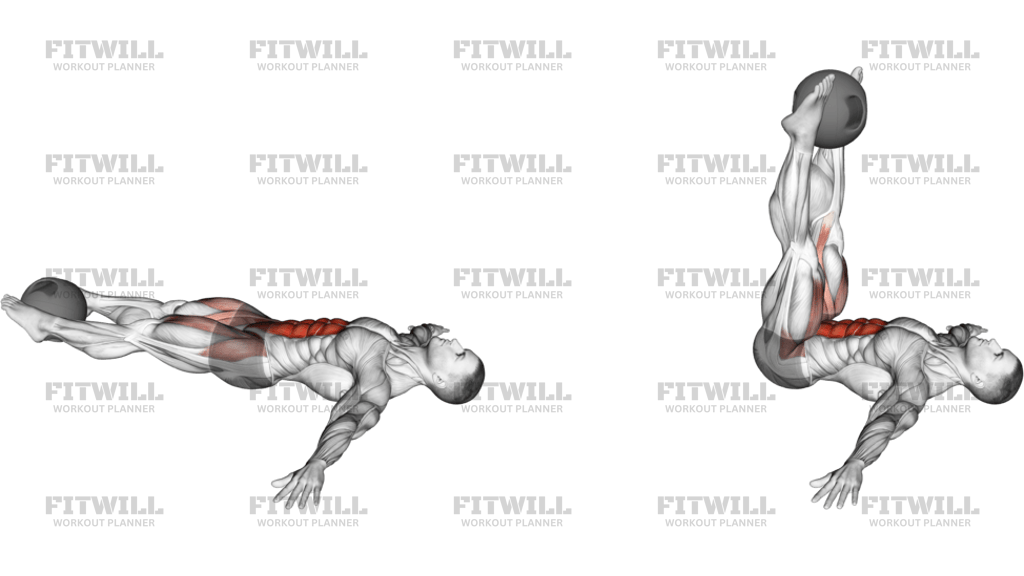
Medicine Ball Lying Leg Raise is a floor-based core exercise where you lie on your back, clamp a medicine ball between your feet, and raise and lower the straight legs under control. The ball changes the feel of the movement by forcing you to keep the ankles and feet aligned while the abs do the work of lifting and controlling the pelvis. It is a direct way to train lower-abdominal control, hip flexor coordination, and the ability to keep the trunk quiet while the legs move.
The setup matters more here than on a basic leg raise because the ball can shift if your feet are lazy or the movement gets rushed. Lie flat with the head, shoulders, and pelvis settled on the floor, then hold your arms out to the sides for balance. Keep the ball pinched firmly between the feet or ankles, draw the ribs down, and keep the lower back heavy against the floor before the first rep starts.
Each rep should feel like a controlled lift from the lower abs, not a kick or swing from the hips. Raise the legs until the pelvis starts to curl slightly, then stop before the low back loses contact or the ball starts to wobble. Lower slowly to the point where you can still control the trunk and keep the ball secure. The goal is a smooth path up and down with no snapping at the top and no dropping on the way down.
This exercise is useful as accessory core work, a bodyweight-plus-load progression, or a way to challenge trunk control without needing a bench or machine. Beginners can use a lighter medicine ball and a shorter range of motion, while more advanced lifters can slow the lowering phase and keep the legs straighter. If the low back arches, the neck tightens, or the ball starts slipping, shorten the range and clean up the position before adding reps or load.
[ Workout Log & Planner ]
Put your next workout in Fitwill
Keep your plan and training log ready when you are.


Instructions
- Lie on your back and place the medicine ball between your feet or ankles so you can clamp it securely.
- Extend your legs long, spread your arms out on the floor for balance, and keep your palms pressing lightly down.
- Set your ribs down, brace your abs, and flatten your lower back against the floor before lifting.
- Squeeze the ball firmly so it cannot shift as you start the first rep.
- Exhale and raise your straight legs toward the ceiling by curling the pelvis and pulling from the lower abs.
- Keep the knees mostly straight, but do not lock them so hard that your hips take over the movement.
- Lift until the pelvis starts to peel and the ball stays centered over your feet, then pause briefly at the top.
- Inhale and lower the legs slowly until just before your low back wants to arch off the floor.
- Reset the brace after each rep and repeat for the planned number of repetitions.
Tips & Tricks
- Choose a light medicine ball first; if the ball shifts, the load is probably too heavy for strict control.
- Keep the ball clamped with the feet and ankles, not just balanced on the toes.
- Use your arms as outriggers by pressing them into the floor to stop your torso from rocking.
- If your hamstrings cramp, soften the knees slightly instead of forcing a perfectly straight leg.
- Do not chase a huge range of motion; stop the descent the moment your lower back starts to arch.
- Move with a slow lowering phase so the abs stay active instead of letting gravity drop the ball.
- Keep your chin neutral and avoid pushing the head forward, especially on the final few reps.
- If the ball slips even once, reset the foot position before continuing the set.
Frequently Asked Questions
What muscles does the Medicine Ball Lying Leg Raise train most?
It mainly trains the rectus abdominis, with the hip flexors and obliques helping to control the lift and the lowering phase.
Why is the medicine ball held between the feet?
Clamping the ball between the feet or ankles adds a control challenge and keeps the legs working as one unit instead of drifting apart.
Is this harder than a regular lying leg raise?
Usually yes. The ball makes the setup less forgiving, so you have to control both the leg path and the object between the feet.
Can beginners use this exercise?
Yes, but start with a light medicine ball and a shorter range so you can keep the low back flat and the ball secure.
Where should my arms go during the rep?
Keep the arms out to the sides or palms-down on the floor so they can help stabilize the torso without pushing the legs.
What is the most common mistake with this movement?
The biggest mistake is letting the lower back arch while the legs swing down too far, which usually happens when the rep gets rushed.
What should I do if the ball slips?
Stop the set, reset the feet, and use a lighter ball or a smaller range of motion before continuing.
How can I make the exercise more challenging?
Slow the lowering phase, keep the legs straighter, or use a slightly heavier ball only if you can still keep the pelvis controlled.