Crunch On Bosu Ball
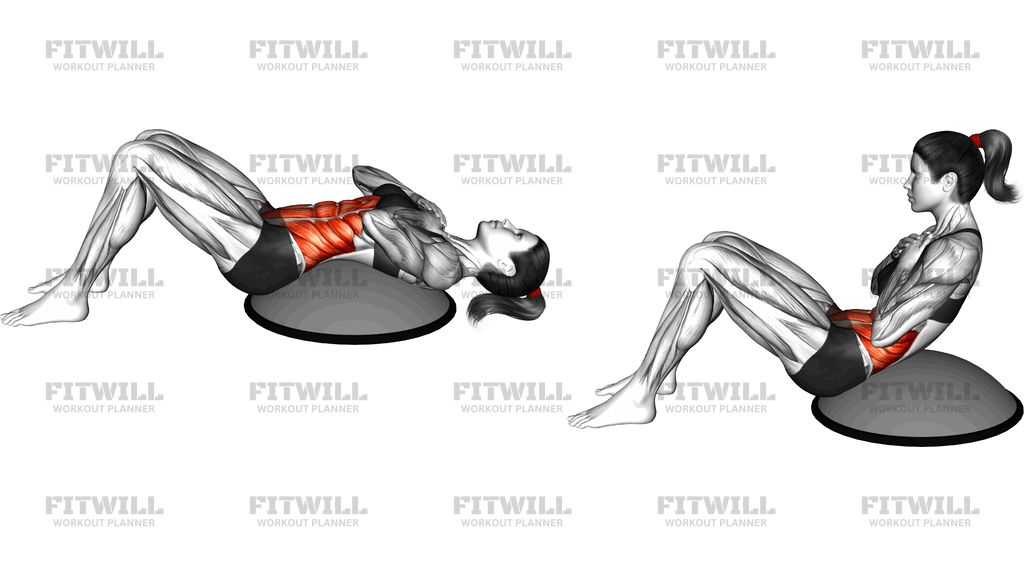
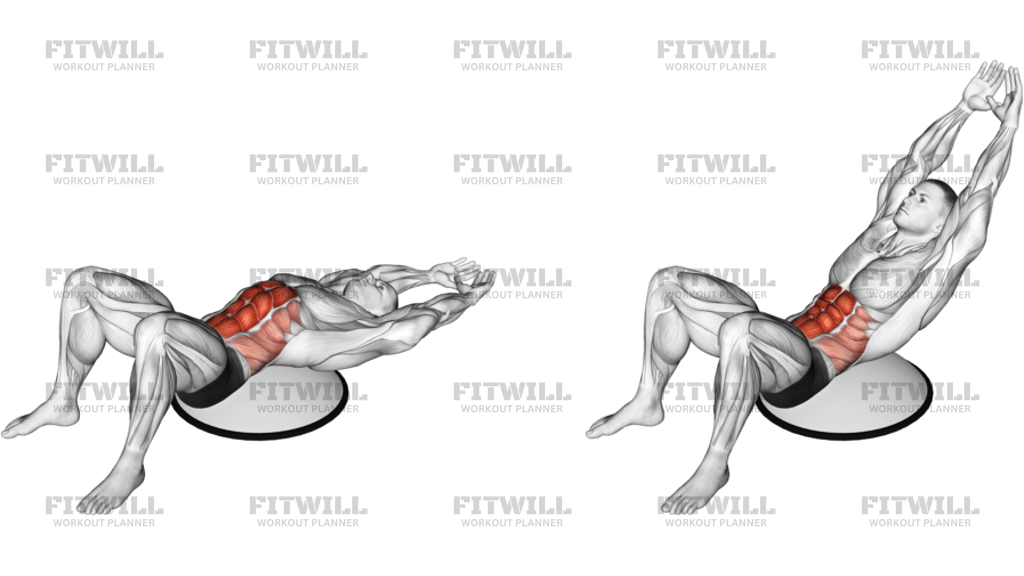
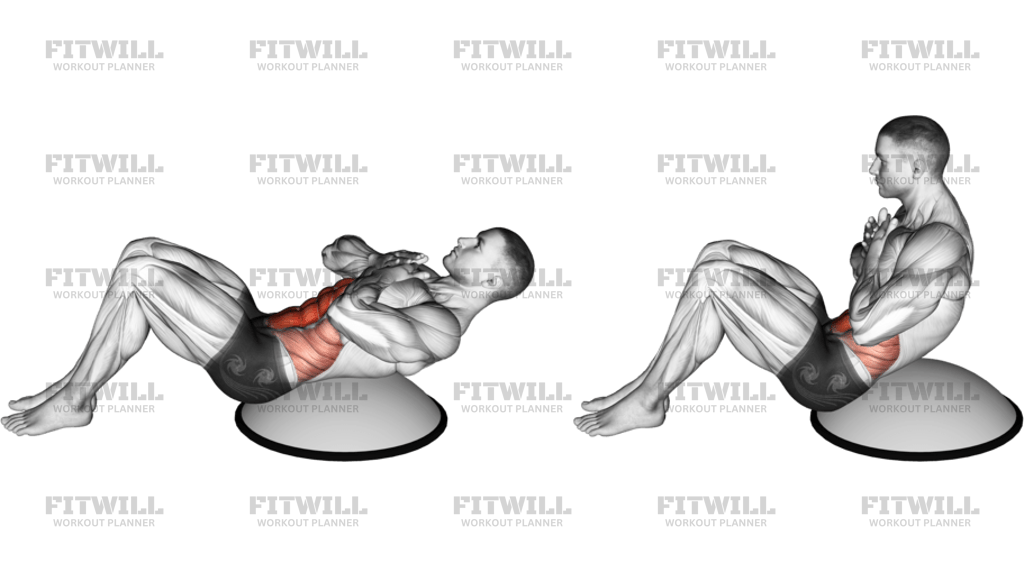
Crunch on a BOSU ball is a core isolation exercise that places your upper back on the rounded dome and your feet on the floor, creating a slightly unstable starting position for a controlled spinal curl. The setup makes the rep feel different from a flat-floor crunch because your torso begins a little more open and your balance has to stay organized while the abs do the work. It is still a short-range crunch, not a sit-up: the goal is to curl the ribs toward the pelvis and lift the shoulder blades cleanly off the dome.
The main training target is the rectus abdominis, with the obliques and deeper trunk muscles helping stabilize the torso and keep the pelvis from tipping. Because the BOSU adds a curved support surface, you get a useful reminder to move from the abdomen instead of yanking with the neck or swinging the upper body. The exercise fits well in core-focused sessions, accessory blocks, and warm-ups where you want a stricter crunch variation without loading the spine heavily.
Good execution starts with the body position. Sit on the dome, walk the feet out until the mid-back is supported across the curve, and plant the feet so the knees stay bent and the soles stay flat. Cross the arms over the chest or keep fingertips lightly at the temples. Before every rep, exhale, brace, and keep the chin slightly tucked so the neck stays long while the ribs fold down toward the pelvis.
As you crunch, the shoulder blades should leave the BOSU only as far as you can control. Stop when the abdominal contraction is strongest and the pelvis stays quiet, then lower slowly until the upper back settles back onto the dome. If the movement turns into a hip-flexor-driven sit-up, reduce the range and focus on a smaller, cleaner curl. If the BOSU feels too unstable, widen the foot stance or shorten the rep until the torso stays steady.
Used well, this variation is a simple way to build better trunk awareness, tempo control, and repeatable abdominal tension. It is usually appropriate for beginners because the load is low, but the unstable support still exposes sloppy form quickly, which makes setup and breathing especially important. Treat each rep as a small, precise curl rather than a forceful rise, and the BOSU will work as a cue for control instead of a distraction.
[ Workout Log & Planner ]
Put your next workout in Fitwill
Keep your plan and training log ready when you are.


Instructions
- Sit on the BOSU dome and walk your feet forward until your mid-back and lower ribs are supported across the curve.
- Plant both feet flat on the floor, about hip-width apart, with the knees bent and the heels rooted.
- Cross your arms over your chest or place fingertips at your temples without pulling on the head.
- Tuck your chin slightly, exhale, and brace so the ribs stay stacked over the pelvis before the first rep.
- Curl your torso up by bringing the ribs toward the pelvis and lifting the shoulder blades off the dome.
- Stop the crunch when the abdominals are fully shortened and the neck still feels relaxed.
- Pause briefly at the top without jerking or bouncing.
- Lower slowly until your upper back returns to the BOSU and keep tension instead of dropping back.
- Reset your feet and torso before the next rep if the BOSU shifts or your hips start taking over.
Tips & Tricks
- Keep the BOSU dome under your mid-back, not under your neck or low back.
- Think about curling the ribs toward the pelvis instead of lifting the chest toward the ceiling.
- Do not pull the head forward; the hands are only there as a light guide if you use them.
- Use a short, controlled range if the BOSU makes the rep wobble or the hips start to tilt.
- Exhale as you crunch up so the abdomen can shorten without holding extra pressure.
- Lower slowly and let the trunk lengthen under control rather than dropping onto the dome.
- If the hip flexors dominate, move the feet a little farther away and keep the knees bent.
- A slower tempo matters more here than rep speed because the unstable support magnifies cheating.
Frequently Asked Questions
What does a crunch on a BOSU ball train most?
It mainly trains the rectus abdominis, with the obliques and deep core muscles helping stabilize the torso.
Where should my back sit on the BOSU dome?
Your mid-back and lower ribs should rest across the rounded dome so you can crunch without landing on your neck or low back.
Should this look like a sit-up?
No. It is a short crunch, so the shoulder blades come off the BOSU, but you do not need to sit all the way up.
Why use a BOSU ball instead of the floor?
The curved surface changes the start position and adds a balance demand, which can make the abdominal contraction feel more deliberate.
What should I do if I feel this mostly in my hip flexors?
Shorten the range, keep the pelvis steady, and place the feet a little farther away so the abs stay in charge.
Can beginners do crunches on a BOSU ball?
Yes, if they keep the range small and the movement slow; the instability makes sloppy reps easier to notice.
How do I keep my neck from getting irritated?
Keep the chin slightly tucked, avoid yanking with the hands, and stop the rep when the abs are working but the neck stays relaxed.
How many reps work best for this exercise?
Moderate sets with strict control usually fit best, because the BOSU rewards precision more than high-speed repetition.