Kettlebell Alternating Hang Clean
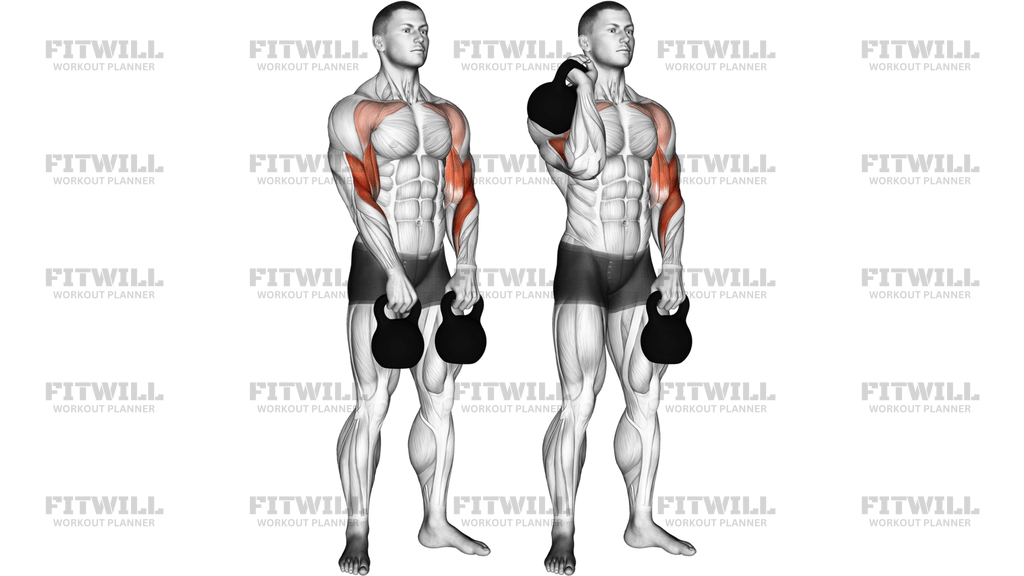
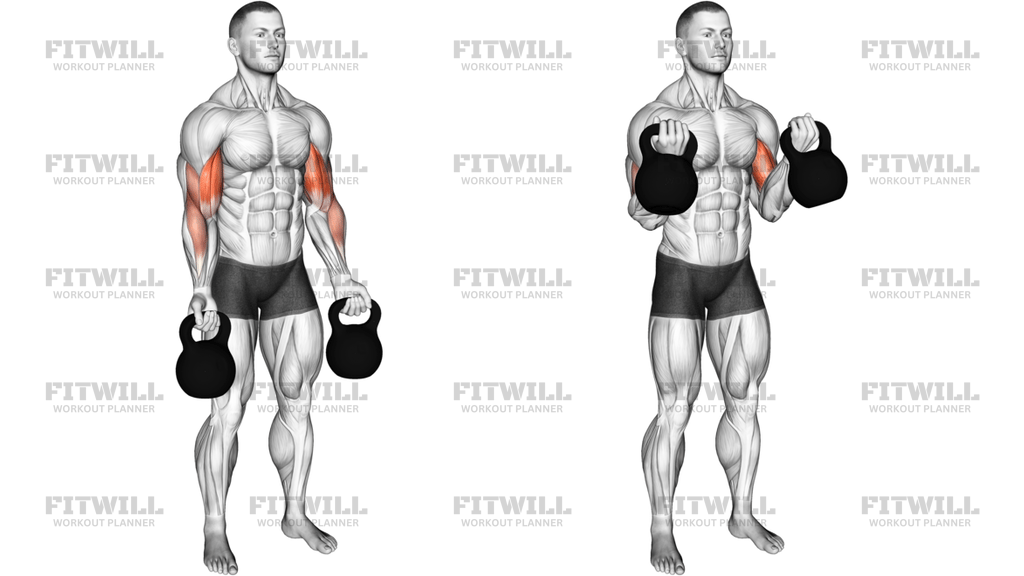
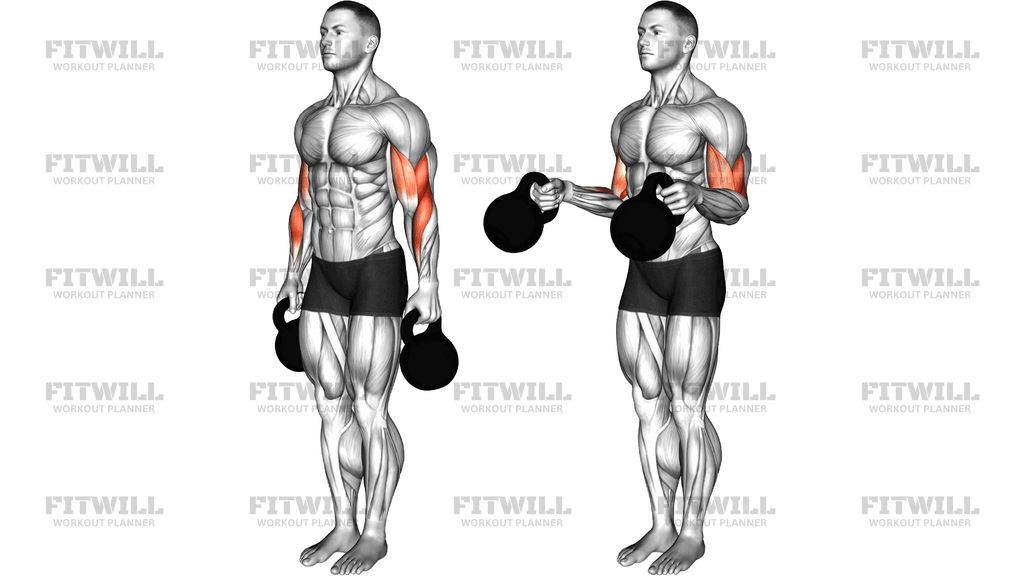
Kettlebell Alternating Hang Clean is a standing kettlebell drill that moves one bell at a time from a loaded hang into the front-rack position while the other hand stays under control. It develops grip strength, forearm endurance, biceps and brachialis involvement, shoulder stability, and a strong trunk that resists twisting as the load shifts from side to side.
The setup matters because the clean starts below the waist, where a loose hinge or drifting bell can turn the rep into a swing or curl. Stand tall with the bells close to the thighs, keep the ribs stacked over the pelvis, and stay balanced through the whole foot so the pull begins from a stable hang instead of from body sway.
Each rep should be a quick pull and a smooth turnover, not a high yank. Drive through the floor, keep the bell path tight to the body, lead with the elbow, then rotate the hand around the handle so the bell lands softly in the rack at the shoulder. In the finished position, the wrist stays straight, the elbow stays tucked, and the bell rests against the forearm without crashing.
Alternating sides makes the exercise more demanding on coordination and anti-rotation control. It fits well in strength circuits, kettlebell technique work, warmups, and accessory blocks when you want a load that trains the arms and shoulders without asking for a full press. The pattern also teaches a clean receiving position that carries over to other rack-based kettlebell movements.
Use a lighter load than you would for a swing if you want the turnover to stay quiet and precise. If the bell arcs away from the body, the shoulder shrugs, or the forearm takes a hard hit at the catch, the weight is too heavy or the path has drifted. Keep each catch organized, reset before the next side, and stop the set when the alternation loses rhythm.
[ Workout Log & Planner ]
Put your next workout in Fitwill
Keep your plan and training log ready when you are.


Instructions
- Stand tall with a kettlebell in each hand, feet about hip-width apart, and the bells hanging close to the front of your thighs with neutral wrists.
- Hinge slightly at the hips and let the bells settle into a short hang below the hips while keeping your chest long, ribs down, and shins nearly vertical.
- Brace your torso and shift your focus to the side you will clean first, keeping the opposite arm relaxed and steady at the hang.
- Drive through the floor and extend the hips and knees so the working bell travels upward close to the body instead of swinging forward.
- Pull the elbow up and back as the bell rises, then rotate the hand around the handle so the bell turns over smoothly.
- Catch the bell softly in the front rack at shoulder height with the wrist straight, elbow tucked, and the bell resting on the forearm.
- Let the other hand stay loaded at the hang, then lower the racked bell back to the hang with control before switching sides.
- Keep alternating sides for the planned reps, breathing out on the clean and resetting your stance each time the bell returns to the hang.
Tips & Tricks
- Keep the bell close to the shorts line on the way up; a forward swing usually means the load is too heavy or the hinge is too loose.
- Think hip drive first and arm pull second, because the clean should start from the lower body rather than from a curling motion.
- Turn the hand around the handle early enough that the bell lands quietly instead of slamming into the forearm.
- Keep the wrist stacked and the knuckles up in the rack so the bell sits on the forearm without bending the hand back.
- Do not let the opposite shoulder creep upward while one side cleans; keep both shoulders level so the trunk does not twist.
- Use a load you can catch for multiple crisp reps in a row, not one that forces you to muscle every turnover.
- Reset your feet and ribs after each catch if the alternating rhythm starts to get sloppy.
- If the bell bangs the forearm, shorten the path, slow the turnover, or drop the weight before the skin and wrist get irritated.
Frequently Asked Questions
What does Kettlebell Alternating Hang Clean train most?
It mainly trains the grip, forearms, biceps, shoulders, and the trunk’s ability to stay stable while the load changes sides.
Can beginners perform this exercise?
Yes, if they start light and keep the bell path close to the body. Beginners should learn the clean and rack catch before trying to move fast.
Where should the kettlebell finish at the top of each rep?
It should finish in the front rack at shoulder height, with the elbow tucked and the wrist stacked so the bell rests on the forearm instead of pulling the hand backward.
Why is this called a hang clean?
Because the clean starts from a hanging position below the hips instead of from the floor, so the rep is built from a short hinge and a fast turnover.
How do I stop the bell from slamming into my forearm?
Keep the bell close, rotate the hand around the handle sooner, and lower the load if the catch is still noisy.
Is this just a curl with a kettlebell?
No. The bell should be driven by hip extension and then turned over into the rack; the arms guide the path, but they should not do all the work.
Do both arms work at the same time?
The exercise is alternating, so one bell is in the rack while the other stays in the hang. Both sides stay active, but only one side performs the clean at a time.
What is a good mistake to watch for?
The most common problems are swinging the bell forward, shrugging the shoulder, and bending the wrist back at the catch.