Kettlebell Bottoms Up Clean From The Hang Position
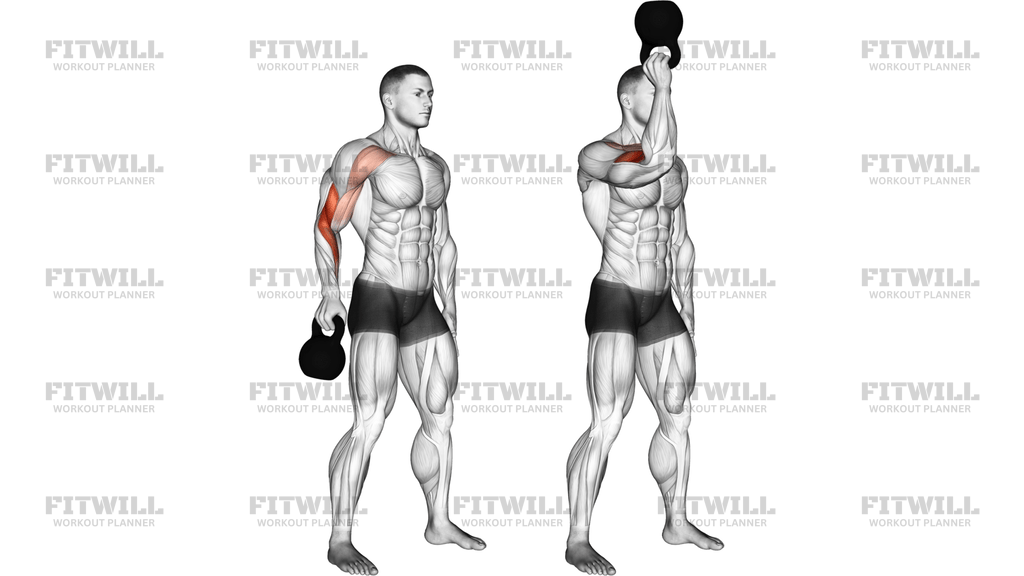
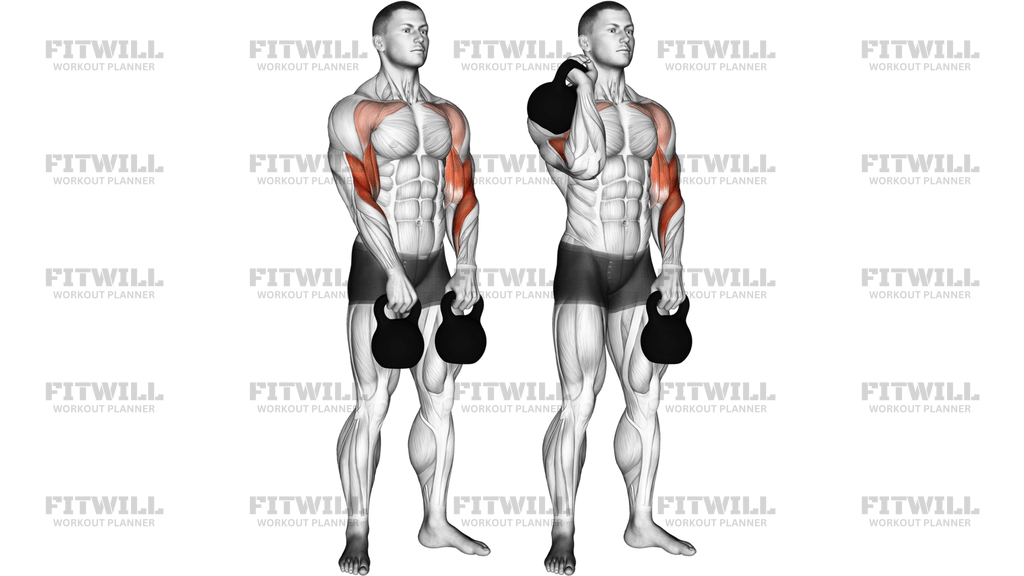
Kettlebell Bottoms Up Clean From The Hang Position is a single-arm kettlebell skill drill that moves the bell from a hanging position near the thigh into a bottoms-up rack at the shoulder. The upside-down bell changes the exercise from a simple clean into a control test for the hand, wrist, elbow, and shoulder, so each rep has to be deliberate and tidy rather than explosive.
The upside-down position makes the grip the limiting factor for many lifters. The forearm flexors, biceps, brachialis, and brachioradialis help guide the bell while the shoulder stabilizers keep the kettlebell stacked above the elbow. That combination is why this movement shows up in warmups, accessory blocks, and technique-focused strength work: it teaches you to produce force without letting the wrist collapse or the torso twist to save the rep.
The hang start matters. Begin with the kettlebell close to the body, usually just in front of the thigh, so the bell can travel on a short, controlled path. From there, the elbow bends, the kettlebell stays close, and the hand rotates so the horn or handle finishes vertical above the fist. If the bell drifts away from the body or the elbow flies out, the clean turns into a swing and the bottoms-up rack becomes unstable.
Use a tempo you can control and keep the rack position honest. The forearm should feel like it is managing the bell, not just surviving it. A clean rep ends with the bell balanced over the shoulder, wrist stacked, and ribs down, then the bell is guided back to the hang with the same control. That makes this exercise useful for building coordination, shoulder integrity, and grip strength without needing heavy loads.
This is a good choice when you want a technical kettlebell movement that still challenges the upper body. It is especially useful for athletes and lifters who need better one-arm stability, stronger gripping mechanics, and cleaner rack positions. Start light, earn the bottoms-up position first, and only add load when every rep stays vertical, smooth, and balanced.
Fitwill
Log Workouts, Track Progress & Build Strength.
Achieve more with Fitwill: explore over 9600 exercises with images and videos, access built-in and custom workouts, perfect for both gym and home sessions, and see real results.
Start your journey. Download today!




Instructions
- Stand tall with feet about hip-width apart and hold a kettlebell in one hand beside the working thigh, palm facing in and the bell hanging just in front of the leg.
- Set your shoulder down and back slightly, keep the wrist straight, and keep the non-working arm relaxed at your side for balance.
- Brace your midsection before the pull so your ribs do not flare and your torso does not lean back.
- Drive the elbow up and back close to your body, keeping the kettlebell traveling in a short vertical path near the torso.
- As the bell rises, rotate your hand so the kettlebell flips into a bottoms-up position with the handle stacked over your fist.
- Catch the bell at shoulder height in a controlled rack, with the elbow bent, wrist vertical, and the bell balanced upside down above the hand.
- Pause briefly to show you can keep the bell steady without shrugging, leaning, or letting the wrist fold back.
- Lower the kettlebell the same way you lifted it, guiding it back to the hang position under control before the next repetition.
Tips & Tricks
- Start lighter than you think; a bottoms-up clean usually exposes grip and wrist weakness before the legs or hips become limiting.
- Keep the bell close to your shirt seam on the way up so the clean stays compact and the rack is easier to control.
- Do not let the wrist bend backward at the catch; the fist should stay under the handle so the bell can balance over the forearm.
- If the bell smacks your forearm or swings away from you, the pull is too loose and the path is too wide.
- Keep the elbow close to the ribs during the pull instead of flaring it out like a high pull.
- Use the non-working hand to stay relaxed, but do not twist your torso to help the bell get up.
- Pause long enough at the top to prove the bell is truly stable before you lower it.
- Stop the set as soon as the bottoms-up position starts to wobble or the shoulder begins to shrug.
Frequently Asked Questions
What muscle does Kettlebell Bottoms Up Clean From The Hang Position target most?
It places the biggest demand on the forearm flexors and biceps, with the shoulder and upper back working hard to stabilize the upside-down bell.
Why use the bottoms-up position instead of a regular kettlebell clean?
The upside-down bell makes the grip, wrist, and shoulder work much harder, so you get more stability training from a lighter load.
Where should the kettlebell start before each rep?
Start with the bell hanging close to the working thigh or just in front of it, not drifting far away from the body.
How do I know the clean was done correctly?
A good rep ends with the bell stacked directly above the fist, the wrist straight, and the shoulder staying down instead of shrugging.
Should the bell travel far away from my body?
No. The clean should stay compact, with the kettlebell moving close to the torso so the rack is easier to balance.
Can beginners use this exercise?
Yes, but only with a very light kettlebell and a slow, controlled catch. If the bell wobbles, the load is too heavy.
What is the most common mistake with this movement?
Letting the wrist collapse back or letting the elbow flare out usually makes the bottoms-up rack unstable.
How should I breathe during each rep?
Take a breath and brace before the pull, then exhale as you control the catch and settle the bell into the rack.