Kettlebell Double Alternating Hang Clean
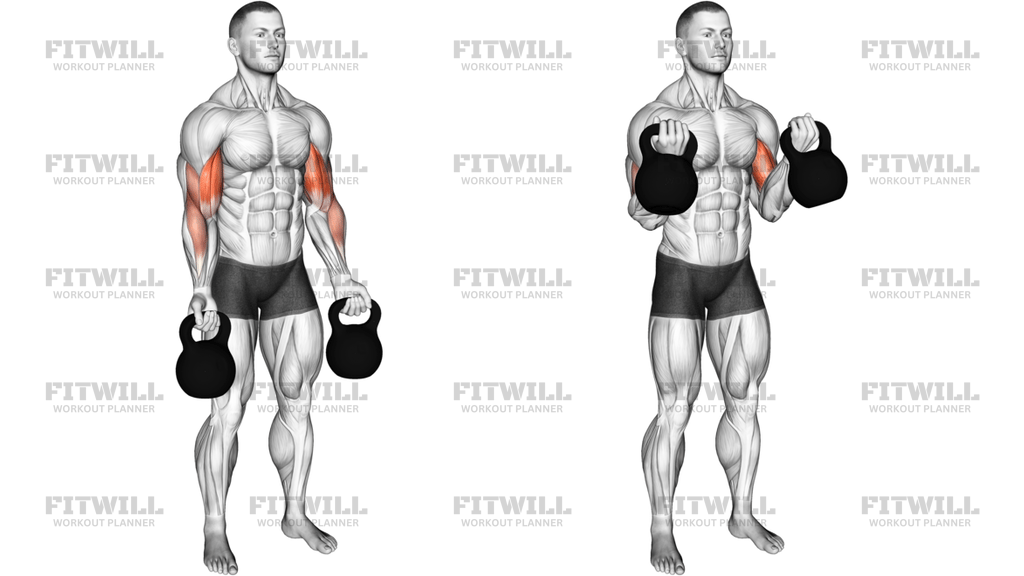
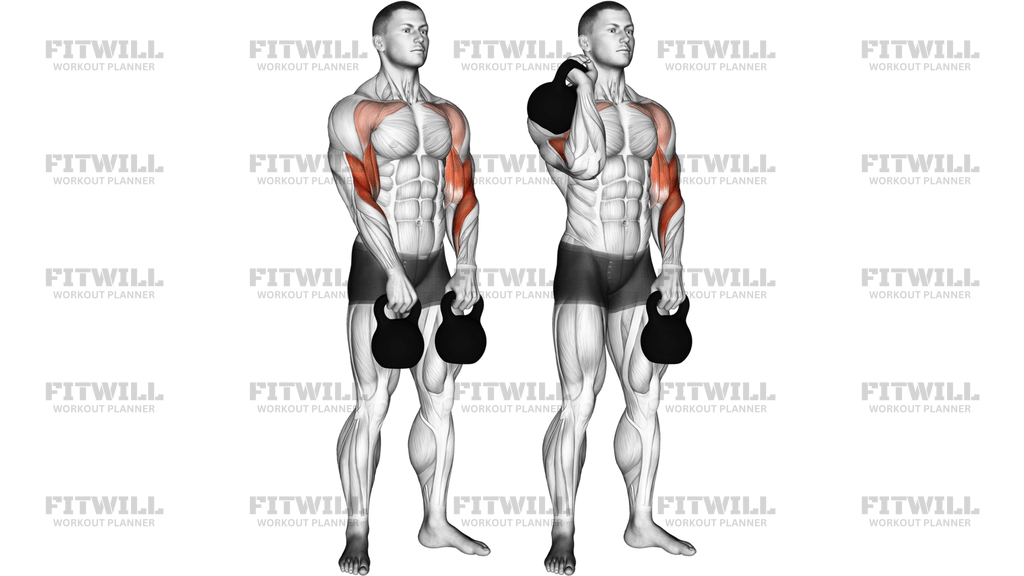
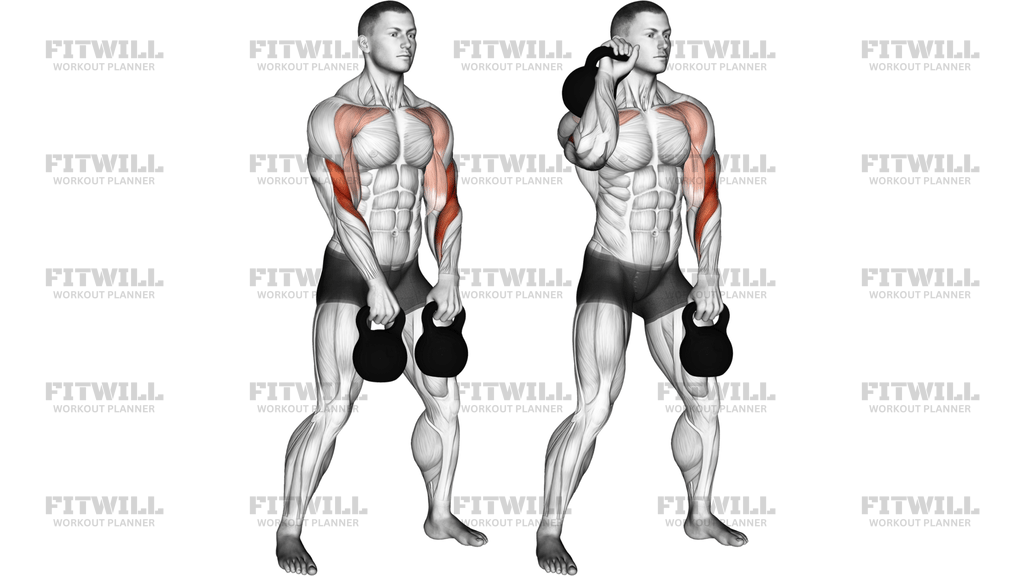
The Kettlebell Double Alternating Hang Clean is a standing kettlebell drill where both bells start hanging below the hips and one bell is cleaned to the front rack while the other stays parked in the hang. The movement then alternates sides rep to rep. It blends hip snap, grip control, shoulder stability, and clean rack mechanics into one coordinated exercise, so the setup and timing matter as much as the load.
This is not a curl and it is not a swing finish. The bell should travel close to the body, rise because of a quick hip drive, and rotate softly into the rack instead of crashing onto the forearm. The working side teaches the arm to guide the bell without pulling it up, while the free side teaches patience and stability by staying quiet at the hang. That split demand is what makes the exercise useful for conditioning, power work, and kettlebell skill practice.
Use a stance that lets you hinge cleanly and keep both shoulders square. The bells should begin just below the hips, with the torso braced and the spine long. From there, each clean starts with a small dip and a sharp extension through the hips. The elbow stays close, the hand turns through the handle, and the kettlebell settles into the rack with the forearm vertical and the wrist neutral. The nonworking bell should remain under control instead of swinging wide or dragging the torso forward.
A good rep feels crisp, quiet, and repeatable. If the bell slaps the forearm, travels away from the body, or forces you to lean back, the load is too heavy or the path is too loose. This movement is especially useful in accessory blocks, complexes, or interval training where you want power, coordination, and grip endurance without losing technique. Beginners can learn it with very light kettlebells, but the first priority is a clean rack position and a smooth handoff, not speed or volume.
Because the exercise alternates sides, it also helps expose asymmetries in grip strength, timing, and shoulder control. That makes it a practical choice when you want one kettlebell at a time to move while the other stays at the hang as a counterbalance. Keep the reps symmetrical, breathe steadily, and stop the set before the catch gets sloppy or the rack position starts to collapse.
[ Workout Log & Planner ]
Put your next workout in Fitwill
Keep your plan and training log ready when you are.


Instructions
- Stand with a kettlebell in each hand, feet about hip-width apart, and let both bells hang just in front of the thighs.
- Hinge slightly at the hips, keep the chest tall, and set the shoulders so the arms hang long and relaxed.
- Brace the trunk, then start with one bell by driving the hips forward so the bell floats upward close to the torso.
- Keep the working elbow close as the bell rises, and turn the hand through the handle instead of curling the bell with the arm.
- Catch the bell softly in the front rack with the wrist neutral and the bell resting against the forearm and shoulder.
- Leave the other kettlebell hanging quietly at your side while you hold the rack position for a moment.
- Lower the racked bell back to the hang under control, then repeat the clean on the opposite side.
- Alternate sides for the planned reps, breathing out on the clean and resetting the hinge before each new rep.
Tips & Tricks
- Start with the bells close to the inner thighs so the clean begins from a short, efficient path.
- Think hip drive first and arm second; if the bell feels lifted by the biceps, the weight is too far from the body.
- Let the bell roll around the hand into the rack instead of slamming over the wrist.
- Keep the nonworking bell still so the torso does not twist or lean toward the active side.
- A vertical forearm in the rack makes the catch safer and keeps the bell from pulling the shoulder forward.
- If the forearm gets bruised, lower the load and clean a little sooner so the bell does not crash down from high in the arc.
- Use a crisp exhale at the top of the clean to keep the trunk braced without holding your breath too long.
- Stop the set when the bell starts drifting forward, the rack gets noisy, or the alternating rhythm loses symmetry.
Frequently Asked Questions
What does the Kettlebell Double Alternating Hang Clean train?
It trains hip extension, grip strength, shoulder stability, and clean rack control, with extra work for the upper back and core.
Is this the same as a kettlebell swing?
No. A swing stays in a hinge pattern, while this exercise adds a rack catch and alternates one bell at a time.
Do both kettlebells clean at once?
No. One bell cleans to the rack while the other remains hanging, then the sides switch on the next rep.
Should I be curling the kettlebell up?
No. The bell should be driven by the hips and then rotated into the rack; curling it usually makes the path too high and too rough.
Why does the bell hit my forearm?
The bell is probably drifting away from your body or arriving too late into the rack. Keep it close and turn the hand through sooner.
Can beginners learn this movement?
Yes, but they should start very light and focus on a clean hinge, soft catch, and stable rack before adding speed or volume.
What should I feel in the rack position?
The bell should sit against the forearm and shoulder with the wrist neutral and the elbow tucked enough to keep the front rack compact.
Where does this fit in a workout?
It works well in power circuits, kettlebell complexes, or accessory blocks where you want alternating coordination and conditioning.