Kettlebell Biceps Curl
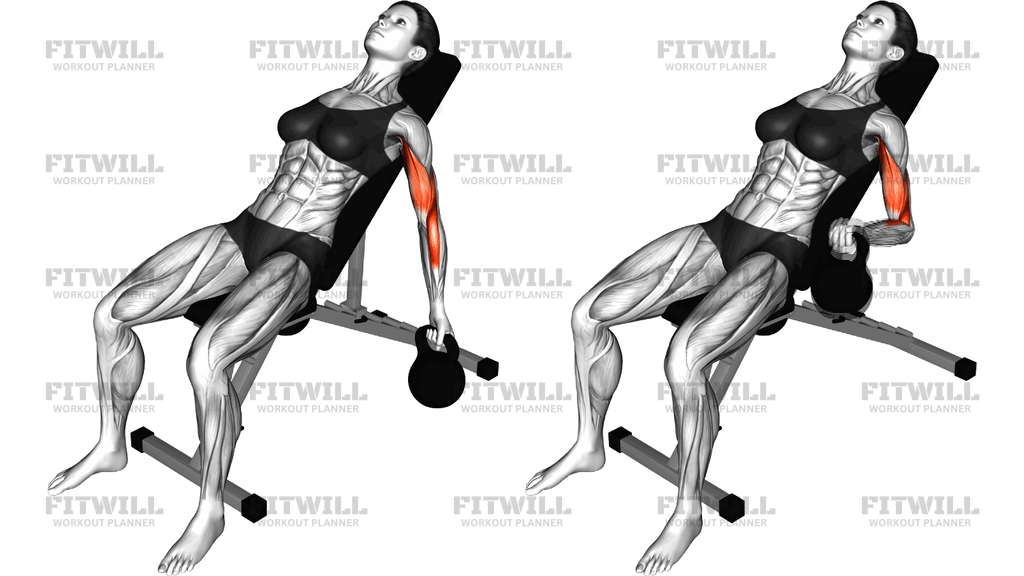
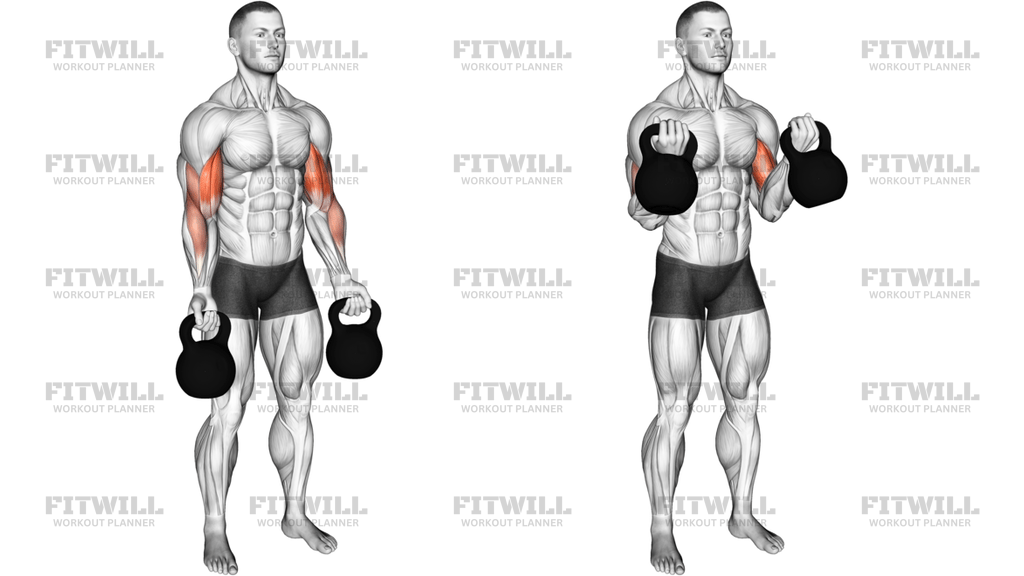
Kettlebell Biceps Curl is a standing arm curl performed with a kettlebell in each hand. The image shows the bells hanging at the sides and then curling up toward the shoulders, which is the key idea of the exercise: keep the upper arms quiet and let the elbows do the work while the forearms and hands manage the kettlebell handle.
Because the kettlebell sits below the hand, this version of the curl demands more wrist and grip control than a standard dumbbell curl. The biceps are still the main driver, but the brachialis, brachioradialis, forearms, and shoulder stabilizers all have to help keep the path clean. That makes it a useful accessory exercise when you want direct upper-arm work with a little extra demand on control.
The setup matters more here than on many machine curls. Stand tall with your feet planted, ribs stacked over your pelvis, and the kettlebells hanging just outside your thighs. Keep your wrists straight and your elbows close to your sides before you start the first rep. If the bells sit too far forward or your torso starts leaning back, the load shifts away from the arms and the curl turns into a swing.
On each rep, curl the kettlebells toward the front of your shoulders without letting the elbows drift forward or the shoulders shrug. Squeeze briefly near the top, then lower the bells under control until the arms are nearly straight again. The return should be deliberate, because the lowering phase is where the biceps and forearms get a lot of useful tension.
This movement works well in an arm-focused session, an upper-body accessory block, or the end of a strength workout when you want direct elbow-flexion work without a lot of setup. It is also a good choice if you want to challenge grip and wrist position at the same time. Keep the load honest, the torso still, and the motion smooth so the kettlebells stay under control from the first rep to the last.
Fitwill
Log Workouts, Track Progress & Build Strength.
Achieve more with Fitwill: explore over 9600 exercises with images and videos, access built-in and custom workouts, perfect for both gym and home sessions, and see real results.
Start your journey. Download today!




Instructions
- Stand tall with a kettlebell in each hand hanging beside your thighs, palms facing in and wrists stacked straight.
- Plant your feet about hip-width apart and keep your ribs stacked over your pelvis without leaning back.
- Set your elbows close to your sides before the first rep so the upper arms stay quiet.
- Curl both kettlebells toward the fronts of your shoulders by bending the elbows, not by swinging the torso.
- Keep the handles controlled in your palms as the bells travel up; do not let the wrists collapse or the elbows drift forward.
- Squeeze the biceps briefly at the top while keeping your shoulders down and neck relaxed.
- Lower the kettlebells slowly until the arms are nearly straight again and the bells return beside your thighs.
- Exhale as you curl up, inhale as you lower, and repeat for the planned number of reps.
Tips & Tricks
- A lighter kettlebell often feels better than a dumbbell of the same weight because the bell sits below the hand and can tug on the wrist.
- If the bells drift forward as you curl, reduce the load and keep your elbows pinned closer to your ribcage.
- Do not let the shoulders climb toward the ears at the top; the rep should finish with the biceps, not a shrug.
- Keep the wrist stacked over the forearm so the handle does not fold you into a bent-wrist curl.
- If your torso starts rocking, freeze the hips and shorten the set before momentum takes over.
- A controlled 2- to 3-second lowering phase makes the exercise much more effective than dropping the bells quickly.
- Stop the set if the kettlebells start banging into your thighs or your elbows move far in front of your body.
- Use a brief squeeze at the top instead of trying to chase a huge range that pulls the shoulders out of position.
Frequently Asked Questions
What muscles does the kettlebell biceps curl work?
It mainly trains the biceps, with help from the brachialis, brachioradialis, forearms, and shoulder stabilizers.
Why use kettlebells instead of dumbbells for curls?
The kettlebell hangs below the hand, so it asks for more wrist and grip control while you curl.
Should my elbows stay close to my sides during the curl?
Yes. Keeping the elbows near your ribs keeps the tension on the arms instead of turning the rep into a front-raise motion.
Can beginners do this exercise safely?
Yes, as long as the kettlebells are light enough to keep the wrists stacked and the torso still.
Why do my wrists feel stressed during kettlebell curls?
The offset load pulls under the hand, so you need to keep the wrist neutral and avoid letting it bend back.
Can I alternate arms instead of curling both bells together?
Yes. Alternating can reduce torso sway and make it easier to keep each rep strict.
What does a bad kettlebell curl rep usually look like?
The usual mistakes are leaning back, swinging the bells, shrugging the shoulders, or letting the elbows drift forward.
Where should I feel the movement most?
You should feel the front and inner part of the upper arm working hard, with some forearm and grip fatigue as the set goes on.