Knee To Chest Stretch
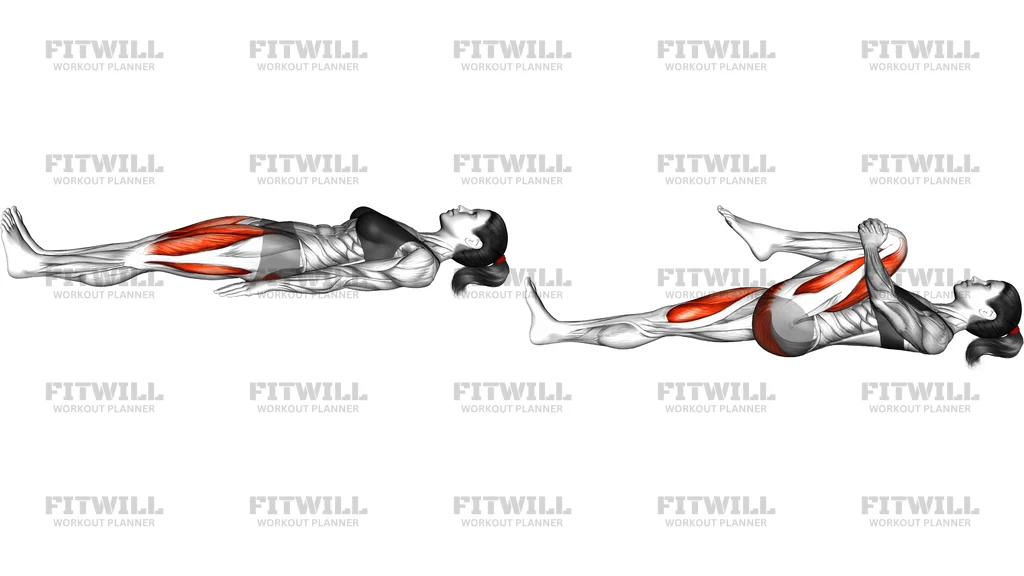
Knee to Chest Stretch is a floor-based mobility drill performed on an exercise mat with body weight. In the image, you lie on your back, pull one knee in toward the torso, and keep the other leg long on the floor. That setup matters because the stretch is meant to come from the hip and low back position, not from yanking the leg upward or curling the whole body.
This movement is commonly used to open the glutes, hips, and lower back after sitting, before training, or during a cooldown. The extended leg helps keep the pelvis honest, while the bent leg lets you find a comfortable end range without forcing the knee or low back. When it is done well, the stretch feels centered, controlled, and easy to breathe through rather than aggressive or crunched.
The quality of the repetition comes from where you stop, not how far you can pull. Draw the knee in until you feel a mild to moderate stretch through the glute and the back of the hip, then settle there with the shoulders relaxed and the neck long. If the low back starts to round hard, or if the lifted hip leaves the floor and the whole pelvis twists, reduce the range and keep the motion cleaner.
Knee to Chest Stretch is useful for recovery days, warmups, cool-downs, and any session where you want to reduce stiffness around the hips and lumbar spine. It is a good beginner-friendly option because it does not require load, balance, or complex coordination. Keep the motion pain-free, switch sides deliberately, and let the breath help the tissues relax instead of forcing a bigger stretch with pressure.
Fitwill
Log Workouts, Track Progress & Build Strength.
Achieve more with Fitwill: explore over 9600 exercises with images and videos, access built-in and custom workouts, perfect for both gym and home sessions, and see real results.
Start your journey. Download today!




Instructions
- Lie on your back on an exercise mat with both legs extended and your arms relaxed by your sides.
- Bend one knee and bring it toward your chest while keeping the opposite heel or calf resting on the floor.
- Reach both hands around the shin or behind the thigh of the bent leg and draw it in until you feel a mild stretch.
- Keep the opposite leg long and relaxed so the pelvis stays level instead of rolling toward the lifted side.
- Let your shoulders stay heavy and your neck relaxed against the floor instead of lifting your head.
- Hold the stretch and breathe slowly into the back of the ribs and abdomen.
- Use only enough pull to settle deeper as the muscles relax; do not force the knee toward the chest.
- Lower the leg with control, reset the pelvis, and repeat on the other side for even work.
Tips & Tricks
- Keep the tailbone heavy so the stretch comes from the hip, not from a hard curl through the low back.
- If the straight leg lifts, bend that knee slightly or slide the heel farther away to keep the pelvis quieter.
- Pull from the shin or hamstring area, not directly on the knee joint.
- A gentle exhale often lets the hip settle deeper than a stronger pull.
- Stop at the first clear stretch in the glute or upper hamstring; this is not a max-range drill.
- If your low back pinches, reduce how close the knee comes to the chest and flatten the spine more gently.
- Keep the motion slow when switching sides so you do not rock the pelvis or use momentum.
- On tight days, hold the stretch for a shorter count and repeat more often rather than forcing a long painful hold.
Frequently Asked Questions
What does the Knee to Chest Stretch target most?
It primarily targets the glutes and the back of the hip, with a useful stretch through the lower back.
Can beginners perform this exercise?
Yes. It is one of the more beginner-friendly floor stretches because it uses no load and very little coordination.
Should the other leg stay straight or bent?
Either can work, but keeping the other leg long on the floor is the version shown here and usually gives a cleaner pelvic position.
Where should I feel the stretch?
You should feel it most in the glute, upper hamstring, or lower back area of the bent leg side, not in the knee joint.
Why keep the opposite leg on the floor?
It helps keep the pelvis square and prevents you from turning the stretch into a side-rolling position.
What is the most common mistake with this stretch?
Most people pull too hard and round the low back instead of letting the hip soften gradually.
How long should I hold the position?
A short controlled hold is usually enough, especially if you are using it between exercises or after training.
Is this a good warmup or cooldown stretch?
Yes. It works well in both places because it is low intensity and easy to control.