Side To Wide Squat
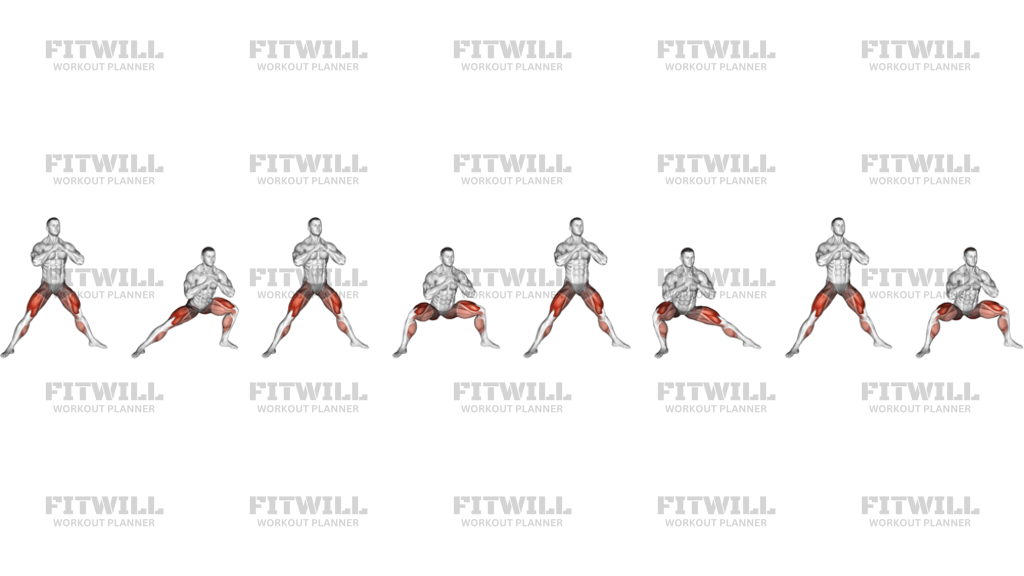
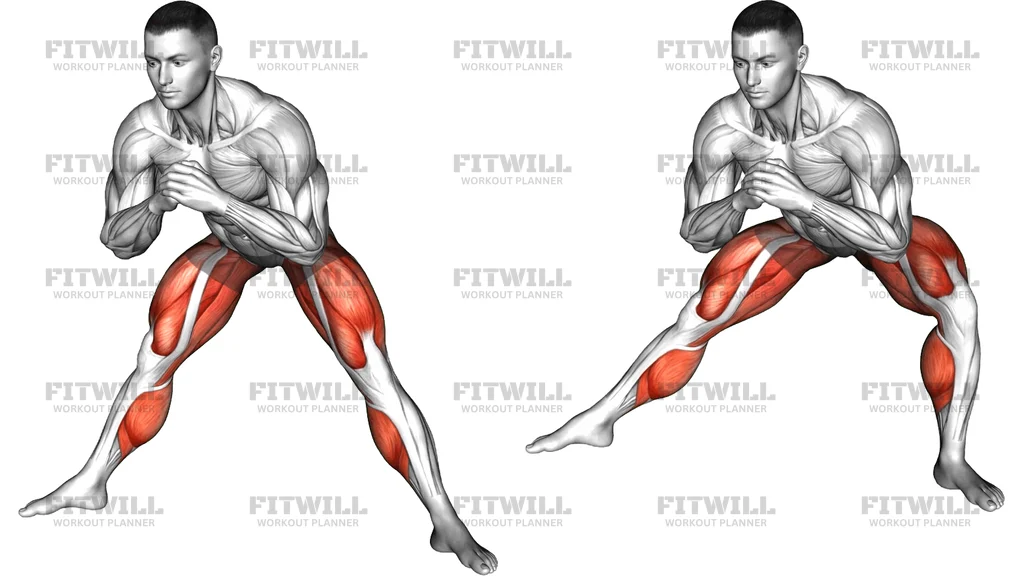
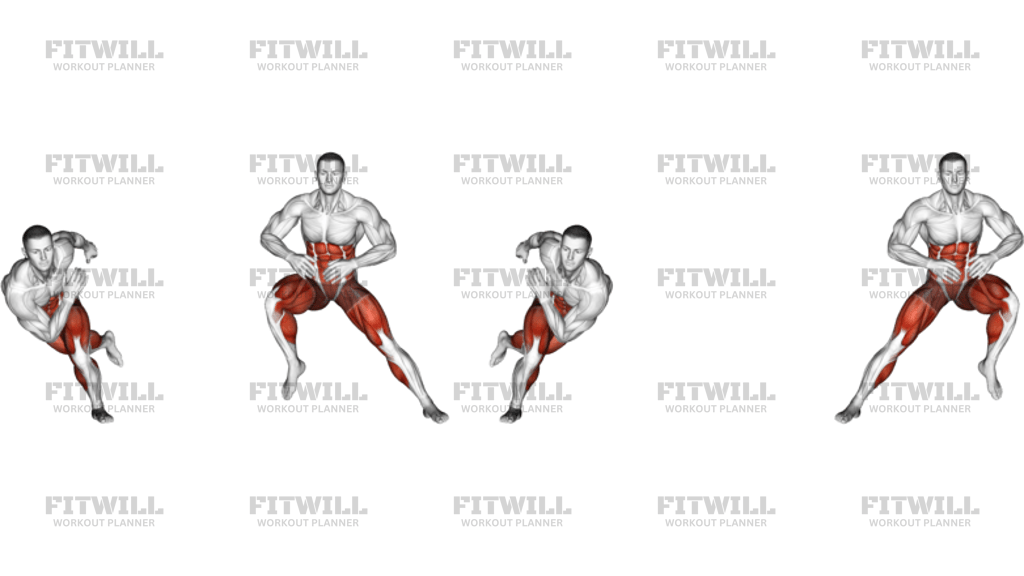
Side To Wide Squat is a bodyweight lateral squat pattern that moves from side to side through a wide stance. It trains the hips to open and close cleanly while the glutes, quads, inner thighs, and core work together to control the shift. The image shows a side-loaded squat position with one leg bent deeply and the other leg kept long, which makes this exercise useful for lateral strength, hip mobility, and lower-body control.
This movement is less about speed and more about owning the transition from one side to the other. As you drop into the loaded side, one hip does most of the work while the opposite leg stays straighter and helps create the wide position. That asymmetry is what makes the exercise valuable: it teaches the body to stabilize the pelvis, keep the torso organized, and produce force through a side-to-side path instead of only straight up and down.
A good rep starts with a wide enough stance to let one knee bend without the heel lifting or the hips twisting. From there, shift your weight into one hip, keep the chest proud, and let the working knee track in line with the toes. The straight leg should stay long rather than collapsing inward. If mobility is limited, shorten the range before the lower back or knees start to compensate.
Because this is a bodyweight drill, the quality of the repetition should come from position and control, not from adding speed. Use it to warm up the groin and hips, build lateral leg strength, or reinforce clean squat mechanics in a side-to-side pattern. The exercise is especially useful when you want more hip range and adductor strength without loading the spine heavily.
Stop the set if the pelvis starts to rotate, the loaded knee caves inward, or the movement turns into a bounce instead of a controlled shift. A smaller range with crisp alignment is better than forcing a deep side squat you cannot own. The goal is a smooth, repeatable side-to-wide pattern that leaves the hips working and the torso steady.
[ Workout Log & Planner ]
Put your next workout in Fitwill
Keep your plan and training log ready when you are.


Instructions
- Stand with your feet wider than shoulder width, turn the toes slightly out, and keep your weight centered before you begin.
- Shift into one side so that one knee bends deeply while the other leg stays long and supported by the planted foot.
- Keep your chest lifted and your pelvis square as you sit into the loaded hip instead of folding forward.
- Track the bent knee in line with the toes and keep the heel of the loaded foot down as you lower.
- Press through the working foot to drive back through the middle before traveling to the other side.
- Transfer your weight across smoothly and repeat the same squat on the opposite side.
- Inhale as you move across and exhale as you drive out of the bottom position.
- Use a controlled tempo and keep the transitions smooth instead of bouncing from side to side.
Tips & Tricks
- Take a stance wide enough that the bent-side heel stays grounded and the straight leg can stay long without the pelvis twisting.
- Point the toes slightly out if it helps you sit into the hip without pinching the groin or knees.
- Keep the load on the working heel and midfoot; if the heel lifts, shorten the depth before going lower.
- Think about sending the hips sideways first and down second so the torso does not collapse forward.
- The straight leg should remain active but not locked hard enough to strain the knee or inner thigh.
- If one side feels much tighter, reduce the depth on that side and match the range on both reps.
- A slow return through the center usually keeps the movement cleaner than rushing straight into the next side.
- Stop the set when your knees cave in, your feet spin out, or the pelvis starts to tilt and twist.
Frequently Asked Questions
What does Side To Wide Squat work most?
It mainly hits the hips and glutes, with strong work from the quads, inner thighs, and core as you shift side to side.
Can beginners perform this exercise?
Yes. Beginners should keep the stance wide, use a smaller side squat, and focus on balance before trying to sit very deep.
Should my heel stay on the floor during the side squat?
Yes, the working heel should stay grounded. If it lifts, the stance is probably too narrow or the range is too deep for your mobility.
Is this the same as a Cossack squat?
It is very close. This version is a side-to-side wide squat pattern, and the image shows the same kind of lateral loading and straight-leg support.
Why do I feel this in my inner thigh?
The adductors help control the pelvis and support the bent side, so a strong inner-thigh stretch and effort on the loaded leg is normal.
How low should I go on each side?
Go only as low as you can while keeping the heel down, the knee tracking cleanly, and the torso from folding or twisting.
What is the most common mistake in this movement?
Rushing across the middle and bouncing into the next side usually causes the pelvis to twist and the knees to collapse inward.
How can I make Side To Wide Squat harder?
Increase the depth, slow down the transition, pause in the bottom on each side, or add a goblet-style load if the bodyweight version is already clean.