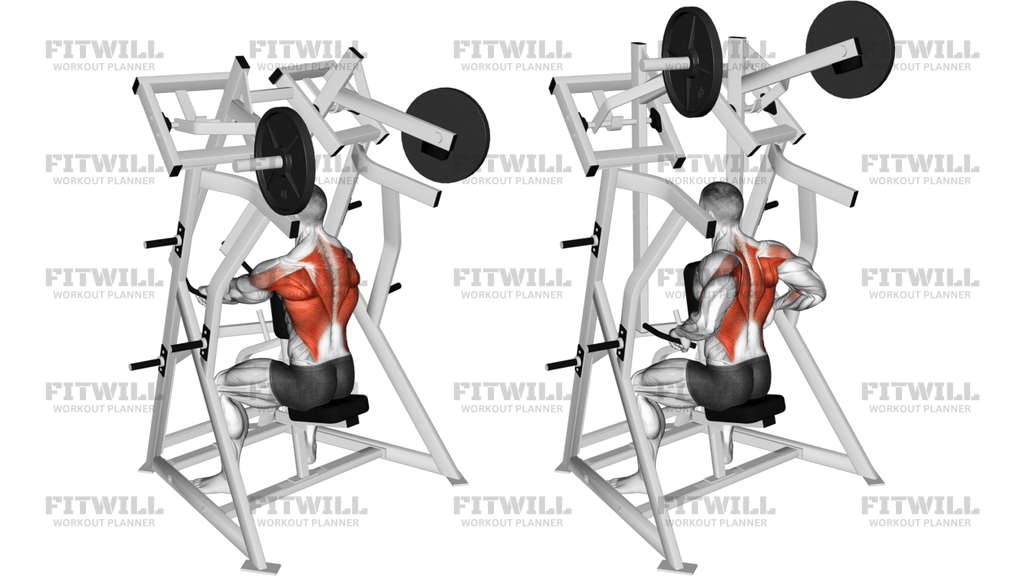
Lever Assisted Chin-Up
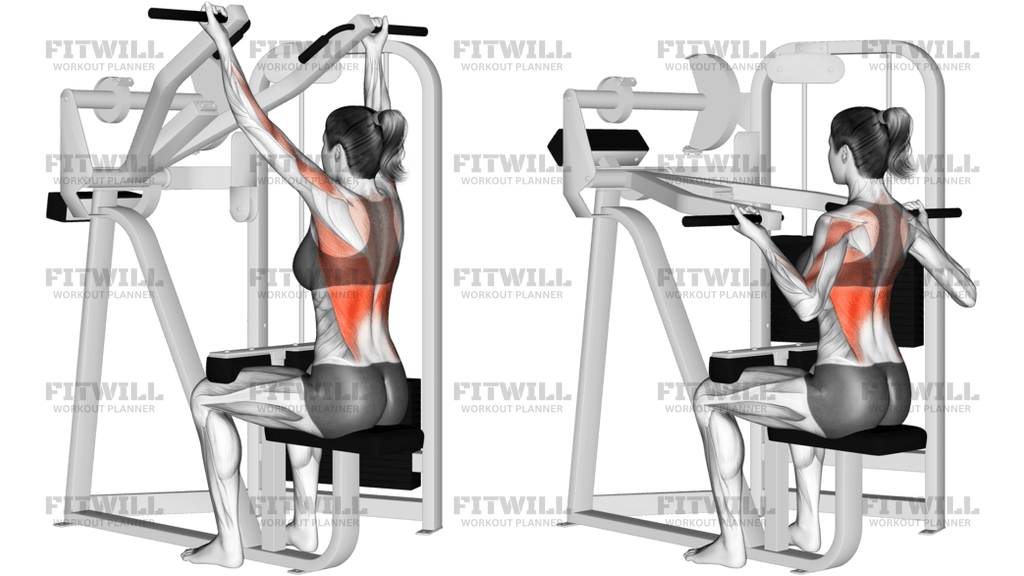
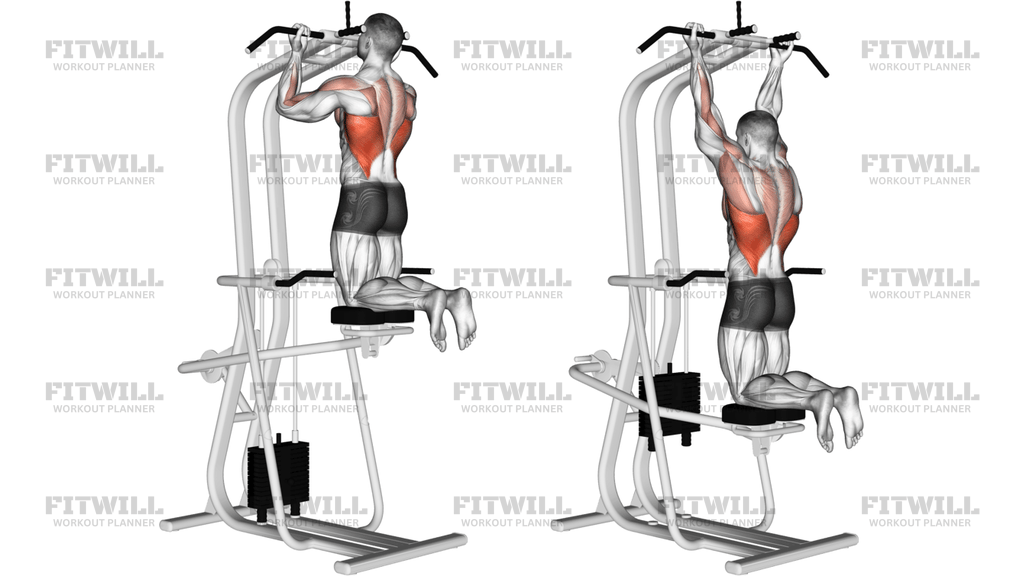
Lever Assisted Chin-Up is a vertical pulling exercise performed on a leverage machine that helps you train the lats, upper back, biceps, and forearms while the pad supports part of your body weight. The machine lets you practice a strict chin-up pattern with a more manageable load, so the emphasis stays on pulling strength, scapular control, and clean repetition quality instead of swinging or kicking for momentum.
The setup matters because the knees and hips need to stay organized on the pad while the hands, shoulders, and trunk stay stacked under the handles. When the assistance is adjusted correctly, you can start from a long overhead position without losing shoulder position or collapsing into the bottom. That makes the exercise useful for beginners building their first chin-up, and for stronger lifters who want extra pulling volume with precise form.
A good rep begins from a controlled dead-hang or near-dead-hang, then the shoulder blades pull down before the elbows drive toward the ribs. The chest stays lifted, the ribs stay from flaring hard, and the chin rises over the handles without craning the neck. On the way down, resist the descent and return to the full stretch under control so each repetition trains both the top squeeze and the bottom position.
This exercise is commonly used to build vertical pulling strength, improve chin-up mechanics, and add back work without needing a full bodyweight rep yet. It also works well in accessory blocks when you want focused lat tension without the fatigue of free-hanging reps. Because the machine controls some of the load path, the biggest benefits come from matching the assistance level to your current strength and keeping every rep identical.
Treat the machine as a skill builder, not just a way to move weight. Use enough assistance to keep the torso steady, elbows tracking consistently, and the lowering phase smooth. If the knees slide around, the shoulders shrug, or the chin only clears by throwing the head forward, the load is too hard or the rep is too fast. Clean execution matters more than chasing extra reps on the stack.
[ Workout Log & Planner ]
Put your next workout in Fitwill
Keep your plan and training log ready when you are.


Instructions
- Set the assistance on the leverage machine, place your knees on the pad, and grip the chin-up handles with a shoulder-width hold that lets your wrists stay straight.
- Sit tall under the handles with your chest up, shoulders set down away from your ears, and your knees anchored on the pad so your body stays centered.
- Start from the bottom with your arms extended and your torso still, allowing a controlled stretch through the lats without losing shoulder position.
- Exhale and pull your shoulder blades down first, then drive your elbows toward your lower ribs to lift your body toward the handles.
- Keep your chest lifted and your neck neutral as your chin rises above the handles without swinging, kicking, or leaning back hard.
- Squeeze briefly at the top when the elbows are bent and the upper back is engaged, then keep the path smooth rather than jerking the next rep.
- Inhale as you lower under control, letting the elbows extend fully and the shoulders open back up into the bottom stretch.
- Reset your torso and knees on the pad before the next repetition and repeat for the planned set with the same tempo on every rep.
Tips & Tricks
- Choose enough assistance that you can reach the top without yanking your knees off the pad or swinging through the torso.
- Keep your shoulders depressed before each pull; if they shrug toward your ears, the lats lose tension quickly.
- Think about driving the elbows down and back, not just pulling with the hands.
- Let the chest come up slightly as you pull, but do not turn the rep into a big backward lean.
- Lower slowly to the full stretch so the bottom position trains the lats instead of dropping out of control.
- Keep the chin neutral; craning the head forward to clear the handles usually shortens the actual pull.
- Use a grip width that feels strong on your wrists and elbows, usually around shoulder width on this machine.
- If the knees drift or the hips pop off the pad, reduce the load or slow the tempo before adding more reps.
Frequently Asked Questions
What muscle does Lever Assisted Chin-Up target most?
The lats are the primary target, with the upper back, biceps, and forearms assisting through the pull.
Can beginners perform this exercise?
Yes. The machine makes it a good option for beginners because you can reduce the load enough to practice the full chin-up pattern with control.
Where should my knees be on the machine?
Place both knees or shins securely on the pad so your body stays centered under the handles and you do not kick for help.
Should I pull all the way to my chin or higher?
Pull until your chin clears the handles with the chest tall. Do not reach by jutting the head forward or by losing shoulder position.
What grip should I use on the handles?
Use the handle set that lets your wrists stay straight and your elbows track comfortably. Shoulder-width is a strong default on most machines.
What if I cannot control the lowering phase?
Increase the assistance and shorten the set. The descent should stay smooth all the way back to the bottom stretch.
Is this the same as a pull-up?
It uses the same vertical pulling pattern, but the machine reduces the load so you can practice the chin-up path with more control.
How do I progress this movement?
Reduce the assistance gradually, keep the same rep quality, and aim for a cleaner full range before adding more volume.