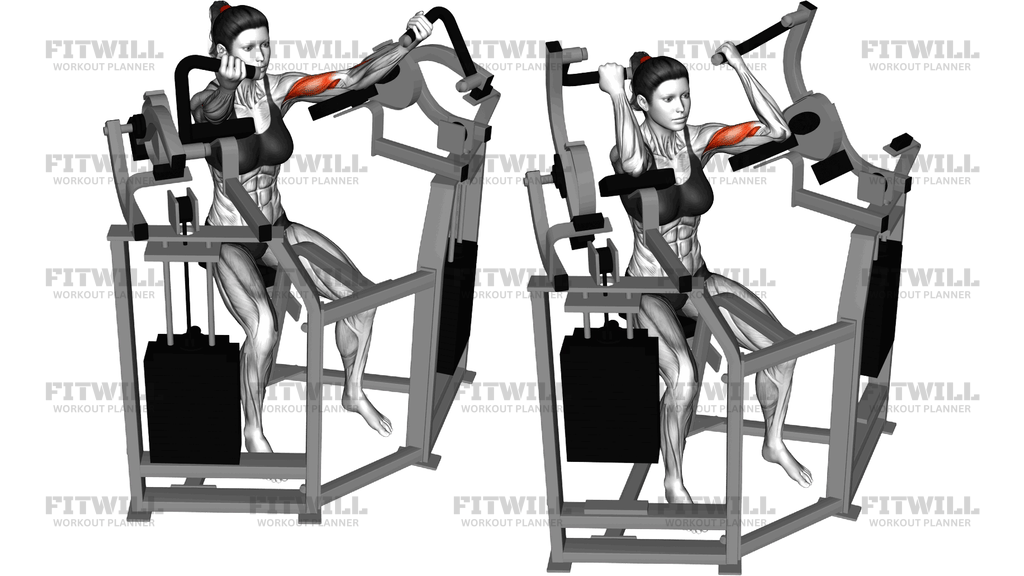
Lever Bicep Curl
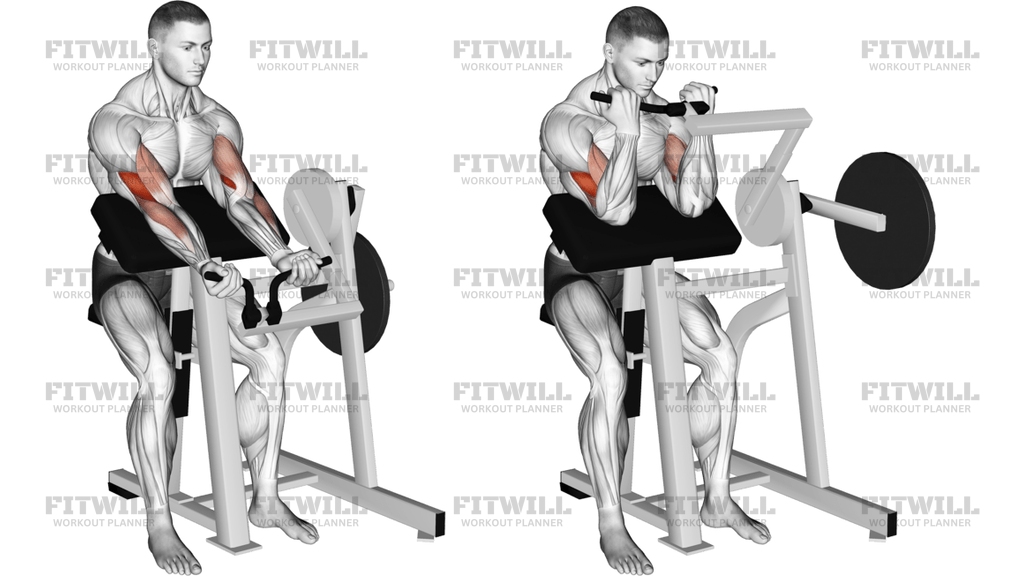
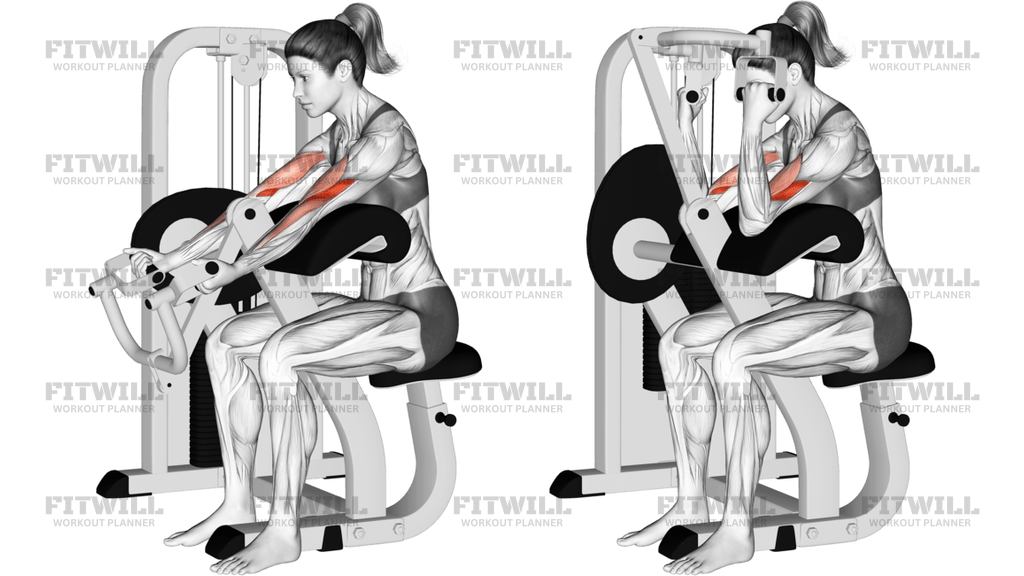
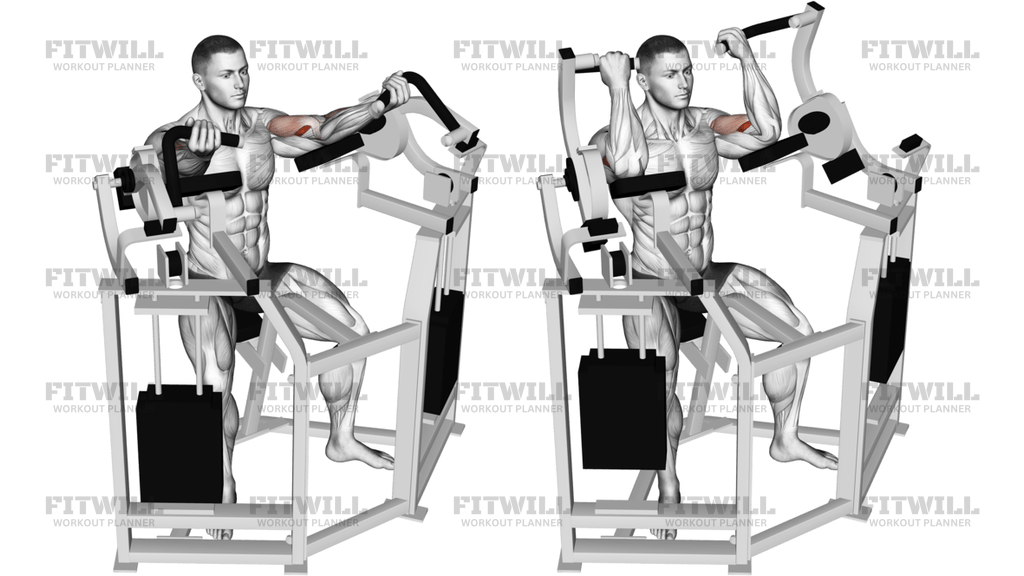
Lever Bicep Curl is a machine curl that isolates elbow flexion while the upper arms stay pinned against the lever pads. The guided path makes it easier to keep the shoulders quiet and to load the biceps with steady tension, which is why this variation is common in bodybuilding blocks, accessory work, and higher-rep arm training.
The exercise mainly targets the biceps brachii, with the brachialis and brachioradialis helping to finish the curl and control the lowering phase. Because the machine fixes the arm path, the work shifts away from body sway and toward elbow flexion. That also makes the movement useful when you want a strict curl without needing to balance a free weight.
Setup matters on this machine. Sit far enough back that your chest and upper arms are supported, then line your elbows up with the machine's pivot so the handles move cleanly through the arc. If the seat is adjustable, choose a height that lets your shoulders stay down and your wrists stay stacked over the handles instead of drifting forward.
Each rep should start from a controlled stretch with the arms extended and the biceps already under tension. Curl the handles by bending only at the elbows, keep the upper arms pressed into the pads, and bring the handles toward the front of your shoulders or upper chest. Squeeze briefly at the top, then lower the weight slowly until the elbows are nearly straight again without letting the stack slam.
Use Lever Bicep Curl when you want a strict arm-builder after bigger pulling work or as a standalone finisher. The machine is beginner-friendly because the path is guided, but it still rewards exact setup and a deliberate tempo. If the shoulders start lifting, the torso rocks, or the wrists bend back, the load is too heavy or the seat is out of position.
[ Workout Log & Planner ]
Put your next workout in Fitwill
Keep your plan and training log ready when you are.


Instructions
- Adjust the seat so your chest and upper arms sit firmly against the pads and your elbows line up with the machine pivot.
- Place your upper arms on the support pads and grip the handles with your wrists straight and your shoulders down.
- Set your feet flat on the floor and brace your torso against the back pad before the first rep.
- Start with your arms extended and the handles down in the machine's starting position.
- Curl the handles upward by bending at the elbows only, keeping your upper arms pressed into the pads.
- Bring the handles toward the front of your shoulders or upper chest without letting your elbows drift forward.
- Squeeze the biceps briefly at the top of the curl.
- Lower the handles slowly until your elbows are almost straight and the biceps stay under control.
- Keep breathing steady through each rep and re-set your shoulders before the next repetition.
Tips & Tricks
- If your shoulders roll forward at the bottom, move the seat or chest pad until the elbow joint stays stacked over the machine pivot.
- Keep your elbows glued to the pads; letting them slide forward turns the set into a shoulder-driven curl.
- Use a grip that keeps your wrists straight. Bending the wrists back usually shifts stress away from the biceps and into the forearms.
- Drive the handle up smoothly instead of yanking it off the bottom, where the machine is often hardest to start.
- Pause only long enough to feel the biceps contract; a long rest at the top can let tension drop off the set.
- Lower the lever for two to four seconds so the lengthened part of the curl actually trains the biceps.
- Keep your chest anchored to the pad and avoid rocking your torso to finish the last few reps.
- Choose a load that lets you close every rep with the same elbow path, not a weight that forces you to shorten the range.
- Stop one or two reps before the stack starts clanging or the handles bounce at the bottom.
Frequently Asked Questions
What muscle does Lever Bicep Curl target most?
The biceps brachii is the main target, with the brachialis and brachioradialis helping during the curl and the lowering phase.
Can beginners perform this exercise?
Yes. The fixed lever path makes it easier to learn than a free-weight curl, as long as the seat height and elbow position are set correctly.
Where should my elbows be on the machine?
Your elbows should line up with the machine pivot and stay planted on the pads through the whole rep. If they drift forward, the curl becomes much less strict.
Should I lean back or rock my torso to finish the curl?
No. Keep your chest against the support and let the handles move because the elbows are bending, not because the torso is swinging.
What grip should I use on the handles?
Use the grip the machine gives you and keep the wrists straight. A neutral wrist keeps more of the work in the elbow flexors instead of the forearms.
How far should I lower the handles?
Lower until your arms are nearly straight and the biceps still stay loaded. If the stack slams or the shoulders pull forward, the range is too deep for your setup.
Is this better for strength or muscle growth?
It is especially useful for muscle growth and strict accessory work, but it can also support arm strength when you use controlled reps and enough resistance.
What is a common mistake on this machine curl?
The most common mistake is letting the shoulders take over at the bottom of the rep. That usually means the seat is too low, the elbows are not lined up, or the load is too heavy.
When should I use Lever Bicep Curl in a workout?
It fits well after big pulling exercises or as a finish for direct arm work, when you want strict biceps tension without needing to stabilize a free weight.