Lever Reverse-Grip Lateral Pulldown Plate Loaded
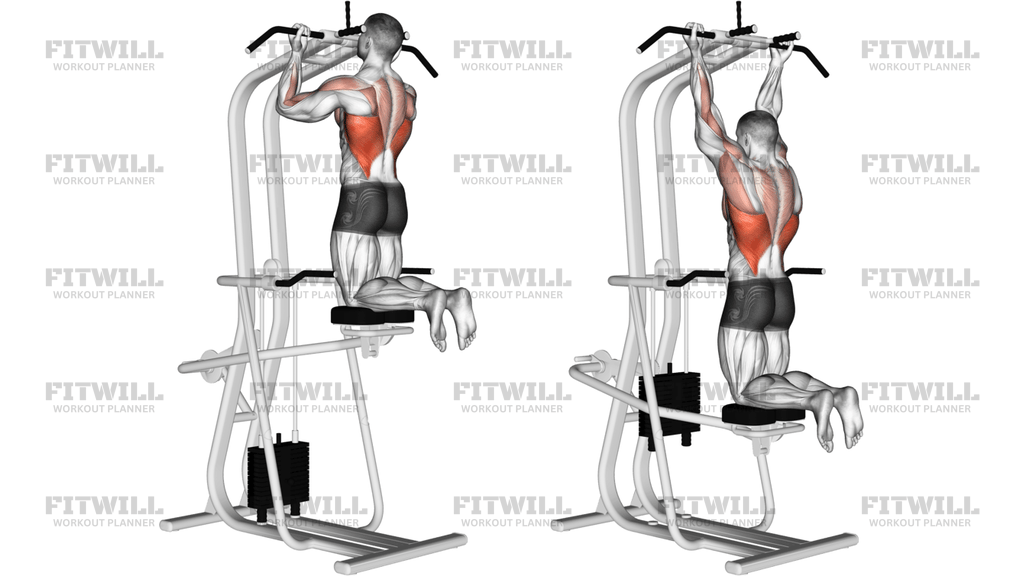
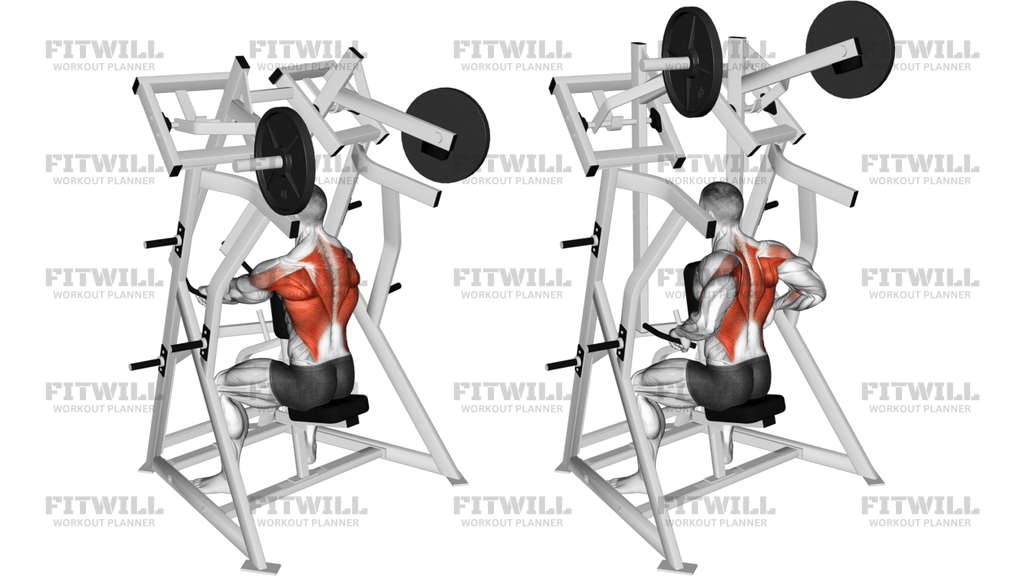
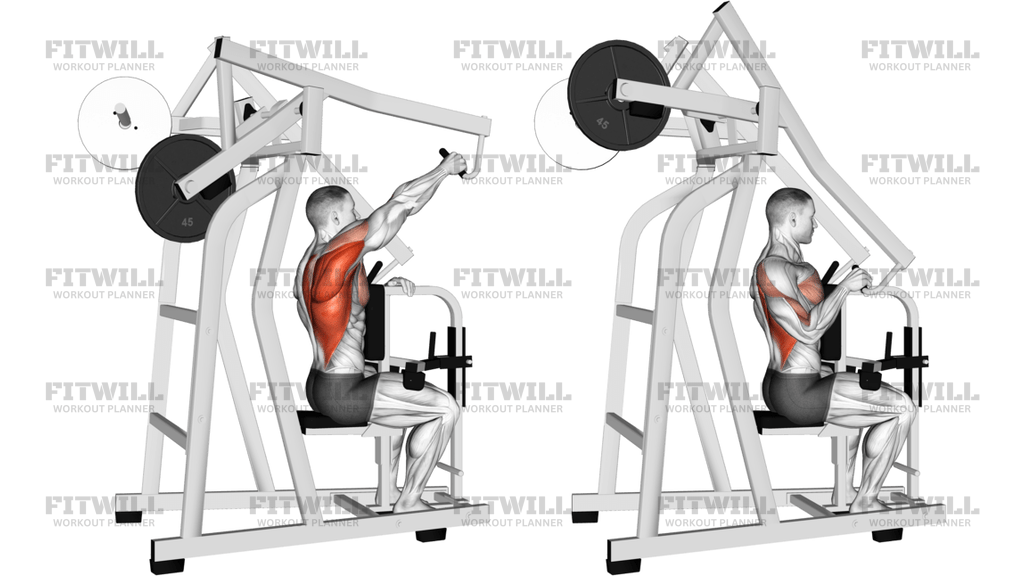
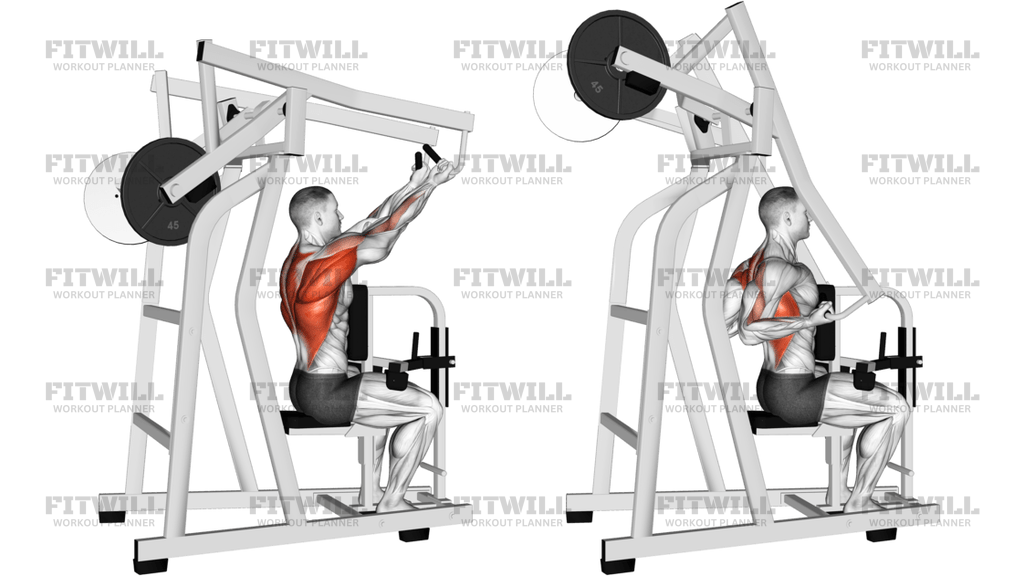
Lever Reverse-Grip Lateral Pulldown Plate Loaded is a guided back exercise that uses an underhand grip to train the lats through a smooth vertical pulling path. The leverage machine fixes the track of the movement, which makes it easier to keep tension where you want it and to repeat the same rep shape from start to finish. Because the grip is reversed, the biceps and forearms help more than they do in a standard overhand pulldown, but the main job still belongs to the latissimus dorsi.
This exercise is especially useful when you want a pulldown pattern that feels stable and controlled without needing to balance a free bar or cable path. The reverse grip usually lets the elbows travel a little closer to the torso, which can help some lifters feel the lower and outer portion of the lats more clearly. Rhomboids and other upper-back muscles assist by keeping the shoulder blades organized as the handles travel downward.
The setup matters because the machine should fit your body before the first pull begins. Sit so the thigh pads lock you in, place your feet firmly, and choose a grip that lets the wrists stay neutral while the palms face you. Keep the chest tall and the ribs stacked over the pelvis so the pull comes from the shoulders and elbows instead of from swinging the torso or curling the weight with the arms.
During each repetition, drive the elbows down and slightly back until the handles approach the upper chest or upper ribs, depending on the machine's range. Keep the shoulders away from the ears, pause briefly in the contracted position, and return under control until the arms are long again without losing posture. The motion should feel strong but smooth, with no jerking at the bottom and no sudden release on the way up.
Lever Reverse-Grip Lateral Pulldown Plate Loaded fits well in a back session, accessory block, or any workout where you want lat work with a more arm-assisted feel than a standard pulldown. Beginners can use it if the load is light enough to keep the torso still and the wrists straight, while more advanced lifters can use it to add volume with strict form. A clean rep is the goal: the machine should move because the lats are working, not because momentum is carrying the stack or plates.
[ Workout Log & Planner ]
Put your next workout in Fitwill
Keep your plan and training log ready when you are.


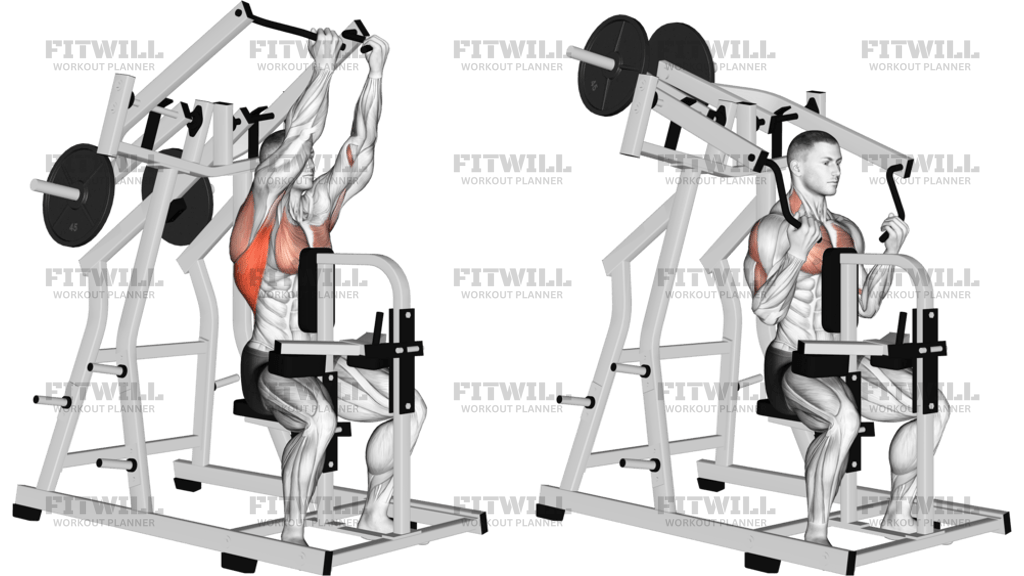
Instructions
- Sit on the Lever Reverse-Grip Lateral Pulldown Plate Loaded machine and lock your thighs under the pads before you reach for the handles.
- Set your feet flat on the floor or foot platform and take an underhand grip with the palms facing you, using a shoulder-width or slightly narrower hand position.
- Lift your chest, keep your rib cage stacked over your pelvis, and pull your shoulders down away from your ears before the first rep.
- Start with your arms long and your elbows open without letting your lower back arch or your torso swing.
- Pull the handles down by driving your elbows toward your sides and slightly behind your body until they approach your upper chest or upper ribs.
- Squeeze the lats briefly at the bottom while keeping your wrists straight and your neck relaxed.
- Let the handles travel back up in a slow, controlled return until your arms are nearly straight again.
- Reset your shoulder blades and breathing at the top, then repeat for the planned number of repetitions.
Tips & Tricks
- If the machine starts too low or too high, adjust the seat before loading more weight; the handles should line up so the first pull feels smooth, not cramped.
- Keep the elbows pointed down and in, not flared wide, or the pull turns into a shoulder-dominant row.
- Do not let the wrists curl back on the underhand grip; keep the knuckles stacked over the forearms so the biceps do not take over.
- Stop the pull when the shoulders start rolling forward instead of chasing extra range with the upper body.
- A small lean back is fine, but if your torso rocks on every rep the load is too heavy for strict pulldown work.
- Use a lighter weight than you would on an overhand pulldown because the reverse grip adds help from the arms and can tempt you to curl the handles.
- If the forearms give out first, reduce the load and keep the hands relaxed around the handles instead of squeezing harder.
- Pause for a beat at the bottom with the chest tall so the lats finish the rep instead of momentum.
Frequently Asked Questions
What muscles does Lever Reverse-Grip Lateral Pulldown Plate Loaded work most?
The lats do most of the work, with the biceps, forearms, and upper back helping stabilize and finish the pull.
Is Lever Reverse-Grip Lateral Pulldown Plate Loaded good for beginners?
Yes, as long as the seat is set correctly and the load is light enough to keep the torso still and the wrists straight.
How should I set my grip on Lever Reverse-Grip Lateral Pulldown Plate Loaded?
Use an underhand grip that is about shoulder-width or slightly narrower so the elbows can drive down cleanly without the wrists bending back.
Should I lean back on Lever Reverse-Grip Lateral Pulldown Plate Loaded?
A small natural lean is fine, but the torso should stay mostly fixed; if you are swinging backward, the load is too heavy.
Why do I feel Lever Reverse-Grip Lateral Pulldown Plate Loaded in my biceps so much?
The reverse grip recruits the arms more than a standard pulldown, but the elbows should still drive the motion; lower the load if it turns into a curl.
What are the most common mistakes with Lever Reverse-Grip Lateral Pulldown Plate Loaded?
Common errors are shrugging the shoulders, curling the handles with the hands, and rocking the torso to force extra range.
Can I use a neutral-grip pulldown instead of Lever Reverse-Grip Lateral Pulldown Plate Loaded?
Yes, a neutral-grip pulldown is the closest substitute if the reverse grip bothers your wrists or elbows.
When should I program Lever Reverse-Grip Lateral Pulldown Plate Loaded in a workout?
It works well after your main back movement or as accessory volume when you want more lat work without needing maximal load.