Lever Overhand Triceps Dip
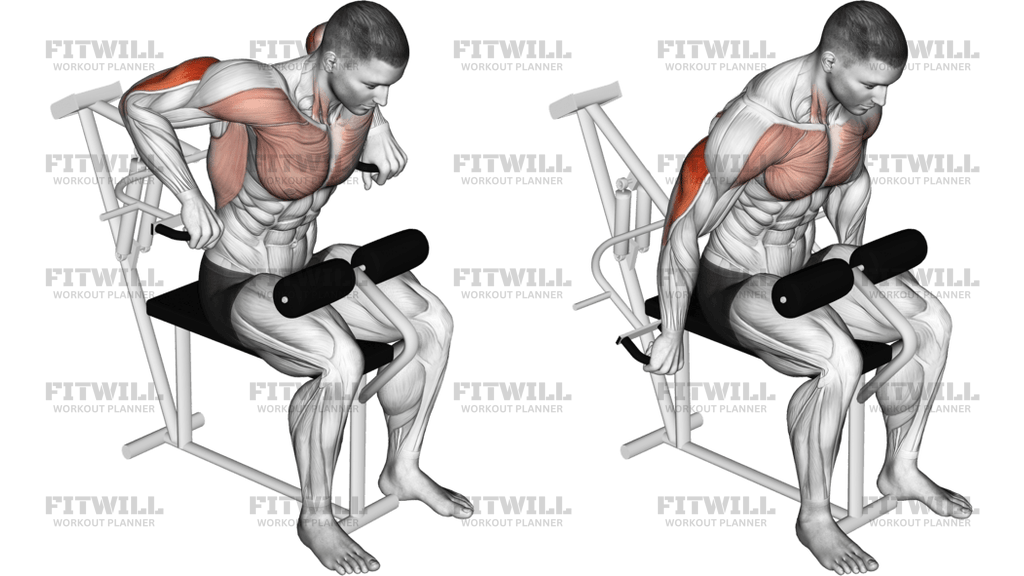
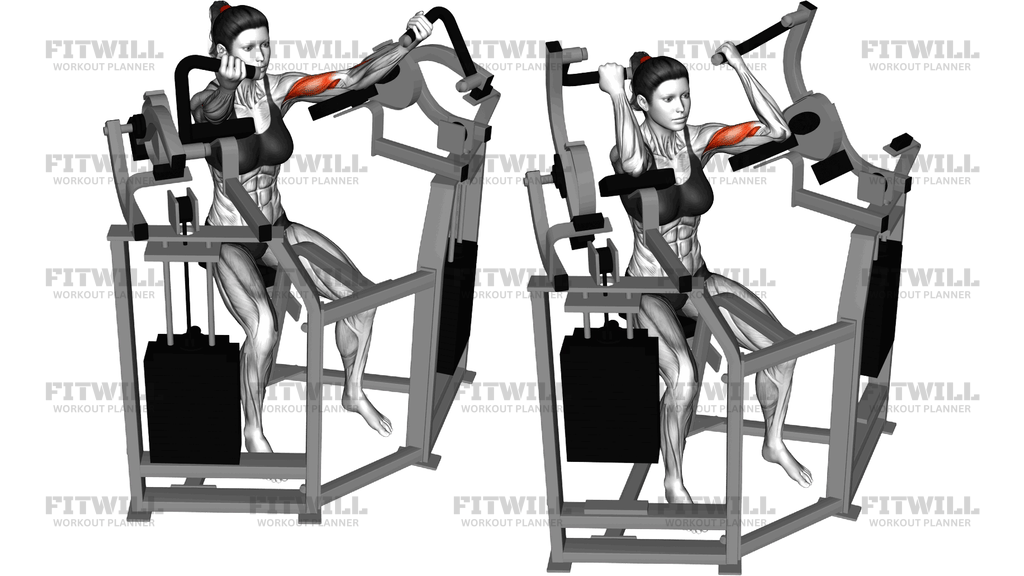
Lever Overhand Triceps Dip is a seated machine pressing exercise that lets you train the triceps through a fixed, guided path. The overhand handles and leverage arm remove most of the balance challenge, so the set can stay focused on elbow extension instead of on stabilizing a free weight. That makes it useful when you want direct arm work with a stable setup and predictable resistance.
The main work comes from the triceps, while the chest and front shoulders assist as the handles move through the press. Because the machine controls the arc, the setup matters more than it would on a simple bodyweight dip: seat height, torso angle, and the starting bend at the elbows all change where the tension lands. If the handles begin too high or the seat is out of position, the shoulders usually take over before the triceps do their job.
Start by sitting back against the pad, planting your feet, and taking the overhand grips with your wrists stacked over the handles. Keep your shoulder blades set down, your chest lifted, and your ribs from flaring hard through the lower back before you press. From there, drive the handles down and slightly back by straightening the elbows, then let the machine rise again under control so the triceps stay under tension on both halves of the rep.
Lever Overhand Triceps Dip fits well after pressing work, close-grip variations, or any arm-focused session where you want more triceps volume without the technical demand of a free-weight press. It is also a practical option for lifters who prefer a guided path because the machine reduces the need to balance the load while still allowing a strong, deliberate contraction. Moderate to higher reps often work well, provided each rep stays smooth and the stack never turns into a bounce.
Keep the range pain-free and let the elbows travel naturally instead of forcing them far behind the torso. If the front of the shoulder pinches, shorten the bottom position and reduce the load. The best set looks controlled from the first rep to the last, with the triceps finishing the press instead of your body swinging into the machine.
Fitwill
Log Workouts, Track Progress & Build Strength.
Achieve more with Fitwill: explore over 9600 exercises with images and videos, access built-in and custom workouts, perfect for both gym and home sessions, and see real results.
Start your journey. Download today!




Instructions
- Sit back against the pad, place both feet flat on the floor, and take the overhand handles with your wrists stacked over the grips.
- Adjust the seat so the handles begin with your elbows bent and your upper arms can move without your shoulders creeping upward.
- Set your shoulder blades down, lift your chest slightly, and brace your midsection before the first rep.
- Press the handles down and slightly back by straightening your elbows while keeping them close to your sides.
- Finish the press when your arms are nearly straight and the triceps are fully contracted, but do not slam into a hard lockout.
- Pause briefly at the bottom of the press while keeping your neck relaxed and your ribs from flaring.
- Let the machine rise under control until your elbows bend and you feel a strong but comfortable stretch through the triceps.
- Breathe in on the return and exhale as you press again, keeping each rep smooth instead of jerking the stack.
- When the set is done, let the handles return fully and release them only after the machine is stable.
Tips & Tricks
- If the handles start too high, the shoulders will help too much; lower the seat until the press begins with bent elbows instead of shrugged shoulders.
- Keep your wrists straight over the grips. Letting them fold back makes the set feel heavier and shifts stress to the forearms.
- Think about driving the elbows into extension, not pushing with the chest. That cue keeps the triceps as the main limiter.
- Stop the bottom position before your shoulders roll forward. A smaller stretch is better than forcing a deep range that feels pinchy.
- Use a load you can lower quietly. If the stack slams or the machine bounces, the set is too heavy.
- A slight torso lean is fine if the machine calls for it, but do not turn the movement into a rocking press from the hips.
- Keep the rep tempo even. A slow return makes the triceps work harder than a rushed drop back to the start.
- If the elbows flare wide, narrow them just enough to keep tension on the back of the arms and reduce shoulder takeover.
Frequently Asked Questions
What muscles does Lever Overhand Triceps Dip work?
It mainly trains the triceps, with the chest and front shoulders helping during the press.
Is Lever Overhand Triceps Dip good for beginners?
Yes. The machine path is guided, so beginners can learn elbow extension safely with light resistance and a controlled range.
Where should my elbows travel on Lever Overhand Triceps Dip?
Let them bend and straighten in a natural path close to your torso instead of flaring out hard to the sides.
Should I lean forward or stay upright on Lever Overhand Triceps Dip?
Follow the machine’s setup, but keep the torso steady and avoid excessive rocking; a small forward lean is fine if the seat position calls for it.
How deep should I go on Lever Overhand Triceps Dip?
Go only until you feel a strong triceps stretch and the shoulders stay comfortable. If the front of the shoulder pinches, shorten the range.
Why do I feel Lever Overhand Triceps Dip in my chest more than my triceps?
Usually the load is too heavy or the torso is drifting too far forward. Lighten the stack and focus on finishing the press with the elbows.
Can I replace cable pushdowns with Lever Overhand Triceps Dip?
Yes, if you want a heavier guided triceps movement. Cable pushdowns are easier to fine-tune, while this machine lets you press through a stronger fixed arc.
What are the most common mistakes on Lever Overhand Triceps Dip?
Shrugging the shoulders, bouncing out of the bottom, and locking out with a jerk instead of a smooth triceps squeeze are the big ones.