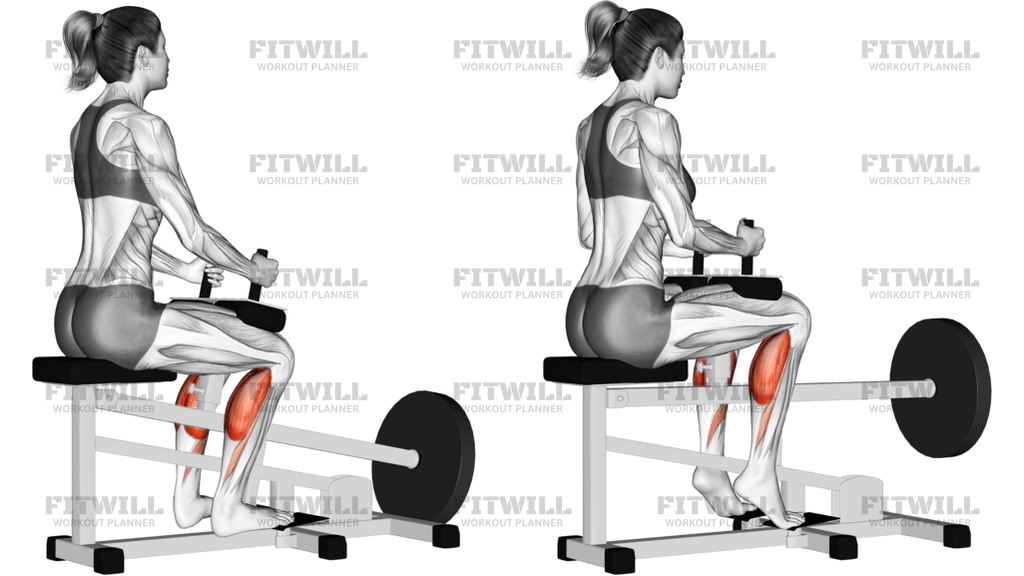
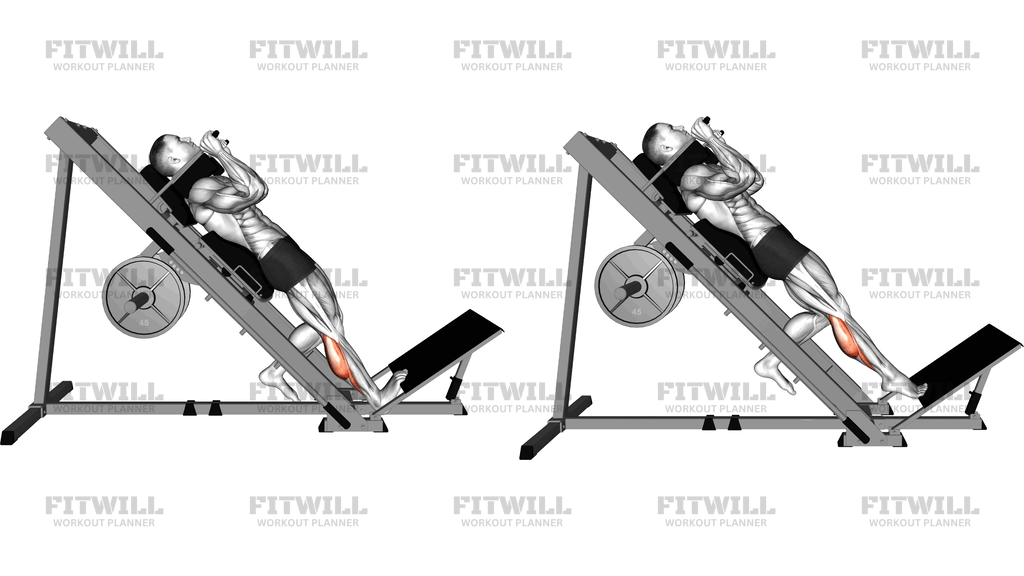
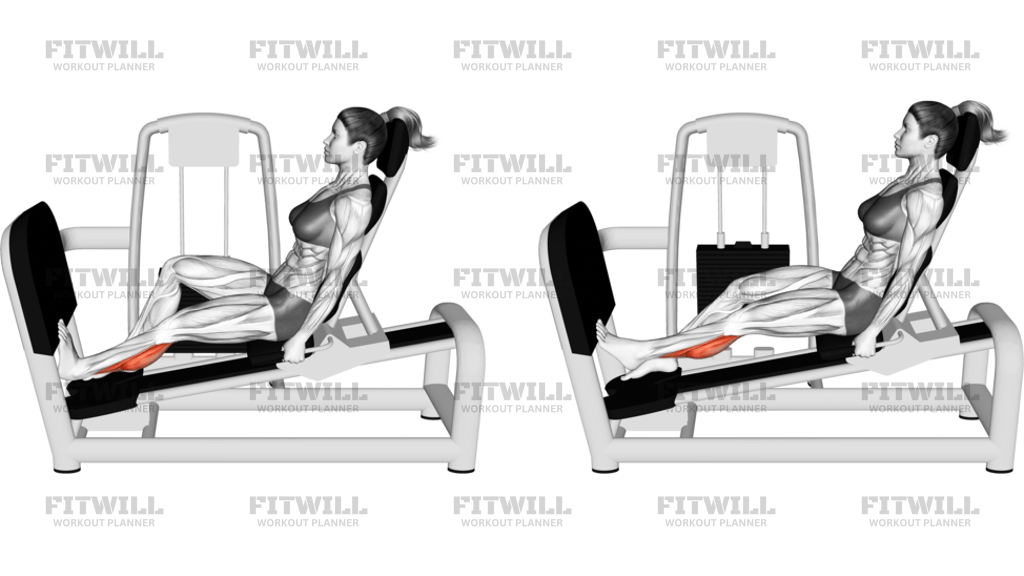
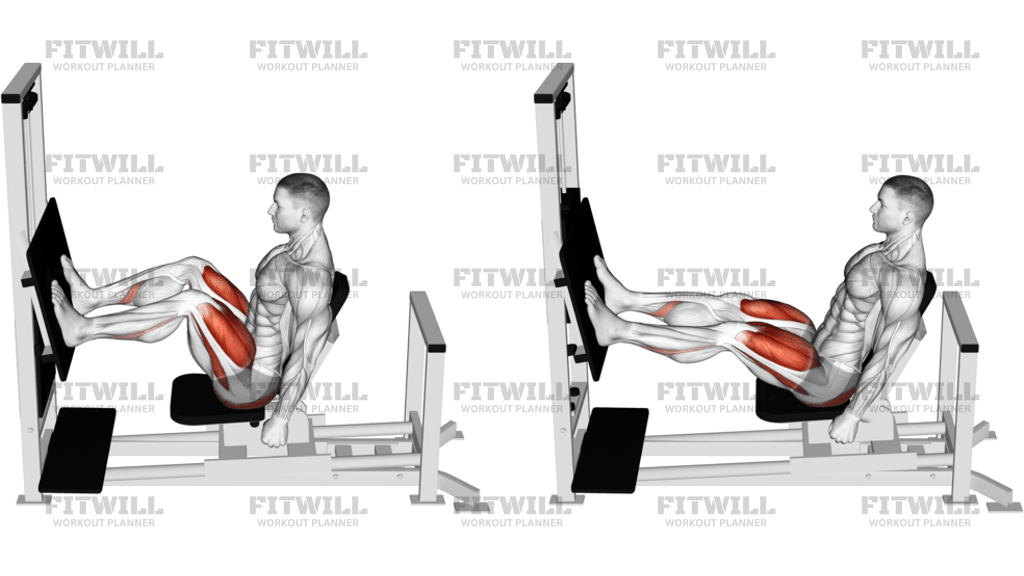
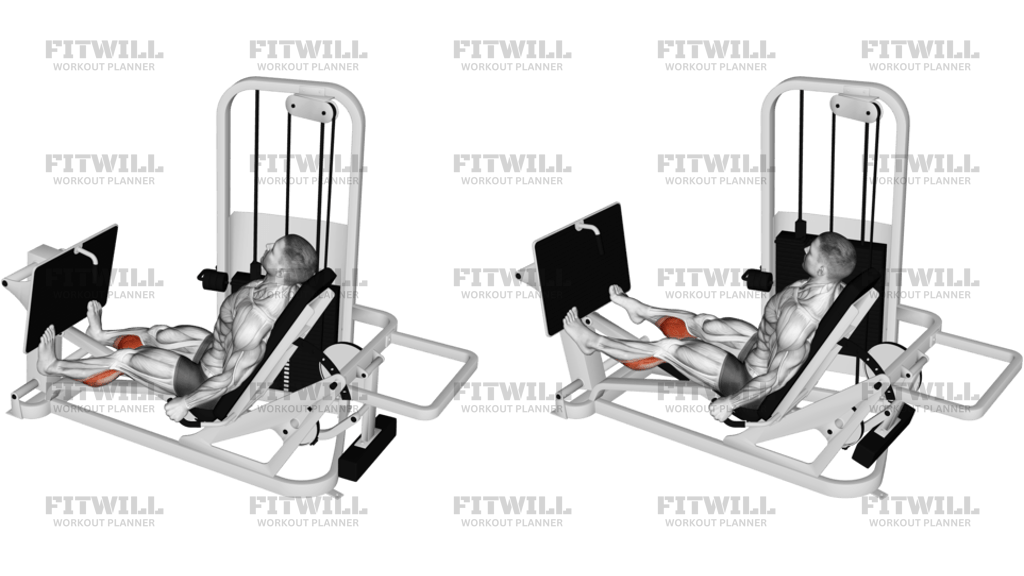
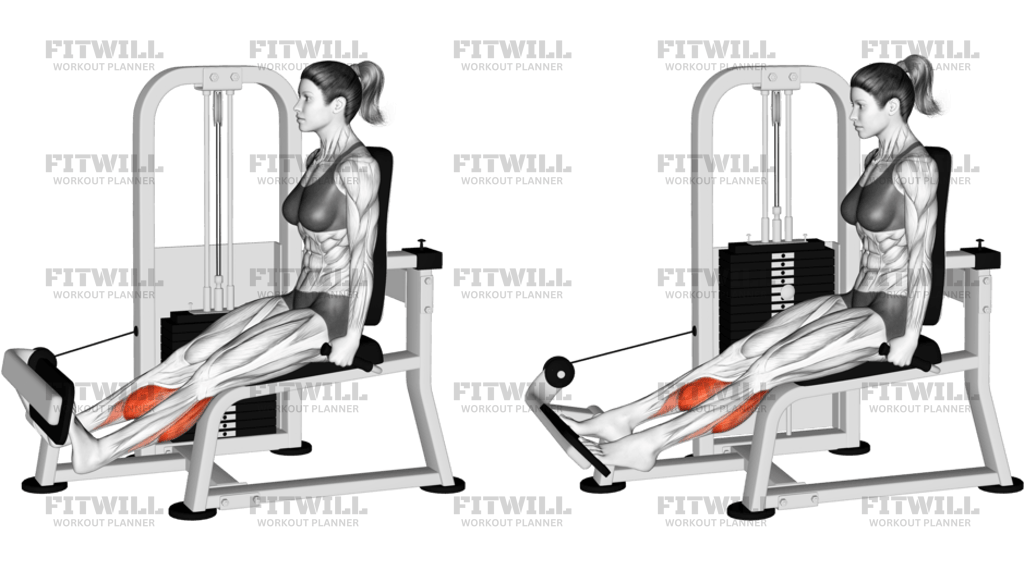
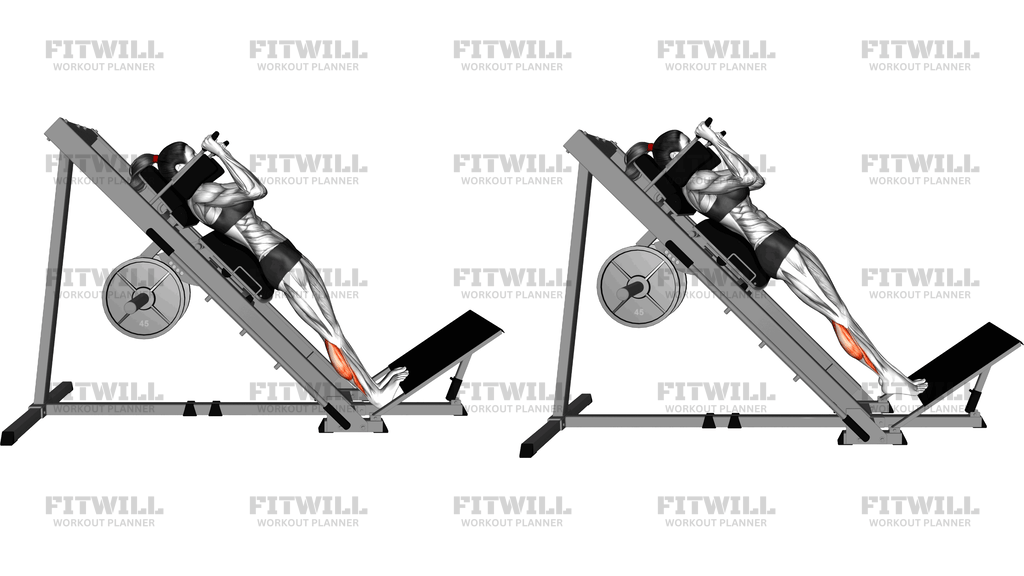
Lever Standing Calf Raise
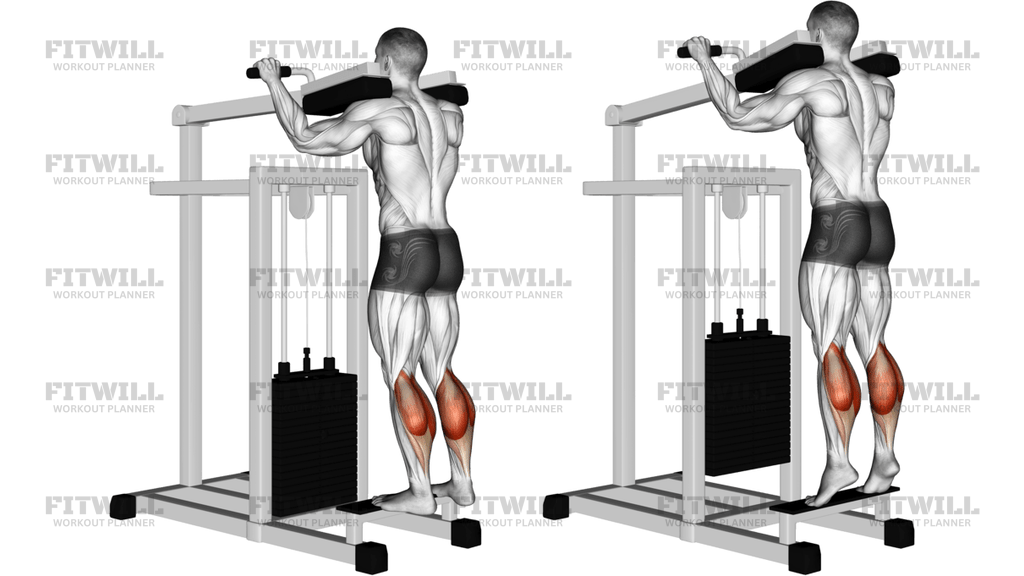
Lever Standing Calf Raise is a machine-based calf exercise built around one simple pattern: rise up onto the balls of your feet, then lower the heels under control for a strong stretch. The leverage machine keeps the torso more stable than a free standing calf raise, but the quality of the set still depends on a precise setup. The shoulder pads should sit securely across the upper traps, the feet should be planted on the platform with the heels free to travel, and the ankles should track cleanly through the full motion.
This movement primarily trains the gastrocnemius, the larger visible calf muscle that does most of its work when the knees stay mostly straight. The soleus, foot stabilizers, and muscles around the ankle and hip still contribute, especially to balance and control, but the main target is the calf complex. Because the load sits on the shoulders and the movement happens at the ankle, small setup errors show up quickly: if the pads are too high, the heels are too far back, or the body sways, the set turns into a balance drill instead of a calf exercise.
Good repetitions are deliberate. Start from a controlled bottom position with the heels dropped as far as your ankles can comfortably allow, then drive straight up through the ball of the big toe and second toe until the calves are fully shortened. At the top, pause briefly without bouncing, then lower at a slow, even pace so the calves stay under tension through the eccentric phase. Keep the knees soft but not bent so much that the movement shifts away from the calves and into a partial squat pattern.
Lever Standing Calf Raise is useful for hypertrophy, ankle strength, and sports preparation because it overloads the calves through a long range of motion. It fits well in lower-body sessions, accessory work, or as a focused calf block after compound lifts. The biggest safety points are simple: keep the heels moving in a straight line, avoid rolling onto the outer edge of the feet, and choose a load that lets you reach the top and bottom positions without jerking through the machine.
[ Workout Log & Planner ]
Put your next workout in Fitwill
Keep your plan and training log ready when you are.


Instructions
- Adjust the machine so the shoulder pads rest across your upper traps, not on your neck, and step onto the platform with the balls of your feet near the edge.
- Hold the handles lightly, stand tall, and let your heels hang free so the ankles can move through a full stretch.
- Keep your knees mostly straight with only a soft unlock so the calves stay as the main movers.
- Lower your heels slowly until you feel a strong but controlled stretch through the calves and Achilles area.
- Drive up through the balls of your feet, especially the big toe and second toe, until you are as high as you can rise without bouncing.
- Pause for a brief squeeze at the top while keeping the ankles stacked and the feet flat across the front of the platform.
- Lower back down under control to the stretched position, letting the weight settle without slamming the stack.
- Repeat for the planned reps, then step off the platform carefully before releasing the machine.
Tips & Tricks
- If the shoulder pads are pressing into your neck, lower the machine setup before starting the set.
- Keep the pressure centered on the forefoot; if your weight shifts to the outside edge, the ankles usually drift and the calves lose tension.
- Use a slow lowering phase, because the stretch at the bottom is where this exercise earns a lot of its stimulus.
- Do not let the knees dip and turn the movement into a hidden squat; a mostly straight leg position keeps the gastrocnemius on target.
- Rise as high as your ankle motion allows, but do not slam into lockout or bounce off the top stop.
- Lightly grip the handles for balance only; if you are pulling hard on them, the load is probably too heavy.
- Keep both heels moving together so one ankle does not take over while the other side shortchanges the rep.
- Stop the set if the platform starts rocking or you can no longer control the bottom stretch cleanly.
Frequently Asked Questions
What does Lever Standing Calf Raise mainly work?
It mainly targets the gastrocnemius, with the soleus, foot stabilizers, and ankle muscles helping to control the machine path.
Where should the shoulder pads sit on this machine?
They should rest across the upper traps and shoulders. If they sit on the neck, the setup is usually too high.
Why do my heels hang off the edge of the platform?
That setup lets the ankles travel through a full lower stretch and a full calf contraction. If the heels stay supported, the range of motion is reduced.
Should my knees stay straight or bent?
Keep them mostly straight with only a small unlock. Too much bend shifts the work away from the calf muscles and toward the thighs.
How do I know if I am using too much weight?
If you need to bounce, lean into the pads, or shorten the bottom stretch, the load is too heavy for clean calf reps.
Is this different from a seated calf raise?
Yes. The standing version keeps the knees mostly straight, which puts more emphasis on the gastrocnemius than a seated calf raise.
Can I hold the handles tightly?
Use them for balance, not as a pulling point. Heavy hand pressure usually means the machine is carrying more of your body than your calves are.
What range of motion should I use?
Use the deepest controlled heel drop you can manage without pain, then rise as high as possible without bouncing or losing foot contact.