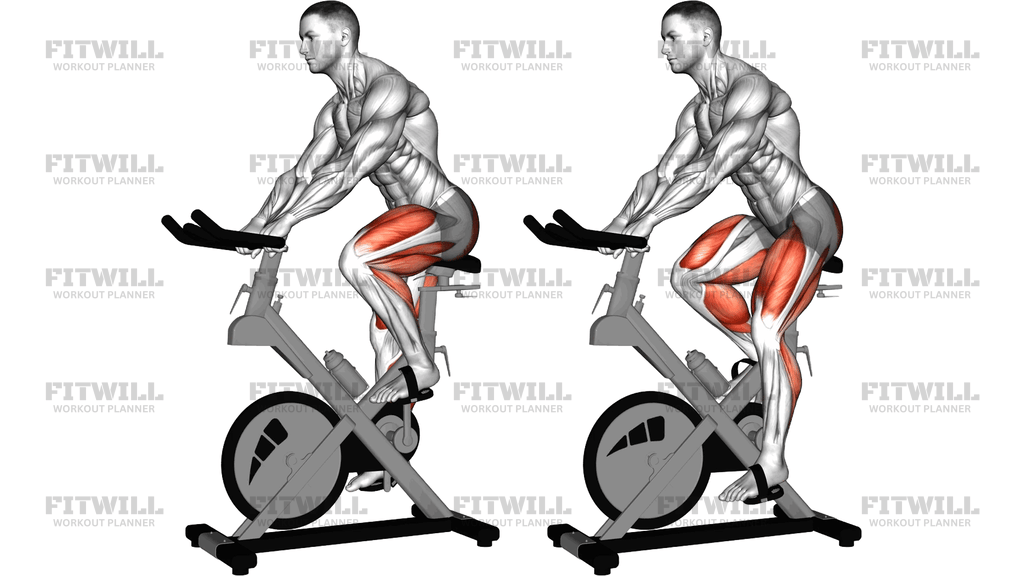
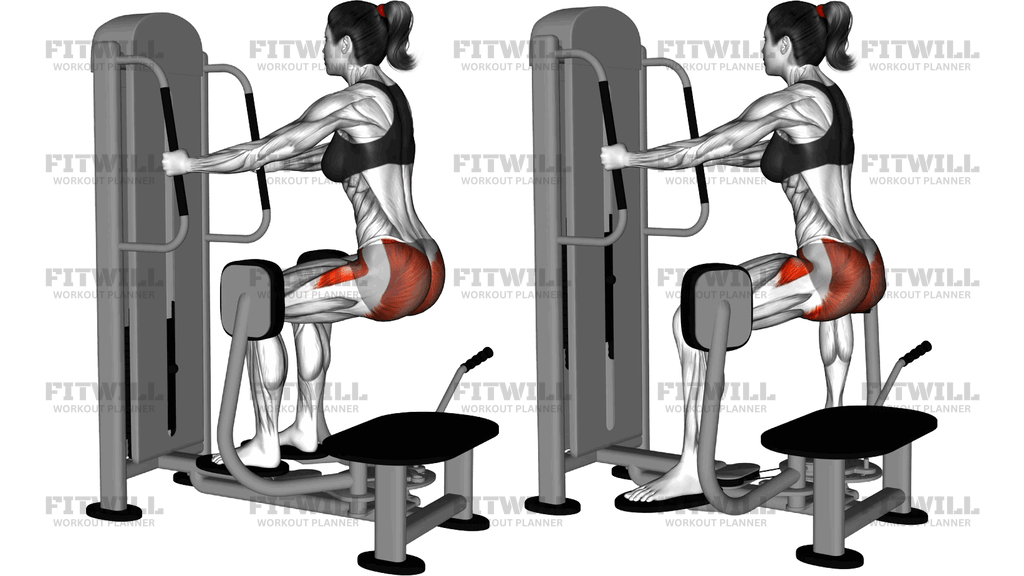
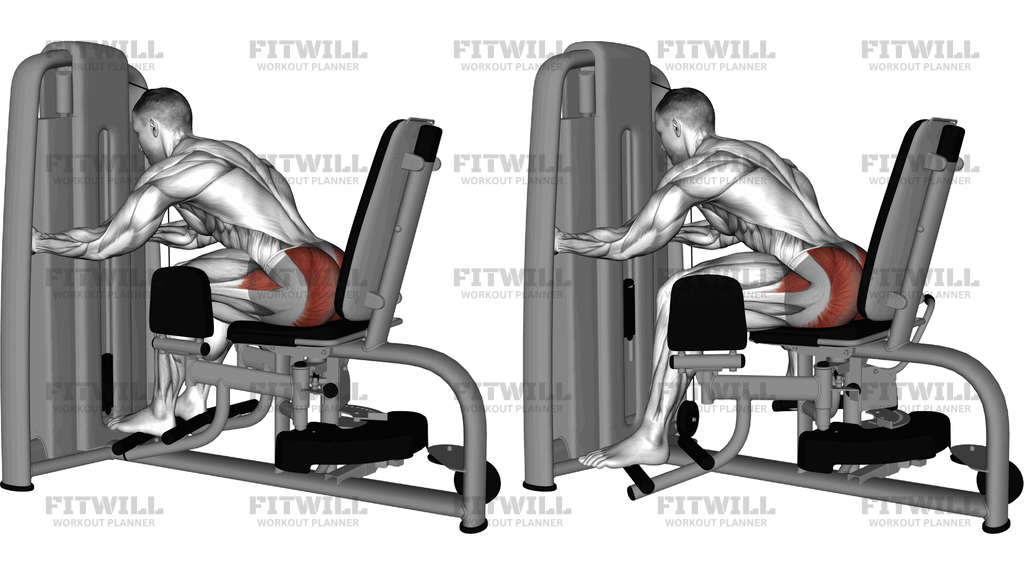
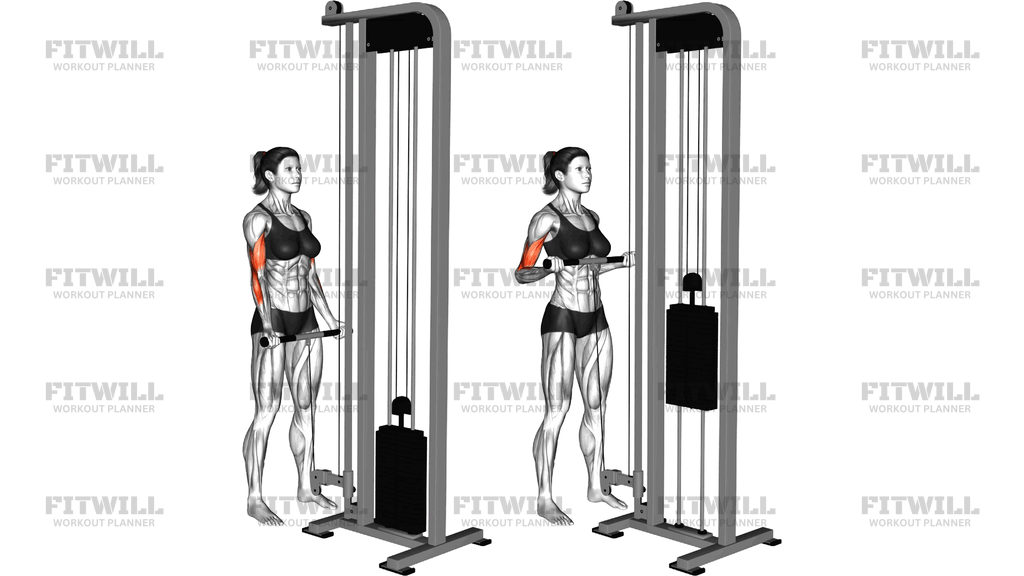
Walk Wave Machine
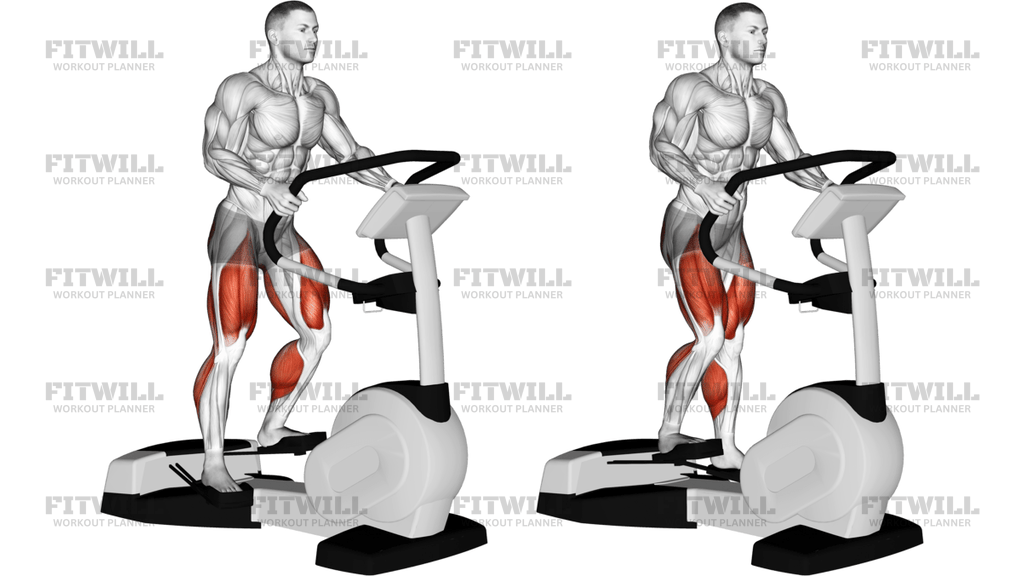
Walk Wave Machine is a standing cardio and lower-body conditioning exercise performed on a leverage machine with moving foot platforms and linked handles. It creates a smooth walking rhythm without the impact of running, so it is useful when you want to raise your heart rate while still keeping the movement controlled and joint-friendly. The exercise places the biggest demand on the thighs, with the legs, hips, calves, and core working together to keep each stride steady.
The machine is most effective when the setup is clean from the start. Stand tall between the pedals, place one foot on each platform, and hold the handles lightly enough to stay balanced without hanging on them. Your knees should stay softly bent, your chest should stay lifted, and your hips should stay centered over the pedals so the motion feels like an organized walking pattern rather than a bounce or sway.
During Walk Wave Machine, one pedal moves down and forward as the other rises, and the handles move with that alternating rhythm. Drive through the full foot, keep your torso quiet, and let the legs do the work instead of rocking your body from side to side. A smooth stride with even breathing matters more than speed, and the machine should feel like a controlled march rather than a sprint.
This exercise is a practical choice for warm-ups, conditioning blocks, or lower-impact cardio work on days when you want extra volume without heavy loading. It can also fit well in mixed training sessions because it builds thigh endurance while gently involving the arms and trunk. If you feel the effort shifting into your shoulders, low back, or hands, the stride is usually too aggressive or the resistance is too high.
Keep the motion honest and repeatable for the full set. Shorten the stride if your hips rock or your knees start to lock out, and slow the cadence if the pedals begin to slap or lose control. Walk Wave Machine works best when each repetition feels balanced, rhythmic, and easy to repeat, which makes it a good option for beginners as well as for lifters who want a lower-impact conditioning tool.
[ Workout Log & Planner ]
Put your next workout in Fitwill
Keep your plan and training log ready when you are.


Instructions
- Step onto the machine with one foot on each moving pedal and take a light hold on the handles.
- Set your feet centered on the platforms, keep your knees softly bent, and stack your chest over your hips.
- Stand tall with your shoulders down and your weight evenly distributed before you start the stride.
- Press one pedal down and forward as the opposite pedal rises, letting the handles move in the same alternating rhythm.
- Keep your torso quiet and your hips level while your legs create the walking motion.
- Drive through the whole foot on each stride instead of bouncing off the toes or locking the knee at the top.
- Breathe steadily as you alternate sides, keeping the pace smooth and even rather than rushed.
- Use only as much resistance as you can control without leaning hard on the handles or rocking your body.
- Slow the pedals to a controlled stop, then step off one foot at a time when the machine is fully settled.
Tips & Tricks
- If your hips sway from side to side, shorten the stride and lower the pace until the pedals feel smooth again.
- Keep a soft bend in both knees at the top of the stride so the legs do not snap straight.
- Treat the handles as balance support, not as something to pull your body through the set.
- Push through the midfoot and heel to keep the thighs and glutes doing more of the work.
- Use a resistance that lets you keep the pedal motion quiet; loud foot strikes usually mean you are forcing the stride.
- If your lower back starts to arch, reset by standing taller and slightly reducing the range of motion.
- For conditioning sets, keep the cadence steady enough that you could speak a short sentence without gasping.
- If your hands start to do all the work, lighten your grip and let the legs drive the machine.
- Stop the set before your posture collapses, not after the pedals start feeling jerky.
Frequently Asked Questions
What muscles does Walk Wave Machine work most?
The thighs do most of the work, especially the quads, with the glutes, calves, and core helping keep each stride controlled.
Is Walk Wave Machine more cardio or strength work?
It is mainly a cardio and conditioning movement, but the legs still have to produce steady force through every stride.
Should I hold the handles tightly on Walk Wave Machine?
No. Use the handles for balance and rhythm, but keep the grip light so the arms do not steal the work from the legs.
How do I keep Walk Wave Machine from feeling bouncy?
Shorten the stride, slow the cadence, and keep your feet centered on the pedals so the motion stays smooth instead of springy.
Can beginners use Walk Wave Machine?
Yes. Start with a low resistance, a short stride, and a pace you can control without leaning on the handles.
Where should I feel Walk Wave Machine in my body?
You should mainly feel it in the thighs and glutes, with some work in the calves and core to keep your posture steady.
What is the biggest mistake on Walk Wave Machine?
The biggest mistake is overstriding and rocking the torso, which turns the exercise into a jerky swing instead of a controlled walk.
Can I use Walk Wave Machine as a warm-up?
Yes. It works well as a warm-up because it raises heart rate, warms the legs, and keeps the impact lower than running.