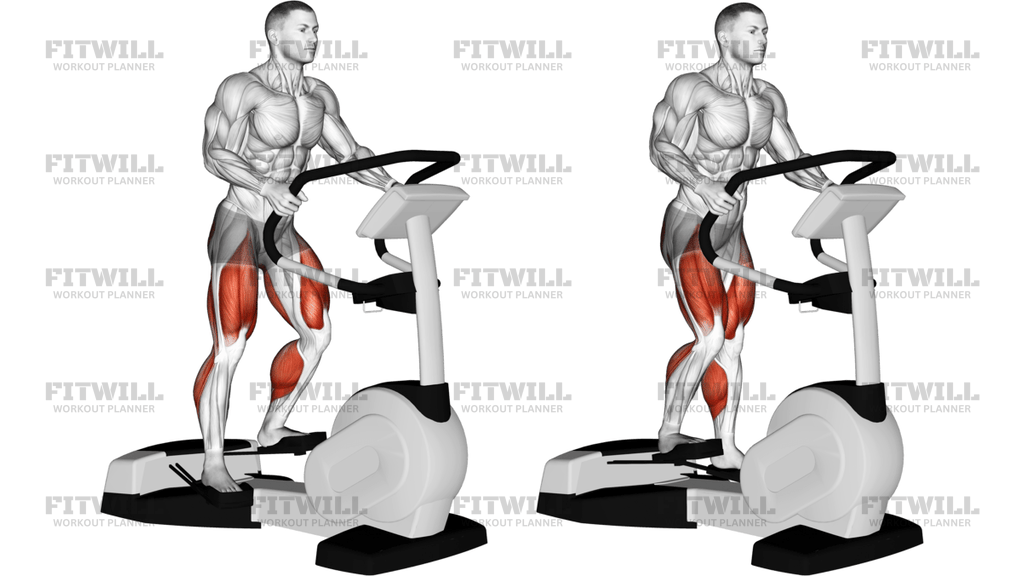
Walking On Stepmill
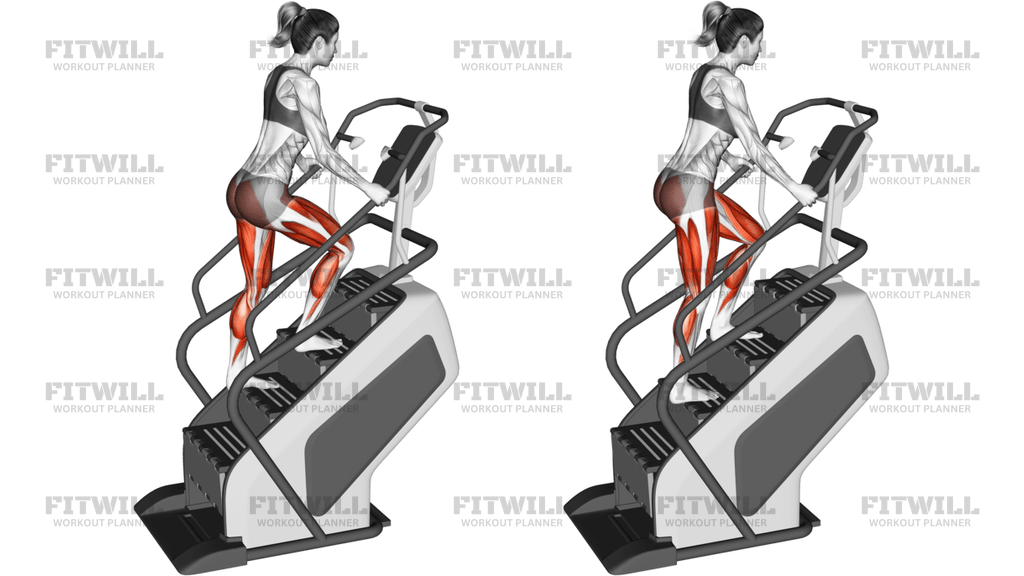
Walking On Stepmill is a machine-based stair-climbing exercise that turns a simple walking pattern into a steady lower-body conditioning drill. It places continuous work on the thighs, especially the quadriceps, while the glutes, calves, and core help keep each step smooth and organized. Because the steps keep moving under you, the exercise rewards rhythm, balance, and consistent foot placement more than raw speed.
Walking On Stepmill is useful when you want a cardio piece that still feels lower-body focused. The machine asks you to keep one foot driving while the other leg recovers, which makes it a good choice for building work capacity and leg endurance without the impact of running. It can also be a practical finisher, warmup, or standalone conditioning block when you want repeated stepping under control.
Setup matters more than most people think. Stand tall on the pedals or steps with your whole foot planted, keep your chest lifted, and hold the rails lightly instead of hanging from them. The torso should stay stacked over the hips so the machine drives the movement and your legs do the work. If you lean too far forward or dump your weight into the handles, the steps get sloppy and the thighs lose tension.
Each rep should look like a clean, alternating climb. Press through the middle of the foot and heel as the working leg extends, let the opposite knee rise naturally, and avoid bouncing off the ball of the foot only. Keep the pace steady enough that you can control the full cycle of each step, then let the foot come down with purpose rather than dropping or stomping. Smooth breathing helps keep the cadence consistent and prevents the shoulders from creeping up.
This exercise is especially helpful for people who want a low-skill conditioning option that still challenges the legs, lungs, and posture. Beginners can use Walking On Stepmill with a conservative pace and minimal hand pressure, while more advanced users can increase duration, cadence, or step height depending on the machine. The main goal is not to race the machine, but to keep the stepping pattern stable enough that every stride looks deliberate and repeatable.
[ Workout Log & Planner ]
Put your next workout in Fitwill
Keep your plan and training log ready when you are.


Instructions
- Step onto the machine with both feet planted fully on the steps or pedals and both hands resting lightly on the front rails.
- Stand tall with your ribs stacked over your hips, your gaze forward, and your weight centered through the middle of each foot.
- Start the machine at a pace you can control without bouncing or leaning hard into the handles.
- Press one foot down to drive the step as the opposite knee rises naturally, keeping the hips level and the torso quiet.
- Let the stepping pattern alternate smoothly so each foot finds the next step without scraping or rushing.
- Keep your knees tracking in line with your toes and avoid letting them cave inward as the legs fatigue.
- Breathe in a steady rhythm, using short controlled exhales as you climb and relaxed inhales as you reset each step.
- Stay light on the rails and use them only for balance, not to pull your body up the machine.
- Continue for the planned duration or step count, then slow the machine before stepping off carefully.
Tips & Tricks
- Keep your heels as involved as the machine allows; living on your toes makes the calves take over and shortens the stride.
- If your torso folds forward, lower the pace until you can keep your chest open and your hips stacked under you.
- Use the handrails as balance points, not as a lever to haul yourself upward.
- A smoother cadence is usually better than a faster one, because it keeps the thighs under constant work and reduces stumbling.
- If your knees start drifting inward, think about pressing the floor apart through each step.
- Let the trailing foot clear the step before the next drive; dragging the foot is a sign that the machine is moving too fast.
- For more thigh emphasis, choose a pace that forces you to push through the working leg instead of bouncing between steps.
- For a longer conditioning set, keep the resistance moderate enough that you can sustain posture for the full bout.
- If your lower back starts arching or your shoulders shrug, reset your posture before continuing.
- Step off only after the machine slows down enough that you can land each foot securely.
Frequently Asked Questions
What muscles does Walking On Stepmill work most?
It mainly works the quadriceps and glutes, with the calves, hamstrings, and core helping stabilize each step.
Is Walking On Stepmill more of a cardio exercise or a leg exercise?
It is both. The steady stepping pattern drives heart rate up while the thighs and glutes keep producing force step after step.
Should I hold the handrails tightly on Walking On Stepmill?
No. Use the rails for light balance only; gripping hard usually shifts work away from the legs and lets the torso collapse forward.
How should my feet sit on the steps?
Place the whole foot on the step or pedal when possible, then press through the middle of the foot and heel instead of living on the toes.
What is the most common mistake on Walking On Stepmill?
People usually go too fast and start bouncing, leaning, or dragging the feet. Slowing the pace usually fixes the pattern immediately.
Can beginners do Walking On Stepmill safely?
Yes, as long as they start slowly and keep both hands light on the rails until the stepping rhythm feels stable.
Does Walking On Stepmill help build leg endurance?
Yes. The repeated climbing pattern keeps the thighs and glutes under steady tension for as long as you maintain the pace.
How can I make Walking On Stepmill harder without changing the machine?
Increase the duration, raise the pace slightly, or keep the posture stricter so the legs do more of the work and the rails do less.
When should I stop the set?
Stop when you can no longer keep the torso tall, the steps smooth, and the foot placement controlled.