Lunge Push-Up
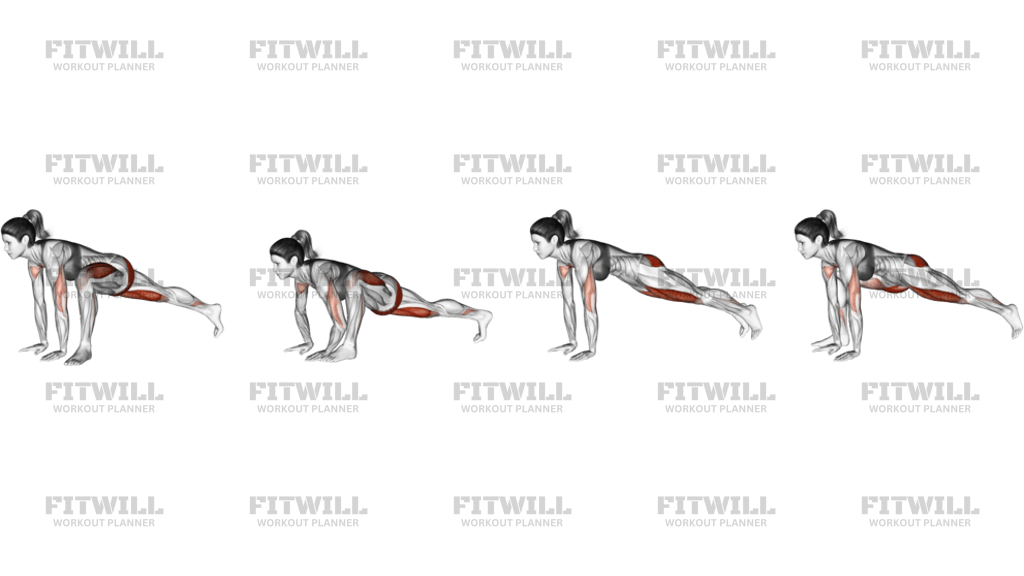
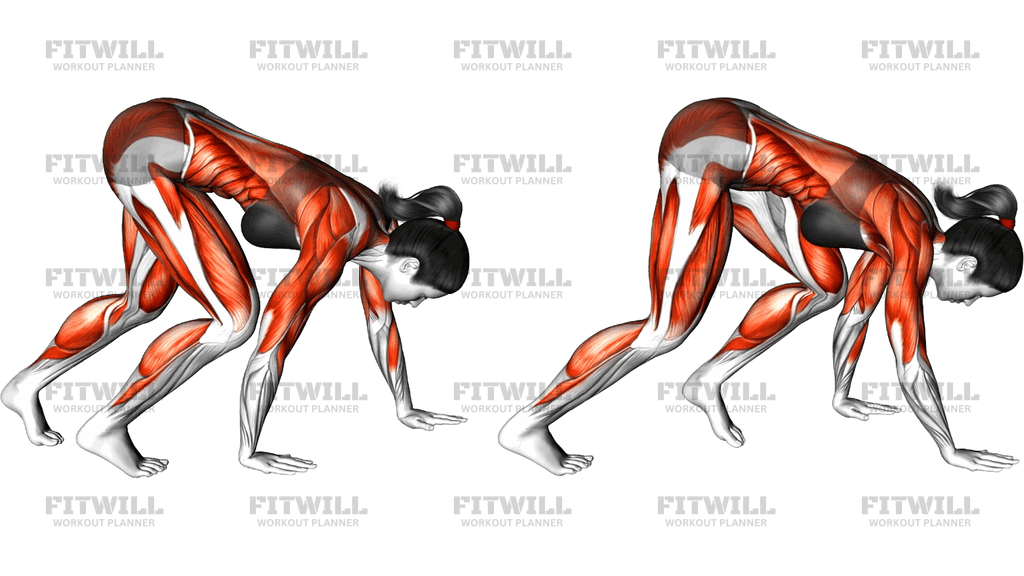
Lunge Push-Up is a bodyweight floor drill that combines a plank-based lunge position with a push-up. It is designed to challenge the glutes first, while the hamstrings, core, lower back, shoulders, and triceps help keep the body rigid and moving as one unit. The exercise works best when the torso stays square and the hips do not twist as the legs shift and the arms press.
The lunge component makes this more than a standard push-up. Stepping or driving one leg forward demands hip control, balance, and a strong brace through the trunk. That front-leg position loads the glute of the working side and forces the pelvis to stay level instead of dropping or rotating. If the setup is sloppy, the movement turns into a scramble; if the setup is tight, the repetition feels coordinated and deliberate.
Because the hands stay on the floor, the upper body also has to do real work. The chest, shoulders, and triceps support the pressing phase, but the rep should still feel like a lower-body and core drill first. The best repetitions keep pressure spread through the palms, shoulders away from the ears, and the neck long while the legs and hips handle the shifting demand.
Use this movement when you want a bodyweight exercise that blends unilateral lower-body control with trunk stability and a pressing pattern. It fits well in warm-ups, conditioning circuits, or accessory work where clean coordination matters more than heavy loading. Start with a smaller range or slower tempo if the transition between the lunge and push-up causes the hips to sag or the knees to collapse inward.
Treat each rep as a controlled floor sequence, not a fast hop. Set the plank first, place the foot precisely, brace before the descent, and finish each rep with the body organized before you switch sides or reset. Clean positioning, steady breathing, and a smooth return to plank matter more than speed.
[ Workout Log & Planner ]
Put your next workout in Fitwill
Keep your plan and training log ready when you are.


Instructions
- Start in a high plank on the floor with your hands under your shoulders, legs long, and your core and glutes braced.
- Step or drive one foot forward into a lunge-like position beside the same-side hand while keeping your hips as level as possible.
- Keep your front knee stacked over the ankle and your back leg extended with the heel lifted.
- Lower your chest toward the floor by bending your elbows, keeping your torso in one long line.
- Press through both palms to return to the top of the push-up without letting your hips sway.
- Drive the front foot back to the plank and re-establish a strong brace before the next repetition or side change.
- Exhale as you press up and inhale as you lower with control.
- Continue alternating sides for the planned number of repetitions.
Tips & Tricks
- Keep both hands planted firmly so the shoulder on the working side does not collapse inward as the foot steps forward.
- If the forward foot cannot reach beside the hand without rounding the lower back, shorten the step and keep the lunge smaller.
- Press the floor away through the whole hand, especially the thumb side, to keep the push-up stable.
- Do not let the front knee cave inward when the leg is loaded; track it in line with the middle toes.
- Keep the ribs down as the leg steps in so the torso does not open up or over-arch.
- Move slowly enough that the transition from plank to lunge does not bounce your hips.
- Use a softer target for the push-up depth if your chest cannot stay braced and aligned to the floor.
- Stop the set if the front foot lands crooked or you have to twist hard through the low back to finish the rep.
Frequently Asked Questions
What muscles work most in a Lunge Push-Up?
The glutes are the main focus, with the hamstrings and core helping to stabilize the lunge position and the chest, shoulders, and triceps assisting in the push-up.
Is this more of a lower-body exercise or a push-up?
It is mainly a lower-body and core drill with a pressing component. The lunge position drives the challenge, while the push-up adds upper-body work.
How should my hands be placed during the push-up?
Keep your hands under or just slightly wider than your shoulders so you can press evenly without shifting too much weight onto one side.
What is the biggest form mistake on the lunge step?
The most common problem is letting the hips twist or the front knee cave inward when the foot moves forward.
Can beginners use a shorter range of motion?
Yes. A shorter lunge step or a shallower push-up makes the exercise easier to control while you learn the pattern.
Should I keep my back leg straight or bent?
Keep the back leg long and active so the pelvis stays steady and the load stays on the front leg and trunk.
What breathing pattern works best?
Inhale as you lower, then exhale as you press the floor away and move back to a stable plank.
How can I make Lunge Push-Up harder?
Slow the transitions, increase the lunge depth, pause in the bottom of the push-up, or alternate sides with less rest between reps.