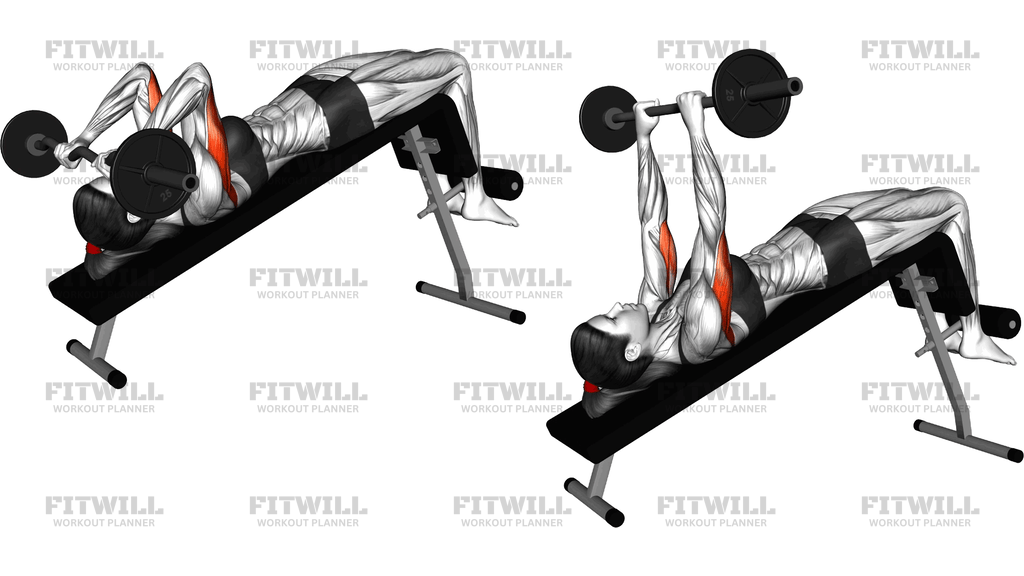
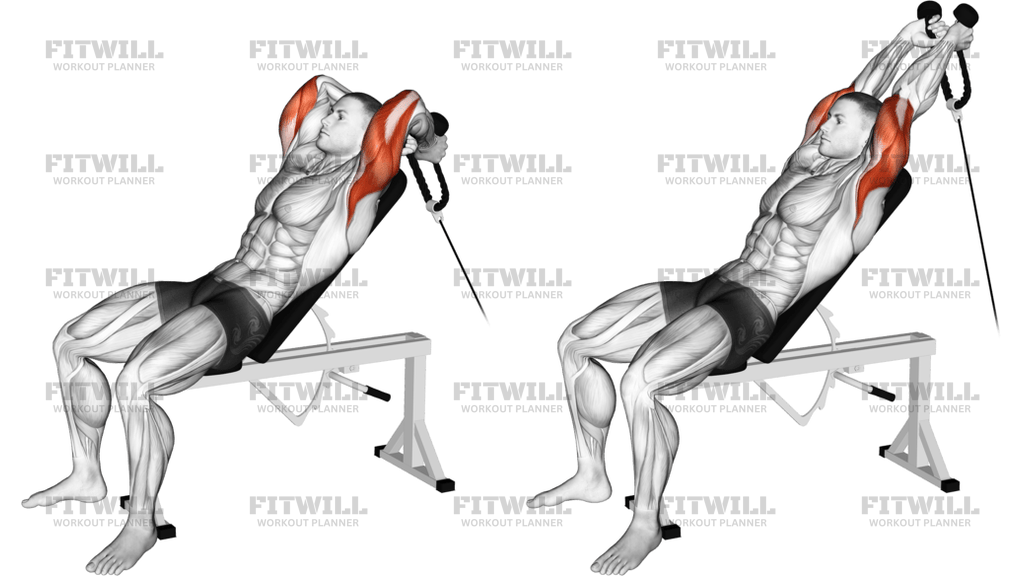
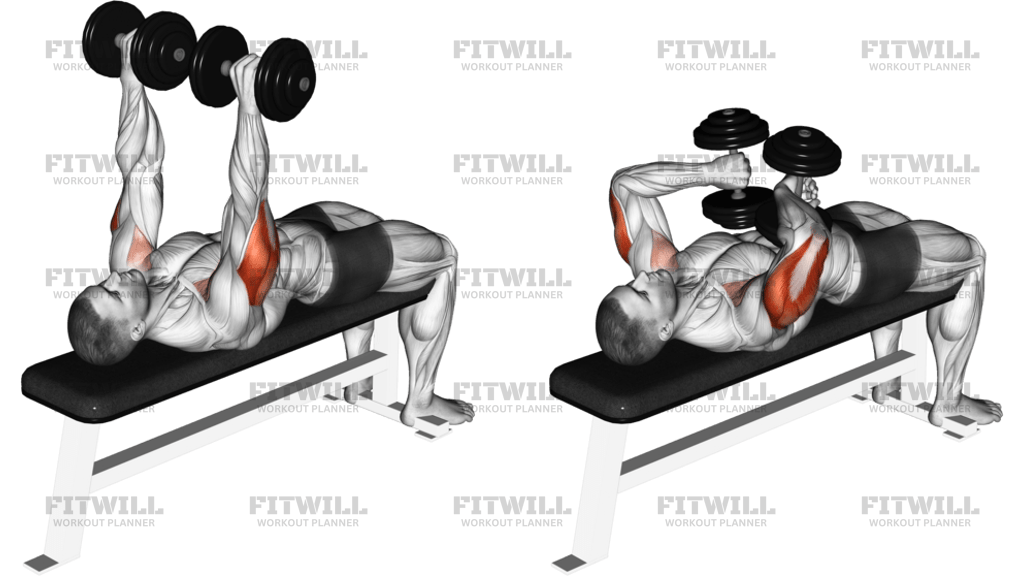
Olympic Barbell Triceps Extension
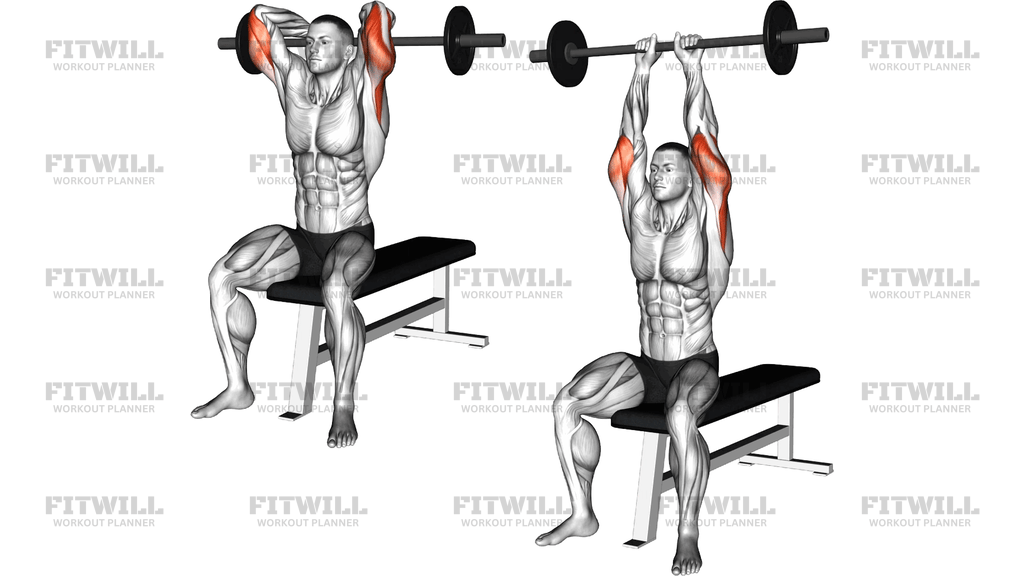
Olympic Barbell Triceps Extension is a bilateral overhead triceps exercise that uses a straight barbell to challenge elbow extension strength while also asking the shoulders, wrists, and trunk to stay organized. The movement is simple in concept but demanding in practice because the bar fixes both arms to the same path, so any loss of control shows up quickly as elbow flare, rib flare, or a low-back arch.
The main training emphasis is on the triceps brachii, especially the long head, with the forearms, anterior deltoids, upper back, and abdominals helping stabilize the setup. Because the bar is long and the load sits away from the elbows, the exercise creates a strong lever arm and a noticeable stretch position behind the head. That makes setup quality more important than load selection.
A good rep starts with the bar set overhead or just behind the crown of the head, elbows pointed mostly forward, and the wrists stacked so the bar stays balanced over the forearms. From there, lower the bar in a controlled arc behind the head until the upper arms stay mostly fixed and the triceps are fully lengthened, then extend the elbows to bring the bar back to the top without shrugging or turning it into a press.
This exercise fits well as accessory work after bigger pressing or arm movements when you want strict triceps tension without the body English that often appears in cable or dumbbell variations. It is especially useful when you want both sides to work together and you want to feel the triceps through a long range of motion. Light to moderate loads usually work best, because the long lever makes heavy loading noisy and sloppy very quickly.
Keep the torso stacked, breathe through each repetition, and stop the set if the low back starts to arch or the elbows drift wide enough that the shoulders take over. If shoulder mobility is limited, shorten the range slightly and keep the descent smooth. The goal is a controlled overhead elbow-extension pattern, not a forceful lockout or a dramatic backward lean.
[ Workout Log & Planner ]
Put your next workout in Fitwill
Keep your plan and training log ready when you are.


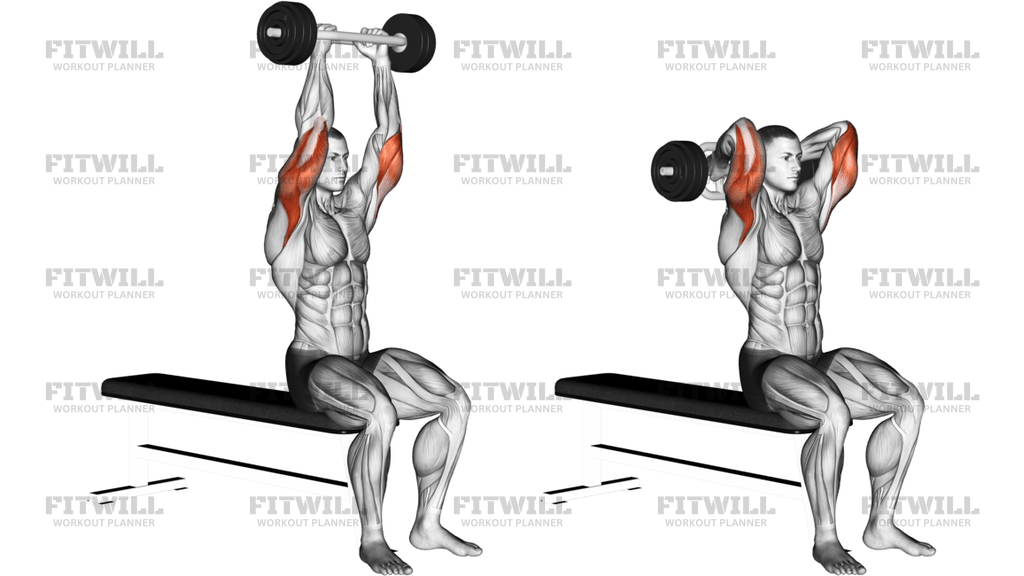
Instructions
- Stand tall with your feet about hip-width apart and hold the straight barbell with a shoulder-width, overhand grip.
- Press the bar overhead or slightly behind the crown of your head so your elbows are extended and your wrists stay stacked over your forearms.
- Set your ribs down, squeeze your glutes, and brace your abs before you start the first rep.
- Keep your upper arms mostly fixed and bend only at the elbows to lower the bar behind your head.
- Lower until you feel a strong triceps stretch and the bar clears the back of your head without forcing your shoulders forward.
- Pause briefly at the bottom without bouncing or letting the elbows flare wide.
- Drive the bar back up by extending the elbows until the arms are straight and the bar is back over your head.
- Finish each rep with the biceps near your ears, then lower the bar under control for the next repetition.
- Exhale as you press and inhale as you lower, keeping the neck long and the torso still.
Tips & Tricks
- Use a grip width that lets your forearms stay vertical; if the wrists bend back hard, the grip is too narrow or the load is too heavy.
- Keep the elbows pointing mostly forward instead of drifting out to the sides, or the shoulders will take over.
- Let the bar travel behind the head, not in front of the face; that keeps tension on the triceps instead of turning the rep into an awkward press.
- If your low back starts arching, tighten the glutes and shorten the range before you add weight.
- A slow lowering phase usually works better here than a fast drop, because the long lever can punish sloppy reps.
- Use a light-to-moderate load that you can control through the bottom position without head movement.
- Keep the wrists straight and the knuckles stacked over the forearms so the bar does not roll in your hands.
- Stop the set when the bar path gets shaky or the elbows start to flare; this movement is about clean elbow extension, not grinding.
- If your shoulders feel pinched, reduce the depth slightly and keep the upper arms a little farther forward.
- Treat the lockout as a triceps squeeze, not a shrug, so the bar finishes overhead without the traps taking over.
Frequently Asked Questions
What muscles does Olympic Barbell Triceps Extension work most?
The triceps do most of the work, with the long head taking a big share because the arms move through an overhead stretch.
Can beginners use a straight barbell for this exercise?
Yes, but only with a light load and a controlled range. If shoulder mobility or wrist comfort is limited, shorten the lowering phase first.
How should the bar move during the rep?
The bar should travel in a smooth arc behind the head and return overhead by elbow extension, not by leaning back or pressing with the shoulders.
Why do my elbows keep flaring out?
That usually means the grip is awkward or the load is too heavy. Bring the elbows slightly forward, reduce the weight, and keep the upper arms quieter.
Should I feel this in my shoulders too?
A little shoulder stabilization is normal, but the main effort should stay in the triceps. If the shoulders are doing most of the work, the bar is probably drifting too far forward.
What is the best stance for this movement?
A stable hip-width stance usually works best because it gives you enough balance to keep the ribs down and the bar path steady.
What if the bar hits the back of my head?
Shorten the range slightly and keep the elbows a touch farther forward. The bar should clear the head smoothly without forcing the neck to move.
Is this a good finisher after pressing work?
Yes. It fits well after bench press, overhead press, or dips when you want a direct triceps accessory that stays strict.