Otis Up
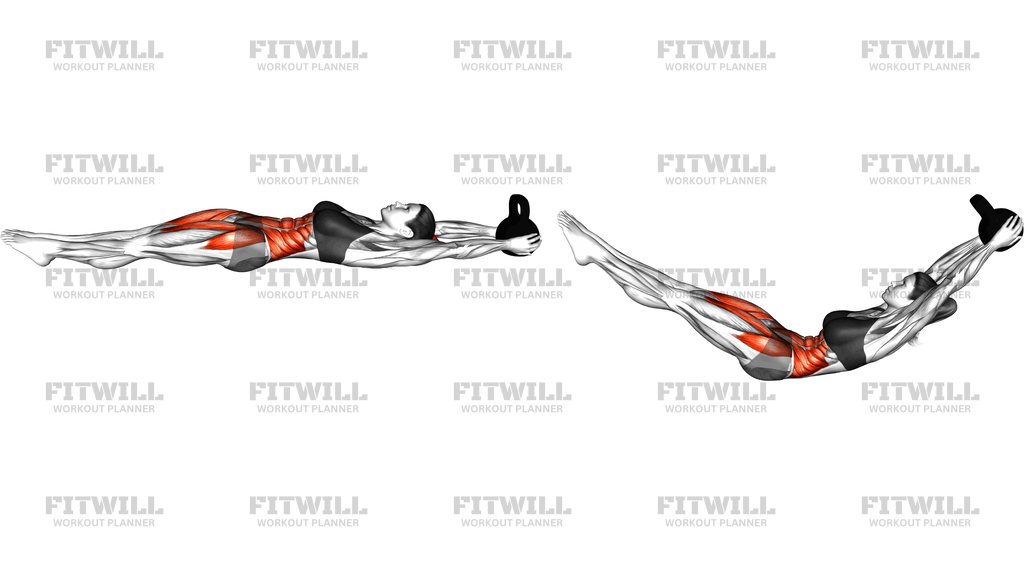
Otis Up is a weighted abdominal raise that starts on the floor and finishes with the torso upright and the load reaching overhead. It is a sit-up style core exercise, but the added plate changes the leverage and makes the trunk work harder through the whole range. That longer lever is what turns a simple curl-up into a more demanding abs drill.
The main training effect comes from the rectus abdominis, with the obliques and deeper core muscles helping control the rib cage and keep the spine moving cleanly. Hip flexors assist as you come up from the floor, especially if the rep gets fast or the feet lift. The exercise is most useful when you want direct trunk flexion work with a clear load that you can control from start to finish.
The setup matters because the starting position determines whether the rep stays smooth or turns into a jerk. Lie on your back with your knees bent and your feet planted, then hold the plate close to the chest or upper torso before you begin. A controlled setup keeps the low back from arching too early and gives you a repeatable path every rep.
On the way up, curl the ribs toward the pelvis, keep the chin slightly tucked, and let the torso rise without yanking on the neck. As you finish the rep, the arms extend and the weight travels overhead while the abs stay tight and the ribs do not flare. The goal is to sit up with control, not to fling the plate back and use momentum to fake a bigger range.
Lower under control and let the spine roll down one segment at a time instead of collapsing back to the floor. Light to moderate loading usually works best because the exercise gets much harder as the arms move away from the body. If the lower back starts to arch, the neck gets tense, or the feet pop up, the load or range is too aggressive for the set.
Use Otis Up as direct core work in an accessory block, abdominal circuit, or general strength session. It suits lifters who already tolerate sit-ups well and want a more demanding variation, but it is easy to overdo if the plate is too heavy or the tempo gets sloppy. Keep the rep smooth, keep the ribs stacked over the pelvis, and stop the set when the spine stops moving cleanly.
Fitwill
Log Workouts, Track Progress & Build Strength.
Achieve more with Fitwill: explore over 9600 exercises with images and videos, access built-in and custom workouts, perfect for both gym and home sessions, and see real results.
Start your journey. Download today!




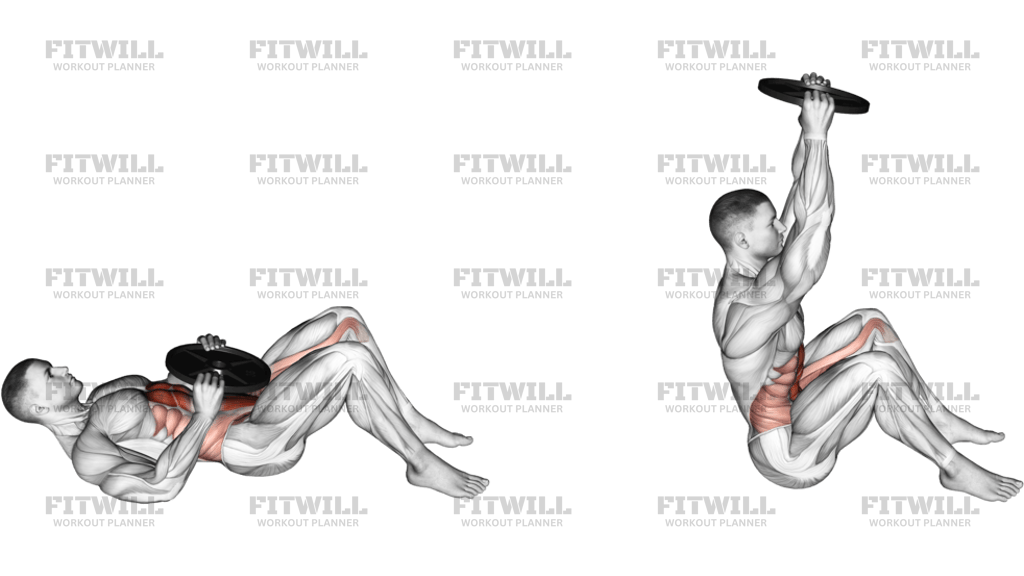
Instructions
- Lie on your back on a mat with your knees bent and your feet flat and hip-width apart.
- Hold the plate close to your chest or upper torso with both hands, and keep your elbows softly bent.
- Set your chin slightly tucked and gently brace your abs so your lower back does not arch off the floor.
- Exhale as you curl your head, shoulders, and upper back off the floor and begin sitting up.
- Continue driving the ribs toward the pelvis while the plate travels upward and the arms extend overhead.
- Finish tall with your torso upright, your abs tight, and the plate stacked above or slightly in front of your shoulders.
- Pause briefly at the top without shrugging or leaning back farther.
- Lower slowly by rolling your spine back down one segment at a time until your shoulders touch the floor.
- Reset the plate against your torso before the next rep and repeat for the planned set.
Tips & Tricks
- Keep the plate close to your body on the way up; pressing it away too early makes the rep much harder and usually turns it into a swing.
- If your feet lift or slide, shorten the range and use less load before you add more reps.
- A small chin tuck helps the neck stay quiet, especially when the plate reaches overhead.
- Think about curling the rib cage toward the pelvis instead of simply throwing the chest forward.
- Use a tempo that lets you feel each vertebra lower back to the floor instead of dropping fast.
- Choose a plate you can control with straight arms at the top without shrugging your shoulders toward your ears.
- Exhale through the hard part of the sit-up so the trunk stays braced as the arms lengthen.
- If the low back pinches, reduce the range of motion or switch to a simpler crunch variation.
Frequently Asked Questions
What muscles does Otis Up work?
It primarily targets the rectus abdominis, with the obliques, deep core, and hip flexors helping through the sit-up.
Can beginners perform this exercise?
Yes, but only with a light plate and a short, controlled range until the sit-up pattern feels smooth.
Where should the plate go during the rep?
Start with it close to the chest or upper torso, then let it travel overhead only as you sit all the way up.
What is the most common mistake?
People usually yank themselves up with momentum or flare the ribs and lose control of the spine.
Should my feet stay on the floor?
Yes, the feet should stay planted unless the load or range is too aggressive, in which case the exercise should be made easier.
Why do my hip flexors feel this so much?
Hip flexors help lift the torso, so they will assist, but they should not take over the whole movement.
How do I know if the plate is too heavy?
If you cannot sit up without jerking, arching your back, or losing the overhead finish, the load is too heavy.
What should I do if my neck feels strained?
Keep the chin tucked, reduce the range, and avoid pulling your head forward with the arms or shoulders.