Weighted Crunch
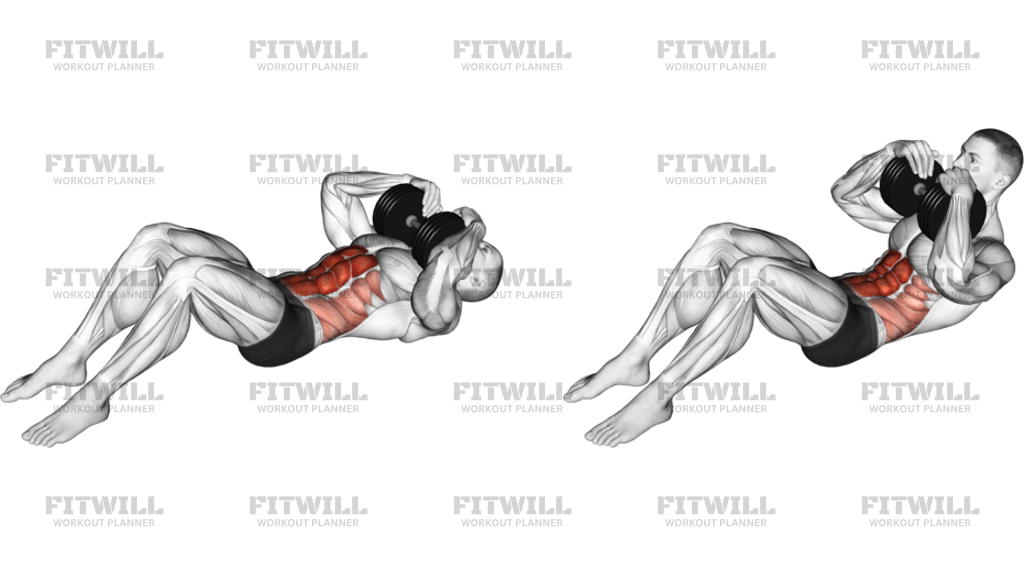
Weighted Crunch is a floor-based abdominal exercise that adds external resistance to a basic crunch. By holding a dumbbell or similar weight against the upper chest, you make the rectus abdominis work harder through a short but focused spinal flexion pattern, while the obliques and deep core muscles help keep the torso organized and the load steady.
This movement is useful when bodyweight crunches stop feeling challenging but you still want a simple setup and a very direct ab exercise. The weight changes the demand without turning the rep into a full sit-up, so the work stays centered on curling the rib cage toward the pelvis instead of turning into a hip-dominant movement. That makes Weighted Crunch a practical choice for hypertrophy-focused core work, accessory training, or the final abdominal block of a session.
The setup matters more than people think. Lie on your back with your knees bent, feet flat, and the weight held firmly against your chest or upper sternum with both hands. From there, keep your chin slightly tucked, ribs down, and neck long so the first part of the rep comes from the upper torso curling forward rather than yanking with the head or driving the hips. A stable lower body gives the abs a clean base to work from.
During each rep, think about lifting the shoulder blades away from the floor, then curling the chest toward the pelvis until the abs are fully shortened. The range should be controlled and repeatable, not exaggerated; if you turn it into a sit-up, the hip flexors will start doing too much. A brief squeeze at the top can help you keep tension where you want it, and a slow return on the way down keeps the load on the abs instead of letting gravity do the whole job.
Weighted Crunch is best used when you want straightforward, measurable abdominal loading with very little equipment and minimal setup time. It pairs well with other trunk-focused work, but it also stands alone as a simple strength or hypertrophy drill for people who can keep the movement strict. Keep the load modest enough that you can breathe, brace, and repeat the same body path on every rep; once the neck tenses up or the lower back starts to arch, the set is no longer serving the target muscles well.
[ Workout Log & Planner ]
Put your next workout in Fitwill
Keep your plan and training log ready when you are.


Instructions
- Lie on your back with your knees bent, feet flat on the floor, and a dumbbell or weight plate held against your upper chest with both hands.
- Keep your feet about hip-width apart, let your lower back settle to the floor, and tuck your chin slightly so your neck stays long.
- Draw your ribs down, brace your abdomen, and take a small breath before the rep starts.
- Exhale as you curl your head, shoulders, and upper back off the floor, keeping the weight steady against your chest.
- Lift until your shoulder blades clear the floor and your abs are fully shortened, not until you sit upright.
- Pause briefly at the top without jerking the weight or pulling with your neck.
- Inhale as you lower your torso slowly until your shoulder blades touch down again.
- Reset your brace at the bottom and repeat for the planned number of reps.
- Set the weight down safely when the set is complete.
Tips & Tricks
- Hold the weight over your sternum, not out in front of your face, so the load does not drag your shoulders forward.
- Keep your chin slightly tucked and your eyes toward the ceiling to avoid turning the rep into a neck crunch.
- If your hip flexors take over, shorten the range and stop the rep as soon as your shoulder blades leave the floor.
- A slower lowering phase usually makes the abs work harder than chasing a bigger crunch at the top.
- Use a dumbbell or plate that you can keep pinned to your chest without your elbows flaring wildly.
- Keep your feet planted; if they start sliding, the set is usually getting too heavy or too rushed.
- Do not swing the weight upward with momentum from the hips or arms.
- If your low back arches off the floor, exhale harder and reduce the load before adding more reps.
Frequently Asked Questions
What muscles does Weighted Crunch train most?
Weighted Crunch mainly targets the rectus abdominis, with the obliques and deep core muscles helping stabilize the torso.
Should I hold the dumbbell on my chest or behind my head?
Hold it against your upper chest or sternum. Putting the load behind your head usually turns the rep into more of a neck and shoulder exercise.
How high should I curl up on Weighted Crunch?
Only curl until your shoulder blades leave the floor and your abs are fully shortened. You do not need to sit all the way up for this movement.
Why do I feel Weighted Crunch in my hips more than my abs?
That usually means the rep is too large or the load is too heavy. Keep your knees bent, feet planted, and stop the crunch before it turns into a sit-up.
Is Weighted Crunch good for beginners?
Yes, if the load is light and the movement stays controlled. Beginners should learn to keep the neck relaxed and the lower body still before adding more weight.
Can I use a weight plate instead of a dumbbell?
Yes. A plate, dumbbell, or similar load can work as long as you can keep it stable against the chest throughout the rep.
What is the most common mistake with Weighted Crunch?
People often yank the head forward or turn the rep into a full sit-up. The crunch should start by lifting the shoulders, not by throwing the torso upward.
How heavy should the weight be?
Use a load that lets you keep the same torso path on every rep and lower slowly without straining your neck or lower back.