Weighted Seated Tuck Crunch On Floor
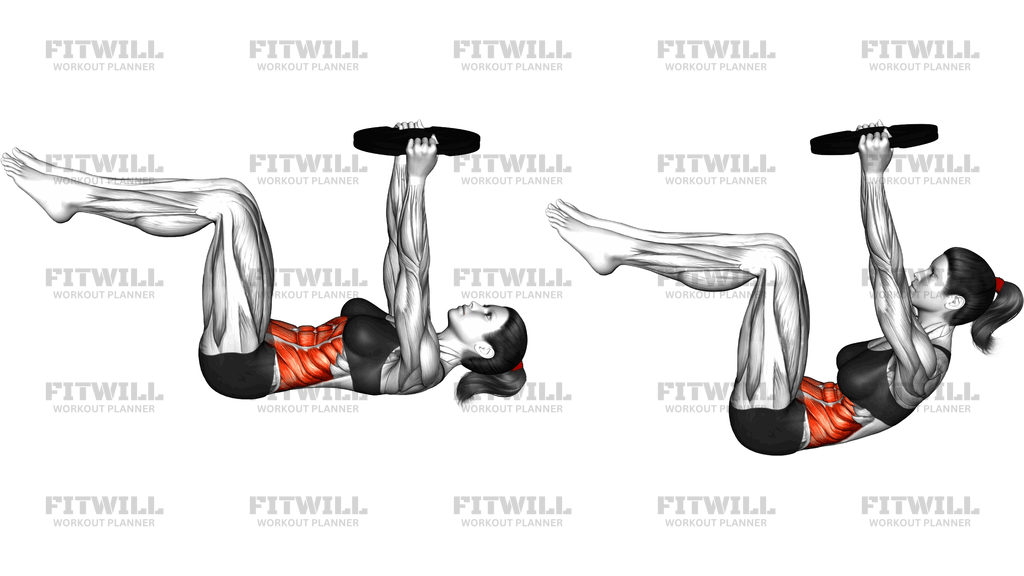
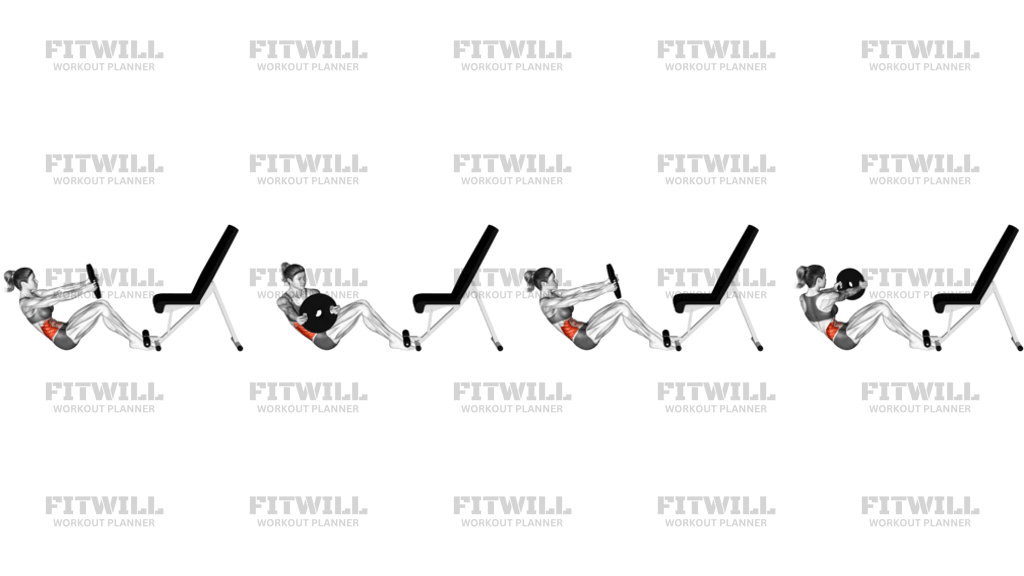
Weighted Seated Tuck Crunch On Floor is a floor-based core exercise that combines a tucked knee crunch with light external resistance. In the image, the lifter is seated on the floor, leaning back on the hands, with the feet lifted and the load secured between the feet. That setup matters because it turns the movement into a strict abdominal contraction instead of a loose rocking motion.
This variation trains the abs through a short, controlled tuck pattern while the hip flexors and shoulder stabilizers help hold the body in position. The goal is not to throw the knees toward the chest. The goal is to keep the torso organized, curl the pelvis and ribs toward each other, and use enough support through the hands to stay balanced without taking over the rep.
The exercise works best when the starting position is deliberate. Sit tall first, place the weight securely between the feet, then lean back until the hands can support you. From there, keep the chest open, brace before each rep, and bring the knees in with control. On the way back out, resist the urge to snap the legs long or collapse the torso. A slower return keeps tension on the abs and makes each rep more useful.
Use this movement as accessory core work, a finisher, or part of a trunk-focused session when you want a compact crunch pattern with a clear end range. It is most useful when the load stays light enough to remain secure and the tempo stays smooth enough to avoid jerking. If the low back starts arching, the feet start drifting, or the weight becomes hard to control, shorten the range or reduce the load before the set turns sloppy.
[ Workout Log & Planner ]
Put your next workout in Fitwill
Keep your plan and training log ready when you are.


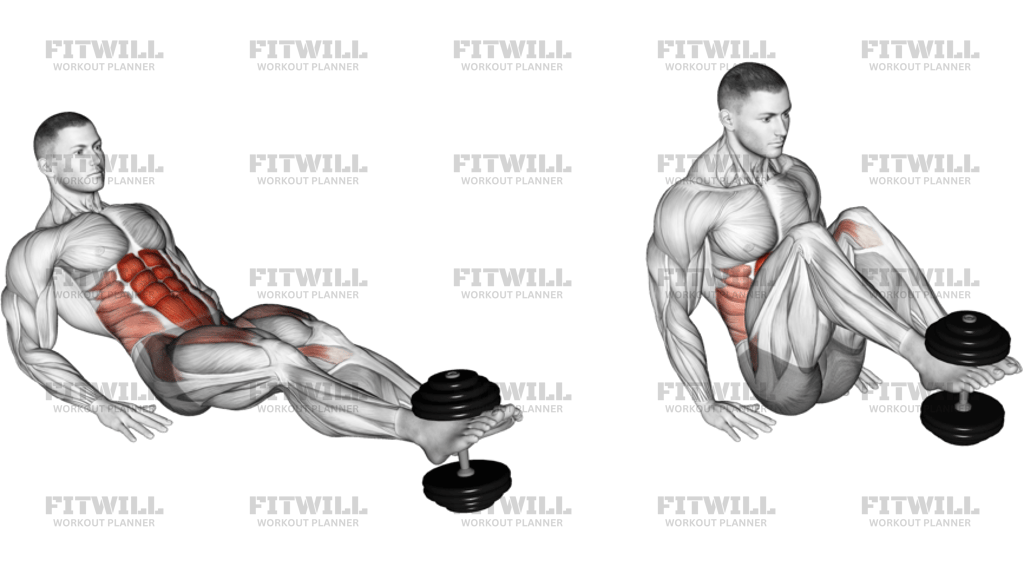
Instructions
- Sit on the floor and place the dumbbell or other load securely between your feet, then put your hands on the floor slightly behind your hips for support.
- Lean your torso back a few inches, lift your feet off the floor, and keep your knees softly bent so the load stays clamped in place.
- Set your shoulders down and open your chest while keeping a slight bend in the elbows to support your body weight.
- Exhale and curl your knees toward your chest as your ribs come down toward your pelvis.
- Squeeze your abs at the top without pulling on the neck or letting the weight shift between the feet.
- Slowly extend the legs back out until you return to the leaned-back start position, keeping tension in the core.
- Keep the motion smooth and controlled instead of swinging the legs or bouncing through the tuck.
- Reset your breathing and repeat for the planned number of repetitions.
Tips & Tricks
- Clamp the weight tightly between the feet before you start; if it shifts, the load is too heavy or the setup is too loose.
- Keep your hands behind you only as much as needed for balance, not to push the torso into a bigger range.
- Think about bringing the ribs and pelvis together, not just lifting the knees higher.
- Use a short, clean tuck if your hips start taking over; forcing a straight-leg return usually makes the set uglier, not harder.
- Let the neck stay long and the chin slightly tucked so the crunch comes from the trunk, not from craning the head.
- Lower the legs with control on every rep; the return phase should be just as deliberate as the tuck.
- If the low back starts to arch or the feet drift apart, reduce the load immediately.
- Breathe out on the tuck and breathe in on the return to keep the torso from bracing too hard or collapsing.
- Keep the reps small enough that you can repeat the same body position from start to finish.
Frequently Asked Questions
What does Weighted Seated Tuck Crunch On Floor train?
It mainly trains the abs through a tucked crunch pattern, with the hip flexors and upper-body stabilizers helping you hold the seated position.
Where should I place the weight?
Place it securely between the feet or ankles so it stays fixed while you tuck and extend. If it feels unstable, use less load.
Why are my hands on the floor behind me?
The hands act as a support base so you can stay leaned back and focused on the crunch instead of wobbling or falling flat.
Should my legs stay straight the whole time?
No. A soft bend helps you keep the load secure and makes it easier to control the tuck without straining the hips or lower back.
Can beginners do this exercise?
Yes, but start with a very light load or no load at all and keep the tuck small until you can hold the position without rocking.
What is the most common mistake?
People usually swing the legs or throw the torso back and forth instead of keeping the movement tight and controlled.
How do I know the range of motion is right?
You should be able to tuck, pause, and return without losing the weight, arching the low back, or collapsing through the shoulders.
Can I use a plate or medicine ball instead of a dumbbell?
Yes, as long as the object can be held securely between the feet and does not force you into a sloppy grip or unstable setup.