Plyo Side Lunge Stretch
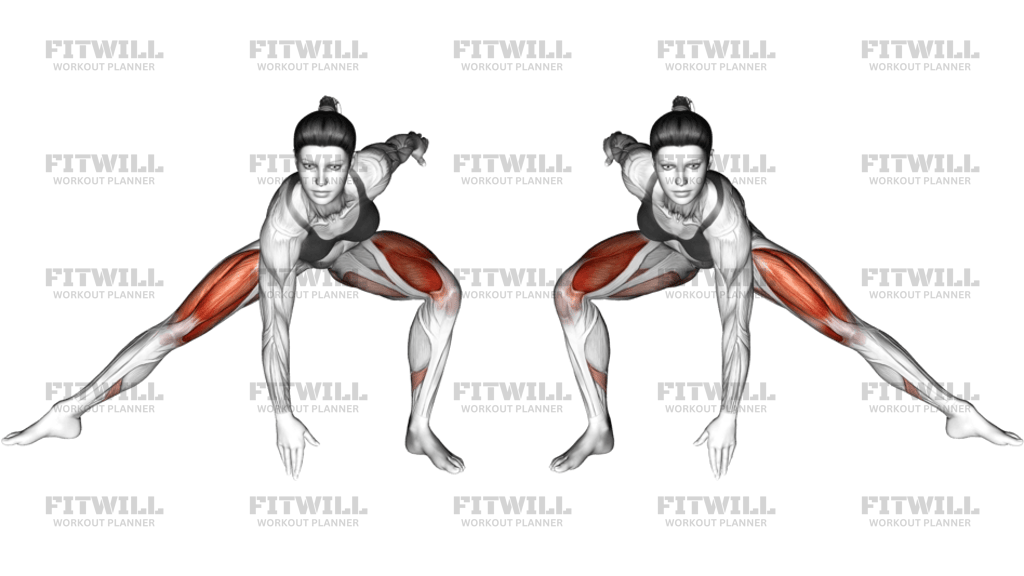
Plyo Side Lunge Stretch is a dynamic lateral mobility drill done from a low side-lunge position on a mat. The image shows a deep side shift with one leg staying long and straight while the other knee bends and the torso folds forward with a hand reaching toward the floor. That setup is what makes the movement valuable: it opens the inner thigh on the straight leg, loads the bent-side glute, and teaches you to move side-to-side without twisting or collapsing through the trunk.
This exercise is especially useful when you want hip, groin, and ankle mobility in the same pattern. The straight leg gets a strong adductor and hamstring stretch, while the bent leg works through knee and hip flexion with the foot planted for balance. Because the reach is low and the chest stays forward, the drill also asks the core and low back to stabilize the pelvis so the stretch stays in the hips instead of spilling into the spine. In anatomy terms, the main emphasis is on the gluteus maximus, with help from the hamstrings, rectus abdominis, and erector spinae.
The setup matters more than the speed. Start with both feet wide, toes turned slightly out if that feels better for your hips, and shift into one side until the working knee tracks over the foot and the other leg stays extended. Keep the flat hand or fingertips close to the floor to help you stay balanced, then switch sides with control rather than bouncing out of the bottom. If you use the movement as a plyo-style drill, the transition should still look smooth and springy, not jerky or flung.
Use controlled breathing to keep the stretch productive. Exhale as you settle into the bent side, then inhale as you come back through center and move to the other side. Stop the descent before the pelvis tucks under or the heel of the bent side starts to peel up. The goal is a repeatable side lunge pattern that feels long through the adductors and glutes, not a forced end-range test.
This drill fits well in a warmup, mobility block, or accessory circuit before squats, lunges, skating work, or any session that needs lateral hip readiness. Beginners can shorten the range and keep both hands higher on the floor or on a support. More advanced athletes can hold the bottom position a little longer, move more rhythmically, or alternate sides with a faster but still controlled transfer.
Fitwill
Log Workouts, Track Progress & Build Strength.
Achieve more with Fitwill: explore over 9600 exercises with images and videos, access built-in and custom workouts, perfect for both gym and home sessions, and see real results.
Start your journey. Download today!




Instructions
- Stand on a mat with your feet set wide, toes slightly turned out, and your weight centered before you move.
- Shift to one side by bending that knee and sitting the hips back while the opposite leg stays long and straight.
- Keep the working foot flat and let the straight leg reach out so you feel a clear inner-thigh stretch.
- Lower your same-side hand or opposite hand toward the floor for balance, keeping the chest proud and the spine long.
- Pause briefly in the bottom position without collapsing the knee inward or letting the heel pop up.
- Drive through the bent leg to return toward center in a controlled, springy motion.
- Move to the other side and repeat the same reach, depth, and foot position.
- Breathe out as you sink into the lunge and inhale as you travel back through the middle.
- Finish the set by standing tall and resetting before the next round.
Tips & Tricks
- Keep the straight leg truly long; a bent knee turns this into a squat and reduces the adductor stretch.
- Let the hips travel back, not just down, so the glute and inner thigh get loaded in the side position.
- Use the hand on the floor as a guide, not as a crutch that dumps all your bodyweight into the shoulder.
- If your heel lifts on the bent side, shorten the stance until the whole foot stays grounded.
- Keep the knee on the bent side tracking over the middle toes instead of caving toward the arch.
- A small pause at the bottom helps you control the stretch before you switch sides.
- If you want more mobility, widen the stance first before forcing a deeper drop.
- Keep the trunk long and avoid rounding hard through the low back as you reach down.
- For a faster plyo feel, speed up the transition only after you can hit the same bottom shape on both sides.
Frequently Asked Questions
What does Plyo Side Lunge Stretch train?
It targets the inner thighs, glutes, and hip stabilizers while also challenging balance and lateral control.
Why is one leg kept straight in the side lunge stretch?
The straight leg creates a strong adductor and hamstring stretch and helps you keep the hips shifting side-to-side instead of dropping into a squat.
Should my hand touch the floor on every rep?
No, the hand is there for balance. Reach only as low as you can while keeping the chest open and the torso controlled.
Can I do this if my groin feels tight?
Yes, but shorten the stance and reduce depth first. The stretch should feel intense but not sharp in the groin or knee.
What is the biggest mistake with this movement?
Most people collapse the bent knee inward or round the low back to chase more depth. Keep the knee tracking over the foot and the spine long.
Is this a strength exercise or a mobility exercise?
It is mainly a mobility drill with light athletic loading. You should feel controlled stretch and lateral readiness, not heavy muscular fatigue.
How do I make it more dynamic?
Push a little faster through center and switch sides with a smooth rhythm, but keep the landing position identical on both sides.
What should I feel in the bent leg?
You should feel the glute and thigh working to support the lowered position, while the straight leg gets the stronger stretch.