Side Plank Straight Arm
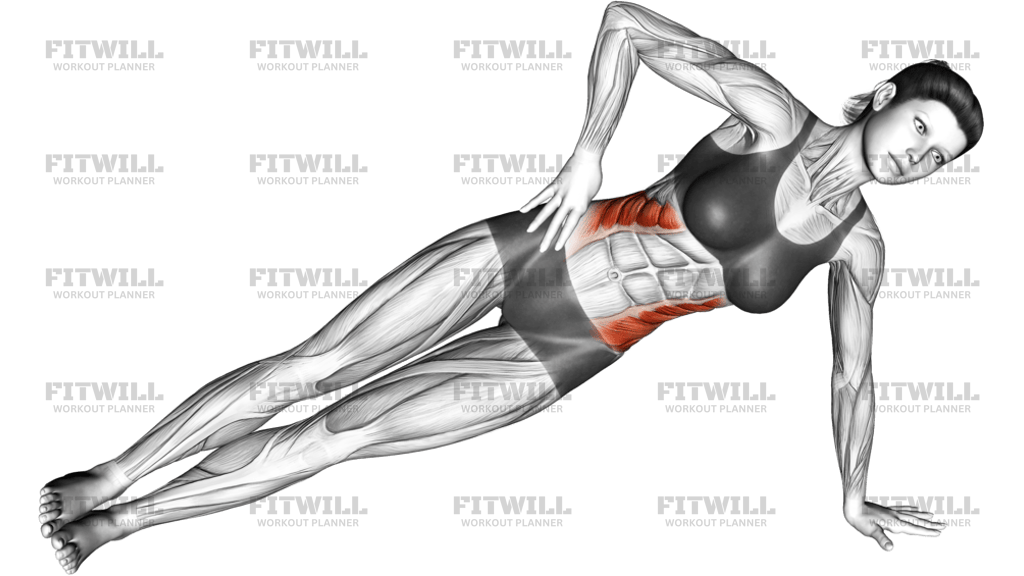
Side Plank Straight Arm is a bodyweight anti-lateral-flexion exercise that trains the obliques, lateral core, and hip stabilizers while teaching the torso to stay long and stacked under load. The straight arm support changes the demand from a forearm plank: the shoulder, elbow, and wrist all have to stay organized while the waist resists sagging or twisting.
The movement is especially useful for building side-to-side trunk control, which matters in sports, carries, single-leg work, and any program that needs a stronger midsection without spinal motion. The main work centers on the External Obliques, with support from the Rectus Abdominis, Transversus Abdominis, Erector Spinae, glute medius, and the shoulder stabilizers of the support arm. If the hips rotate forward or the rib cage flares open, the core loses tension and the set becomes less effective.
Setup matters more here than in many other bodyweight drills. Place the hand directly under the shoulder, press the floor away, and stack the feet or place the top foot slightly in front if you need a wider base. The body should form one long line from head to heels, with the neck relaxed and the top shoulder not collapsing toward the ear. The free hand can rest on the hip, reach up, or stay along the side, but the trunk should remain quiet.
Once you are in position, think about lifting the lower waist away from the floor rather than simply holding on for time. Drive the bottom shoulder blade stable, squeeze the glutes, and keep the ribs from rolling open. Breathing should stay controlled and quiet, with short exhales helping you keep the abdomen braced without turning the set into a strain-and-hold contest.
This exercise fits well in core sessions, warmups before lower-body training, or accessory work after heavier compound lifts. It is also a smart option for athletes who need better pelvic control on one leg and for anyone looking to build trunk endurance without equipment. You can make it easier by lowering the hold time, widening the foot position, or bending the lower knee; you can make it harder by stacking the feet tightly, reaching the top arm overhead, or holding the top hip higher without letting the shoulder drift out of position.
Fitwill
Log Workouts, Track Progress & Build Strength.
Achieve more with Fitwill: explore over 9600 exercises with images and videos, access built-in and custom workouts, perfect for both gym and home sessions, and see real results.
Start your journey. Download today!




Instructions
- Lie on your side with the lower hand planted directly under the shoulder, fingers spread, and the support arm straight.
- Stack the feet or place the top foot slightly in front of the bottom foot so you have a stable base.
- Lift the hips off the floor until your body forms a straight line from head to heels.
- Keep the top hand on your hip or reaching upward without letting the chest rotate forward.
- Press the floor away through the bottom palm and keep the support shoulder stacked over the wrist.
- Brace your midsection and squeeze the glutes so the waist does not sag toward the floor.
- Hold the position with steady breathing and a long neck, then lower the hips with control if you are doing timed reps or pulses.
- Reset fully between efforts and repeat for the planned duration or number of holds on each side.
Tips & Tricks
- Keep the bottom wrist directly under the shoulder; if the hand is too far away, the shoulder works harder and the torso loses stack.
- Think about lifting the lower ribs and waist off the floor instead of just pushing the hips up.
- If your hips drift backward or forward, shorten the hold and re-stack the shoulders, ribs, and pelvis before continuing.
- A slight foot stagger is a valid regression when stacked feet make you twist or wobble.
- Do not let the top shoulder roll forward; keep the chest open and the sternum facing the side wall.
- Keep the neck in line with the spine by looking straight ahead or slightly down instead of craning upward.
- Use the glutes to keep the pelvis level, especially if the low back starts taking over.
- Exhale through the hardest part of the hold to keep the ribs from flaring.
- Stop the set when the support shoulder collapses or the hips start dipping instead of chasing extra seconds.
Frequently Asked Questions
What muscle does Side Plank Straight Arm target most?
The obliques are the primary target, with the side hip and deep core muscles helping keep the torso stacked.
Is the support arm supposed to stay straight in Side Plank Straight Arm?
Yes. The hand is planted under the shoulder and the elbow stays extended so the shoulder, trunk, and hips have to stabilize the line together.
Should my feet be stacked or staggered?
Stacked feet make the hold harder, while a slight stagger gives you a wider base and is a good regression if you wobble or twist.
Why do my hips keep dropping during Side Plank Straight Arm?
Usually the waist or glutes are fatiguing before the hold ends. Shorten the set, widen the stance, and think about lifting the lower waist away from the floor.
What should the top arm do in this exercise?
The top arm can rest on the hip, reach toward the ceiling, or stay along the side, but it should not pull the chest open or close the shoulders off-line.
Can I bend the lower knee if the full version is too hard?
Yes. Lowering the bottom knee is a useful regression because it reduces the leverage on the obliques while you learn to keep the shoulder and pelvis stacked.
What is the biggest form mistake in Side Plank Straight Arm?
Letting the torso rotate forward or the hip sag is the main error. The body should stay in one straight line from head to heels.
How can I make Side Plank Straight Arm harder without adding weight?
Stack the feet tightly, reach the top arm overhead, or hold the top hip slightly higher while keeping the shoulder fully stable.