Sideway Leg Bridge
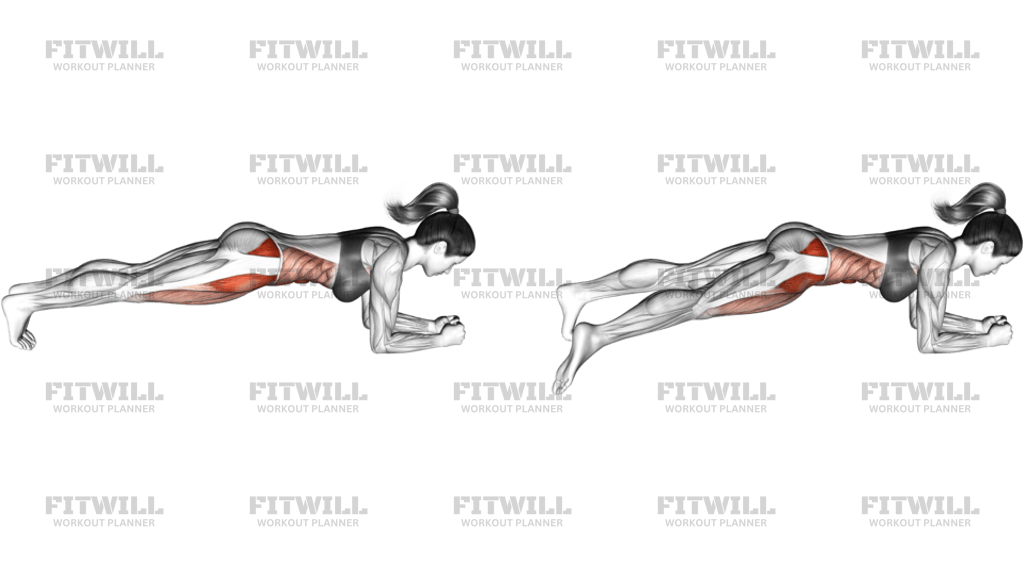
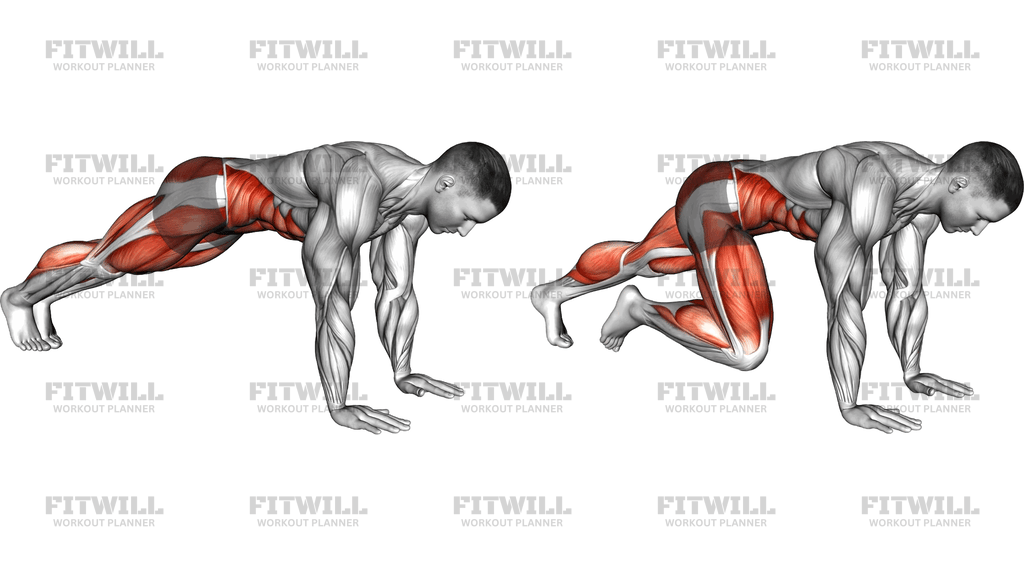
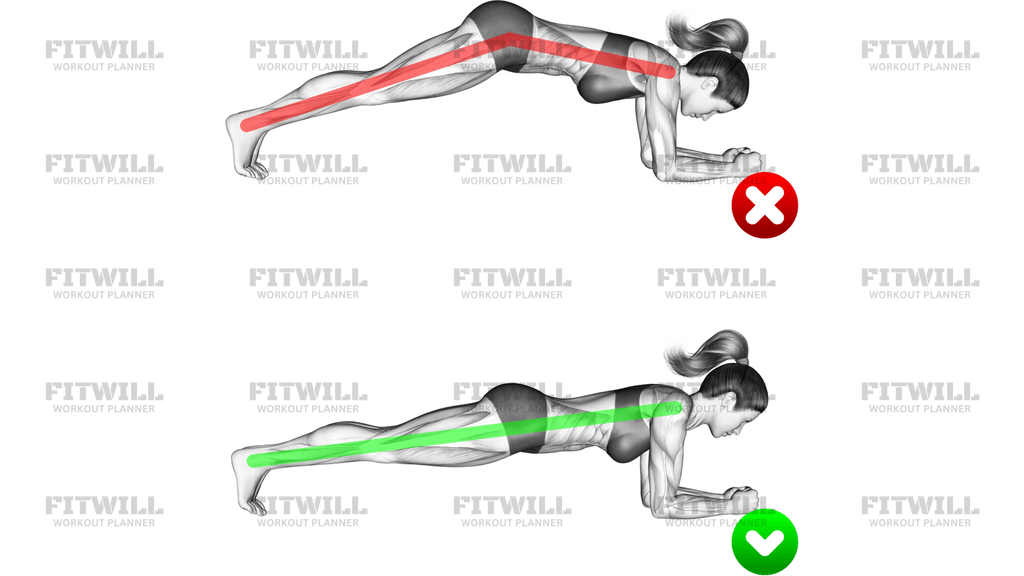
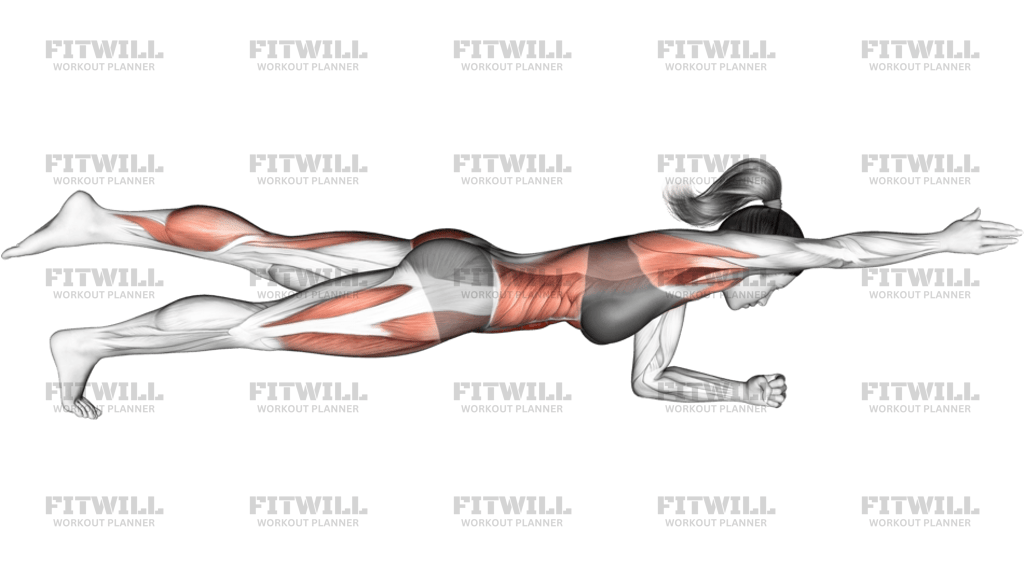
Sideway Leg Bridge is a bodyweight core and glute stability drill performed from a forearm plank while one leg moves out to the side and back. The image for this exercise shows a low plank position with the elbows under the shoulders, the torso held in a long line, and the working leg lifting away from the midline. That makes the exercise more of a plank-based side leg lift than a traditional bridge, so the main goal is to keep the pelvis steady while the hip moves.
The exercise trains anti-rotation control, glute activation, and lateral hip stability. The abs, obliques, and deep core muscles keep the rib cage and pelvis stacked, while the glutes and outer hip help control the lifted leg. Because the movement is done with the torso braced, it is useful for teaching the body to resist twisting when one leg leaves the floor.
Good setup matters more here than range of motion. Start with the forearms planted, elbows under or slightly in front of the shoulders, shoulders pushed away from the floor, and both legs long behind you. Before the first rep, tighten the abdomen, squeeze the glutes, and find a neutral spine so the lower back does not sag when the leg opens out to the side.
Each repetition should look small and deliberate. Lift one leg just far enough for the hip to work without rolling the pelvis open, then bring it back to the floor under control. The standing foot and forearms should do most of the stabilizing while the moving leg comes from the outer hip. Breath should stay calm and rhythmic so the torso does not spike tension or lose position.
Use Sideway Leg Bridge as a warm-up, accessory core drill, or stability exercise when you want the hips and trunk to work together. It is especially useful when you need clean single-leg control without loading the spine heavily. Keep the reps crisp, stop the set if the low back starts to arch, and choose a tempo that lets the working side move without any sway or jerking.
[ Workout Log & Planner ]
Put your next workout in Fitwill
Keep your plan and training log ready when you are.


Instructions
- Set a forearm plank with your elbows under your shoulders, forearms parallel, and both legs straight behind you.
- Press your forearms and toes into the floor, lift your hips to a straight line, and tuck the ribs so the lower back stays neutral.
- Squeeze your glutes and brace your abs before the first rep so the torso stays quiet when the leg moves.
- Shift enough weight into the supporting side to keep the pelvis level without letting the shoulders collapse.
- Lift one leg out to the side only as far as you can without twisting the hips or arching the back.
- Pause briefly at the top if you can keep the trunk square, then lower the leg back to the floor with control.
- Exhale as the leg lifts and inhale as it returns, keeping the breath steady instead of holding it.
- Alternate sides or finish all reps on one side before switching, depending on the workout plan.
Tips & Tricks
- Keep the leg lift small; the goal is hip control, not height.
- If the pelvis starts to roll open, shorten the range before adding more reps.
- Press the standing toes and both forearms down so the torso stays lifted.
- Think about tightening the outer glute on the moving side as the leg leaves the floor.
- A slower return often exposes weak control better than a fast up-and-down rhythm.
- If the low back takes over, reset the plank and make the brace more deliberate before continuing.
- Keep the chin slightly tucked so the neck does not crane forward during the hold.
- Widen the feet a little if you need more stability for the plank position.
Frequently Asked Questions
What muscles does Sideway Leg Bridge work?
It mainly challenges the abs, obliques, and deep core while the glutes and outer hip control the leg that lifts away from the floor.
Is this exercise the same as a side plank?
No. This version uses a forearm plank facing the floor, then adds a side leg lift instead of turning fully onto one side.
Where should my elbows and shoulders be?
Place the elbows under or slightly in front of the shoulders so the forearms can support the plank without dumping weight into the neck.
How high should the leg lift?
Only lift as high as you can without the hips twisting open or the low back arching. A small, clean lift is better than a high, messy one.
Can beginners do this movement?
Yes, but beginners should start with short holds, small leg lifts, and a slightly wider foot stance if the plank feels unstable.
What is the most common mistake?
Most people rotate the pelvis or let the lower back sag when the leg leaves the floor. That usually means the range is too large or the brace is too loose.
How can I make it harder?
Slow the tempo, add a pause at the top, or work longer sets while keeping the plank position perfectly still.
Should I feel this more in the core or the hips?
You should feel both. The core keeps you square, and the outer hip and glute do the work of moving the leg.